Pilates vs Strength Training: Which Should You Choose in 2026?
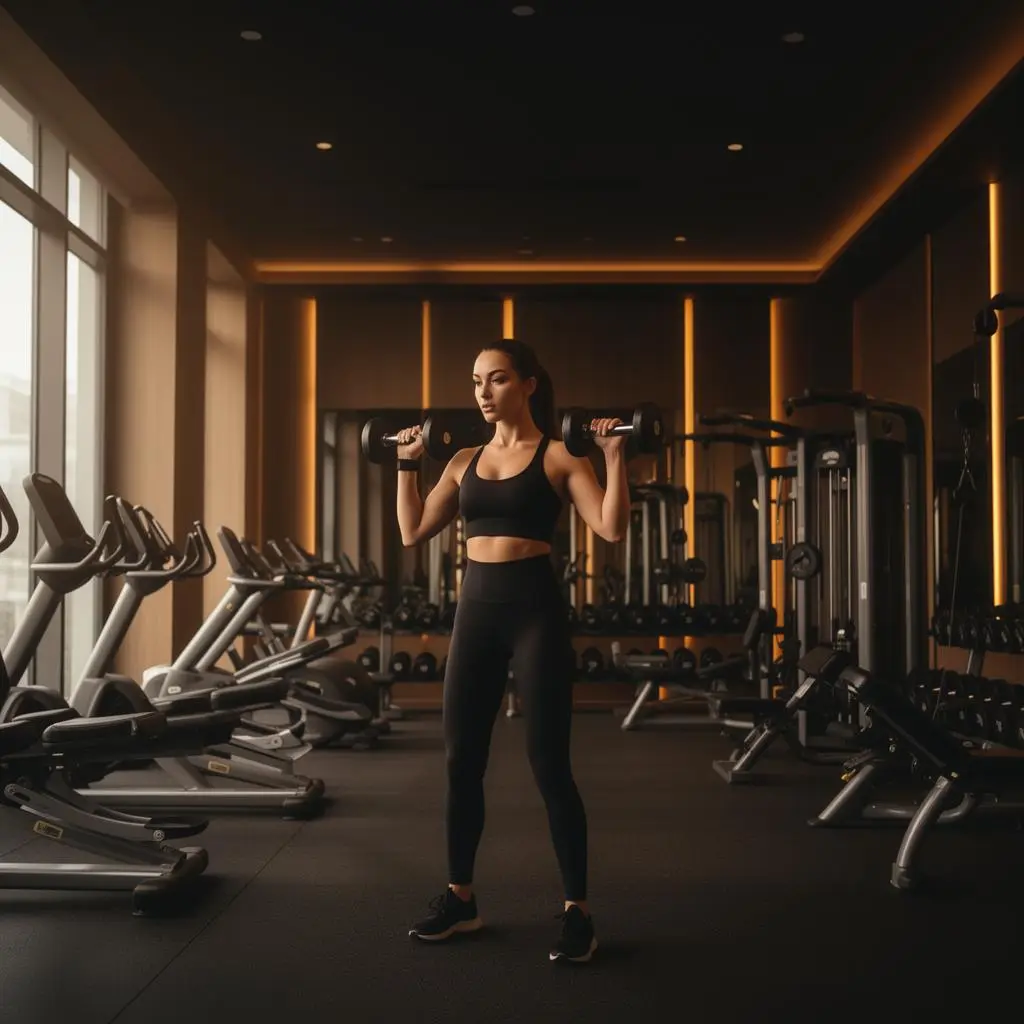
It's the most common question we get from new members in the Ladies section: should I focus on Pilates, lifting, or both? Here's a clear way to choose.
It is the most common question new members ask in the Ladies section: should I focus on Pilates, on lifting, or on both? The honest answer is that Pilates vs strength training is the wrong framing, because the two solve different problems. But to choose well — especially if your time is limited — you need to understand what each one actually trains, and how they fit together.
What strength training actually builds
Strength training builds force, muscle and bone density. It is the most efficient way to change body composition, support your metabolism and reduce long-term injury risk. When people say a woman "looks toned," what they are usually describing is the result of resistance training: more muscle, less fat covering it.
The fear that lifting makes women bulky is one of the most persistent myths in fitness. Building large amounts of muscle is slow and difficult even for people training specifically for it; for the average member lifting two or three times a week, the result is a stronger, leaner, more capable body — not bulk. Bone density is the quiet benefit that matters even more with age, because resistance training is one of the few things that meaningfully protects against the loss of bone mass over the decades.
For most goals women bring to a gym — looking and feeling stronger, changing shape, protecting long-term health — strength training is the engine. It should be the non-negotiable core of the week.
What Pilates actually builds
Pilates trains control, breathing and the deep stabiliser muscles that hold your spine, hips and shoulders in good positions. It dramatically improves posture, core strength and movement quality. What it does not do, on its own, is build the same load capacity that lifting does — that is not its job.
Where Pilates earns its place is in making the rest of your training possible and durable. A strong, well-controlled core and healthy hips let you lift heavier with better technique and lower injury risk. Good breathing mechanics and spinal control are exactly what desk-bound bodies lose, and exactly what Pilates restores. Reformer Pilates in particular adds graded spring resistance, which lets the work scale from gentle rehabilitation to genuinely challenging.
Think of Pilates as the quality-control layer for your movement. It does not replace strength work; it protects and refines it.
So which should you choose first?
If you are completely new and can only commit to one, choose the one you will actually do consistently — adherence beats theory every single time. For most people that means starting with whichever feels more approachable, building the habit, then adding the second discipline once the first is automatic.
If you can commit to both from the start, lead with strength and use Pilates as support. The reason is simple: strength training drives the structural change most members are after, while Pilates keeps the structure healthy enough to keep training hard for years rather than weeks.
There are exceptions. If you are managing back pain, recovering from injury, or pregnant or postnatal, Pilates — especially reformer or cadillac work with a qualified instructor — is often the right starting point, with strength reintroduced as you build a base.
How to combine them in a week
For most members, the best programme is two strength sessions and two Pilates sessions per week. Strength gives the structural change; Pilates keeps the joints, spine and breathing pattern healthy enough to train hard sustainably. A simple template might be strength on Monday and Thursday, reformer Pilates on Tuesday and Saturday, with the remaining days for walking, conditioning or rest.
If you can only manage three sessions, run two strength and one Pilates. If you can manage five, add a conditioning or boxing session for cardiovascular fitness. The exact split matters less than the principle: strength as the base, Pilates as the protector, everything else as a bonus.
Common mistakes to avoid
The first mistake is treating them as rivals and picking only one when you have time for both. The second is doing endless light "toning" circuits and calling it strength training — if the weight never increases, you are not getting the main benefit of lifting. The third is treating Pilates as a warm-up rather than its own discipline; it deserves a real session, not five rushed minutes at the end of a workout.
The fourth, and most common, is inconsistency. Both disciplines reward showing up. A modest, sustainable plan you follow for a year beats a perfect plan you abandon in a month.
Programming both under one roof
The practical barrier to doing both is usually logistics — two memberships, two commutes, two schedules to coordinate. A gym that houses strength and a Pilates studio together removes that barrier. At RPM, Engine and Atelier members can mix unlimited Pilates classes with personal strength programming in the same building, with Coach Maria handling strength and conditioning and Giana Daqnoush leading the Pilates studio. When your coaches share a roof, your programming is integrated rather than two plans pulling in different directions.
What the research says, in plain terms
You do not need to read the studies to train well, but the broad findings are reassuring and worth knowing. Resistance training reliably improves muscle mass, strength and bone mineral density across all ages, and it is one of the most effective non-medical tools for maintaining metabolic health. The "bulky" fear has no basis in how female physiology responds to two or three weekly sessions.
Pilates, for its part, has a solid evidence base for improving core strength, posture, balance and — importantly — chronic non-specific lower-back pain, which is one of the most common complaints among desk-based adults. What the research does not support is treating Pilates as a complete substitute for progressive resistance training when your goal is strength or body composition. Used together, they cover each other's gaps neatly.
A realistic first month for a complete beginner
If you are starting from zero with both, keep month one deliberately simple. Two strength sessions built around the basic patterns — squat, hinge, push, pull and carry — using light dumbbells or bodyweight, focused entirely on clean technique rather than load. One or two Pilates sessions, ideally one private to learn the fundamentals and one group to build the habit. That is enough.
Resist the urge to chase intensity in the first weeks. The goal of month one is not to be sore; it is to groove good movement and build a habit you can sustain. Load and intensity come later, once the patterns are automatic and showing up has stopped feeling like a decision.
How each one changes your body over a year
It helps to picture the twelve-month arc. With consistent strength training two to three times a week, expect visible changes in body composition within a few months — more shape, more definition, clothes fitting differently — alongside steadily rising numbers on your main lifts. The bone-density and metabolic benefits accrue quietly underneath, paying off most over decades.
With consistent Pilates, the changes are different in kind: better posture, a more controlled and capable core, easier movement, and far fewer of the small aches that come from a sedentary life. People often notice they stand taller and move more confidently before any change shows in the mirror. Run both for a year and the effects stack — a stronger body that also moves beautifully and stays free of the nagging injuries that derail most training plans.
Matching the mix to common goals
If your main goal is changing how you look, weight strongly toward strength — three sessions to one or two Pilates. If your main goal is fixing posture, easing back stiffness or moving better, lead with Pilates while keeping at least one or two strength sessions for the structural benefits. If you are an athlete or training for an event like Hyrox, use strength as the base, conditioning for the sport, and Pilates as the mobility and resilience layer that keeps you healthy through a hard block.
The principle holds across all of these: strength is the engine, Pilates is the quality control, and the right ratio simply reflects which one your current goal leans on more.
The bottom line
Pilates and strength training are not competitors — they are complementary. Strength training is the engine that changes how you look, move and age; Pilates is the quality control that keeps that engine running smoothly. The strongest, most mobile members do both. If you must choose one to start, choose the one you will keep doing, and add the other as soon as the habit sticks.