Top 5 Shoulder Workouts for Strength

Strong deltoids are the foundation of a powerful upper body — they drive every press and protect your posture. Mastering these five shoulder workouts builds power, width and resilient joints. You can train them with a barbell, cables or just your bodyweight; in every case, understanding shoulder mechanics will improve your results.
Understanding shoulder anatomy and joint health
The shoulder is a highly mobile ball-and-socket joint, versatile but vulnerable if trained poorly. For a complete, 3D look, train all three deltoid heads:
- Anterior deltoid (front): heavily involved in pressing.
- Lateral deltoid (side): raises the arm out to the side — the key to a wider upper body.
- Posterior deltoid (rear): pulls the arms backward; crucial for balance and posture.
Always include rotator-cuff work, such as band pull-aparts and external rotations, in your warm-up. A stable cuff is the brake system for heavy presses, keeping the humerus securely in the socket.
1. The barbell overhead press (strict press)
The benchmark lift for shoulder strength. It demands raw power, core stability and precise mechanics.
- Setup: unrack the bar across your front delts and clavicles, hands just outside shoulder-width.
- Brace: squeeze your glutes, brace your core, elbows slightly in front of the bar.
- Press: drive the bar straight up; pull your chin back to let it pass, then press your head "through the window".
- Lockout: fully extend your elbows and shrug slightly at the top.
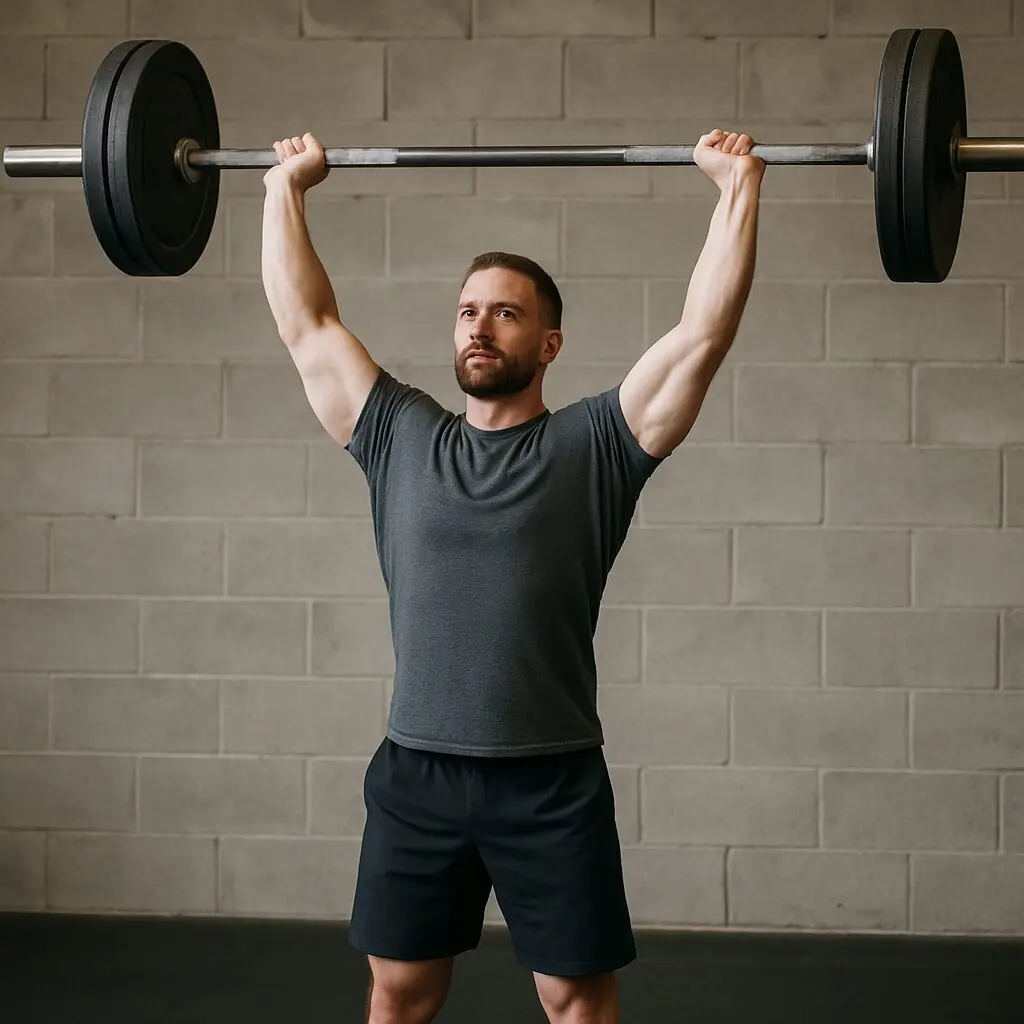
Standing presses build full-body, functional strength through core and glute bracing; seated presses isolate the delts and usually let you lift slightly heavier. To break plateaus, strengthen your triceps for the lockout and add 2-second paused reps.
2. The dumbbell Arnold press
Dumbbells offer a deeper stretch and a more natural path than a barbell, which often makes them better for hypertrophy. The Arnold press hits all three deltoid heads.
- Sit with back support, holding dumbbells in front of your face with a supinated grip (palms toward you).
- As you press overhead, smoothly rotate your wrists outward.
- At full lockout your palms face forward; reverse the motion exactly on the way down.
The continuous rotation keeps the shoulders under constant tension, making it one of the best movements for building shoulder muscle.
3. Cable lateral raises
To build that broad V-taper, isolate the lateral delts. Cables provide constant tension — unlike dumbbells, which lose tension at the bottom.
- Set a pulley to the lowest setting and attach a D-handle.
- Stand sideways, reach across your body and grab the handle with the outside hand.
- Keep a slight bend in your elbow and raise out to your side until your arm is parallel to the floor.
- Lead with your elbow and keep your pinky slightly higher than your thumb (like pouring a pitcher of water).

4. Face pulls for rear delts and posture
Hours hunched over desks lead to rounded, internally rotated shoulders. Face pulls build the rear delts, rhomboids, mid traps and external rotators — countering that posture.
- Attach a rope to a pulley set at upper-chest or eye level.
- Grab with a neutral grip, thumbs pointing back, and step back for tension.
- Pull the centre of the rope toward the bridge of your nose while pulling the ends apart.
- Finish with hands slightly higher than your elbows, like a "double bicep" pose.
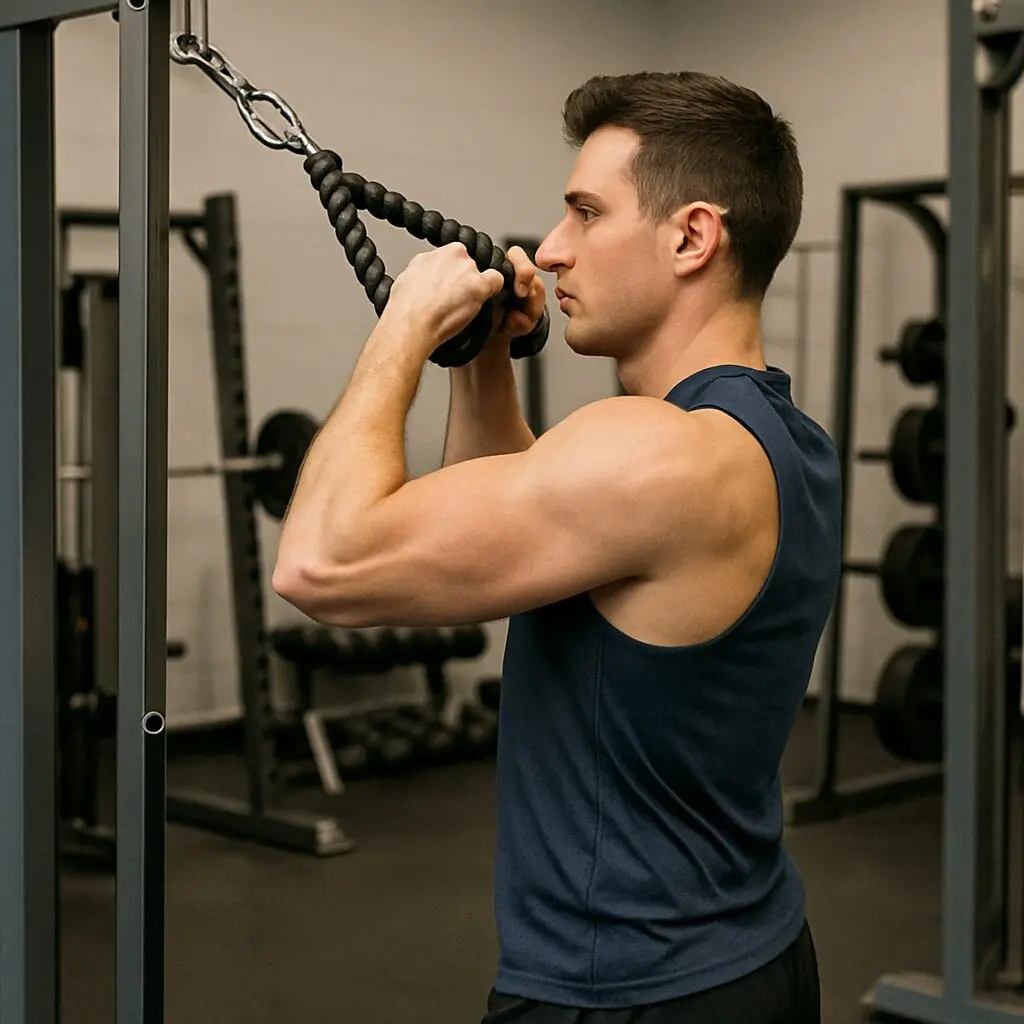
5. Pike push-ups (bodyweight & home)
You don't need a full gym to build shoulder strength. The pike push-up shifts emphasis from the chest onto the anterior and medial delts.
- Begin in a push-up position, then walk your feet forward and raise your hips into an inverted "V".
- Keep your core tight and lower the crown of your head toward the floor, slightly in front of your hands.
- Press back up explosively until your arms are fully extended.
- Progress by elevating your feet, then toward wall handstand push-ups.
Programming and progressive overload
| Movement type | Sets × reps | Focus |
|---|---|---|
| Heavy compounds (overhead / Arnold press) | 3–4 × 5–8 | Strength |
| Isolation (cable raises) | 3–4 × 12–20 | Metabolic stress, pump |
| Rear delts (face pulls) | 3–4 × 15–25 | Endurance, posture |
- Aim for 12–20 total shoulder sets per week across all three heads.
- Progress by adding load, reps, time under tension, or reducing rest.
- Avoid impingement: skip behind-the-neck pressing unless you have elite mobility, and keep elbows tucked ~45° on dumbbell presses.
Should I press standing or seated?
Standing presses demand full-body bracing and build core/glute stability; seated presses reduce lower-body involvement so you can isolate the delts and often lift slightly heavier. Choose standing for functional strength and seated for more delt focus.
Why are cable lateral raises so effective for width?
Cables keep constant tension from the first inch to the top, unlike dumbbells which lose tension at the bottom. Alternating cables and dumbbells maximises lateral-delt growth for a wider look.
How do I build strong shoulders at home?
Progress from push-ups to pike push-ups to shift load onto the front and side delts, then elevate your feet and work toward wall-supported handstand push-ups.
How much weekly volume should I do?
Aim for 12–20 total shoulder sets per week: heavy compounds at 5–8 reps, isolation at 12–20 reps, and rear delts at 15–25 reps.