Pilates for Lower Back Pain in Abu Dhabi: Why It Works
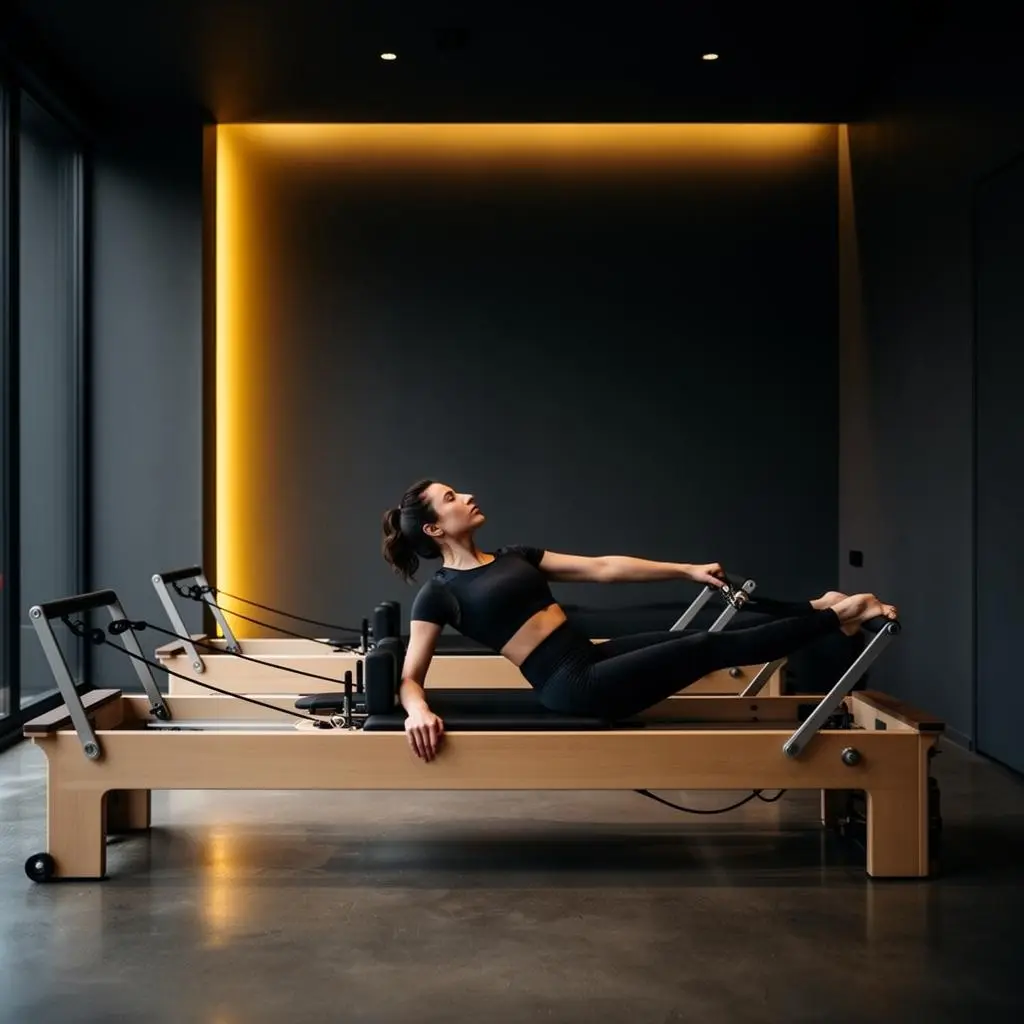
If you sit 9 hours a day in Abu Dhabi traffic and at a desk, your lower back is probably the first thing to complain. Pilates targets exactly the chain that fails.
If you sit nine hours a day in Abu Dhabi traffic and at a desk, your lower back is probably the first thing to complain. Pilates for lower back pain is one of the most evidence-backed non-medical interventions available, and it works because it targets exactly the chain of muscles that fails in desk-bound bodies. Here is why physiotherapists recommend it, and how it works.
Why your back actually hurts
Most mechanical lower-back pain is not really a back problem. Long hours of sitting shorten the hip flexors, switch off the glutes, and leave the deep core unable to stabilise the lumbar spine. The result is a back that takes load it was never meant to carry, because the hips and core that should be doing the work have gone quiet. The pain shows up in the back, but the cause is usually upstream.
This is the key insight behind Pilates for back pain: you do not fix the back by treating the back. You fix it by waking up the deep core and the hips so the spine stops paying for their failure.
What Pilates fixes
Pilates directly retrains the structures that desk life switches off. It activates the deep core — the transverse abdominis and multifidus that wrap and stabilise the spine — restores hip mobility, corrects pelvic positioning, and rebuilds the breathing mechanics that support trunk stability. On the reformer and cadillac, graded spring resistance lets you reload these muscles progressively and safely.
Because Pilates works the whole chain rather than just the painful spot, the improvements tend to last. You are not masking pain; you are rebuilding the support system that prevents it.
Why it suits Abu Dhabi specifically
The Abu Dhabi lifestyle — long commutes in traffic, desk-based work, and a climate that discourages incidental outdoor walking for much of the year — produces exactly the deconditioned, sitting-heavy pattern that causes mechanical back pain. That makes Pilates an unusually good fit for the city: it directly counters the specific postural and movement deficits that the local lifestyle creates.
What to expect from a programme
The typical protocol for noticeable change is around three sessions per week for six to eight weeks. That frequency gives the deep core and hips enough repetition to re-pattern, which is what produces durable relief rather than a temporary easing. Many people feel reduced stiffness within the first couple of weeks, with more meaningful change over the full block.
A sensible programme often starts on the cadillac, where the supported, stable bed lets you decompress the spine and rebuild the core without the demands of a moving carriage, then progresses to the reformer as control improves. Sessions are controlled and unhurried; the goal is precision and re-patterning, not fatigue.
The crucial safety caveat
This matters: acute, sharp or radiating pain — pain that shoots down a leg, follows an injury, or comes on suddenly and severely — needs medical assessment first. Pilates is not a substitute for diagnosis. It is highly effective for chronic, mechanical lower-back pain, but it is not the right first step for pain that signals something requiring medical attention. Get cleared, then commit.
Common mistakes to avoid
The biggest mistake is treating Pilates as a quick fix and quitting after two sessions when the pain has not vanished. Re-patterning takes weeks, not days. The second is pushing through sharp pain, which is never appropriate. The third is doing generic core "ab" work — crunches and sit-ups — in the belief it strengthens the back; that often loads the spine in exactly the wrong way. Pilates targets the deep stabilisers instead, which is the opposite approach and the effective one.
How RPM programs it
RPM's Pilates studio includes both reformer and cadillac, with Coach Giana leading the work. Members presenting with back issues usually begin with a one-to-one cadillac assessment, which lets the instructor identify where the chain is failing and set appropriate, very manageable resistance before progressing to group reformer work. Because the studio sits inside a full gym, the Pilates programme can be coordinated with appropriate strength work and recovery — the combination that keeps a back healthy long-term rather than just temporarily eased.
The bottom line
For mechanical lower-back pain, Pilates is one of the highest-evidence interventions available — because it fixes the hips and deep core whose failure the back is paying for, rather than just treating the sore spot. Get medical clearance for any acute or radiating pain first, then commit to roughly three sessions a week for six to eight weeks, ideally starting on the cadillac, and give the deep core and hips time to re-pattern.