Reformer vs Mat Pilates: Which Is Better for You?
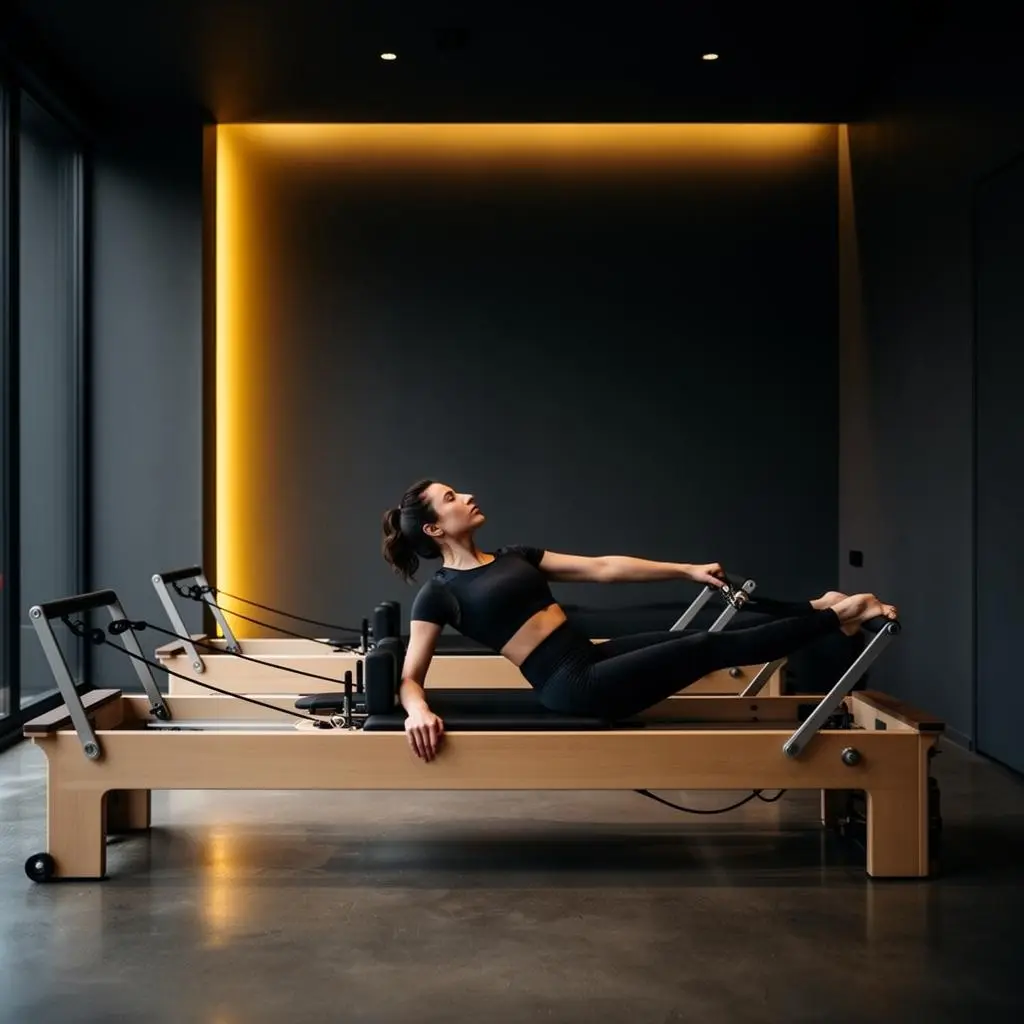
Reformer Pilates and mat Pilates train the same principles using very different tools. The right pick depends on your goals.
Reformer vs mat Pilates is one of the most common questions new members ask in Abu Dhabi. Both train the same core principles — control, breath, precision and deep-core strength — but they use very different tools, and the right pick depends on your goals, your budget and your stage. Here is a clear comparison.
The reformer: resistance and feedback
The reformer is a sliding carriage on a frame with adjustable spring resistance, a foot bar and straps. The springs let you load movement anywhere from very light to genuinely heavy, and the moving carriage gives continuous feedback that keeps your technique honest. This makes the reformer ideal for building strength, for post-rehabilitation work where graded resistance matters, and for anyone who wants measurable progression they can feel from session to session.
Because the resistance is adjustable and constant, the reformer tends to produce visible results faster than mat work. It is also more forgiving for beginners in one important sense: the equipment guides the movement, so good technique is easier to find under a watchful instructor.
Mat Pilates: bodyweight and portability
Mat Pilates uses only your bodyweight, sometimes with small props like rings, balls or resistance bands. There is no machine, which makes it cheaper per session, easy to scale into a home practice, and excellent for drilling the fundamentals of breath, control and technique. Mat work strips Pilates back to its essentials, which is valuable for building a strong technical baseline.
The trade-off is that progression is limited by your own bodyweight. Once you are strong, it becomes harder to keep challenging the muscles without added resistance — which is exactly where the reformer's springs take over.
Head to head: which is harder?
Neither is inherently harder; they are hard in different ways. Mat Pilates is deceptively challenging because you cannot rely on a machine to support or assist you — your core does all the stabilising. The reformer can be scaled to be very demanding with heavier springs, but it can also assist you through movements you could not yet do unsupported. A good instructor uses each property deliberately: the mat to build raw control, the reformer to load and progress.
Which should a beginner start with?
For most beginners in Abu Dhabi, starting on the reformer with a qualified instructor is the smoother path, because the equipment guides technique and the springs can assist as well as resist. A short series of private reformer sessions to learn the fundamentals, then group reformer classes to build volume, is a reliable way in. Mat work then reinforces those fundamentals and gives you something you can practise anywhere.
If budget is the deciding factor, mat classes are a perfectly good entry point — just be prepared to add reformer work later to keep progressing.
How to combine them
The strongest default for most members is reformer twice a week and mat once a week. The reformer drives progression and strength; the mat reinforces control and technique and gives you a portable practice for travel or busy weeks. This blend covers both the loaded, measurable side of Pilates and the pure-control side, and it is exactly how members in the RPM Ladies Pilates studio tend to cycle through the work with the same instructor.
If you can only do one, choose the reformer for progression and results, or the mat for cost and convenience — then add the other as soon as you can.
Cost, convenience and access
Mat classes are generally cheaper and require no special equipment, which is part of their appeal. Reformer classes cost more because of the equipment and the smaller class sizes good instruction requires. The practical answer for most people is access through a membership that includes both, so the choice each week is driven by your training needs rather than by per-class pricing.
How RPM programs both
RPM's Pilates studio in the Ladies section runs both reformer and mat, taught by Giana Daqnoush and included on Engine and Atelier memberships. Members typically cycle through both with the same instructor, which keeps the programming integrated — the mat work reinforces exactly what the reformer is building, rather than being two disconnected practices. The studio also has a cadillac for members who need supported, decompression-focused work, so the full Pilates progression sits under one roof.
The bottom line
Pick the reformer for progression, measurable strength and faster results; pick the mat for control, cost and convenience. For most members, the smartest answer is both — reformer twice a week, mat once — so you get the loaded progression and the portable fundamentals together. If you must choose one, let your goal and budget decide, and add the other when you can.