A studio, not a corner
Pilates needs a calm room with space around each machine. A studio set apart from the weights area keeps out clanging plates and loud music, leaves room to walk between reformers, and lets the instructor see everyone at once. A mat class squeezed into a spare corner of the gym floor is a different product, even if the timetable calls it Pilates.
RPM's Pilates studio is a dedicated room inside the Ladies section, which is for women only.
The apparatus, and what each piece does
Studios differ most in their apparatus. Ask what is in the room, and which pieces your class will actually use.
| Apparatus | What it is | Ask |
|---|---|---|
| Mat | Bodyweight work on a padded mat, sometimes with small props such as rings and balls | Is there a mat class for beginners, and are mats provided? |
| Reformer | A sliding carriage on a frame, with springs you adjust for support or resistance | How many reformers does one instructor look after? |
| Tower | A frame fixed to the end of a reformer, adding bars and springs | Do classes use the towers, or only the carriage? |
| Trapeze table | A raised table inside a frame of bars and springs, also known as a cadillac | Is it used in group classes, or only in private sessions? |
| Ladder barrel | A curved barrel beside a short ladder, used for stretching and spinal movement | Which sessions include it? |
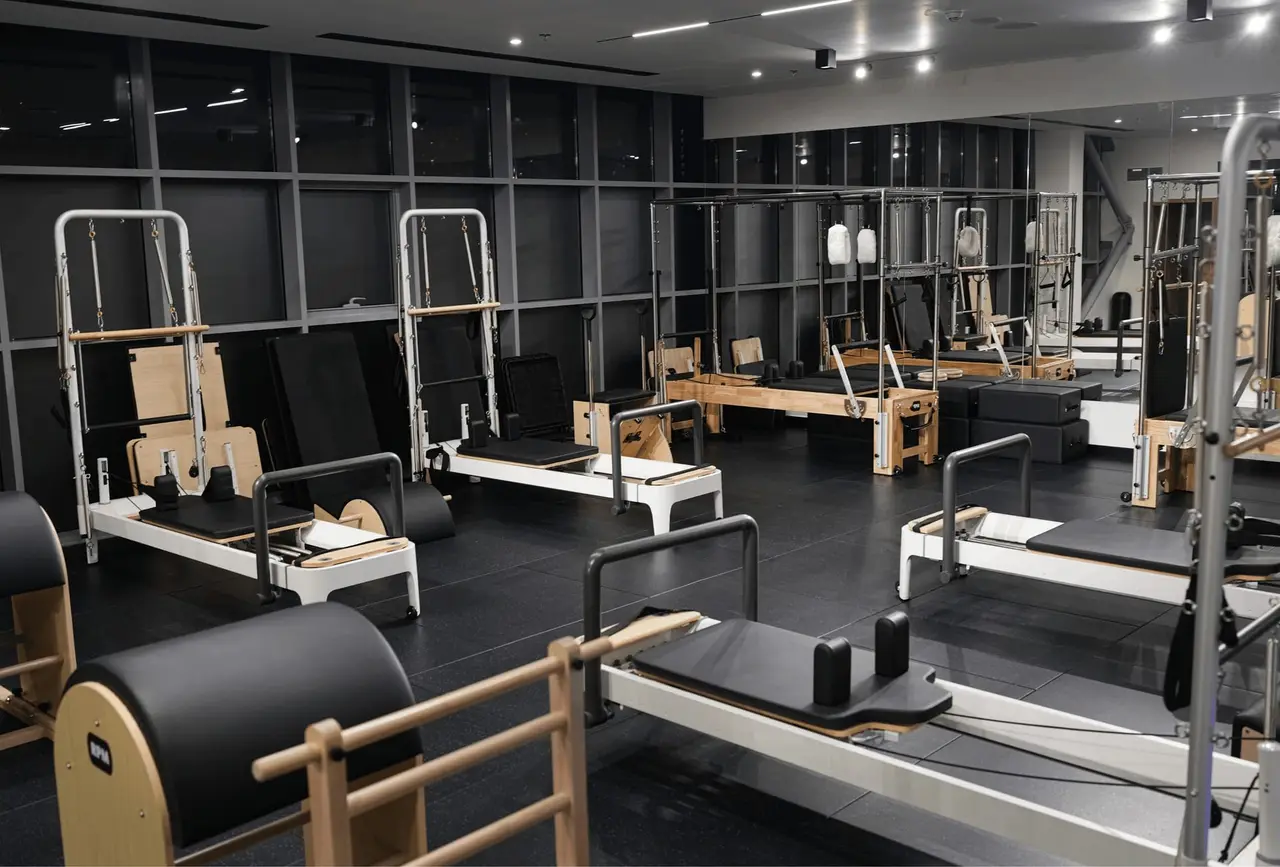
At RPM, the studio photos show reformers, some with towers, along with trapeze-table frames and a ladder barrel. Reformer classes run in the studio. Ask which apparatus a given session uses before you book it.
Mat or reformer classes
A good Pilates gym offers a way in for beginners and something to progress to. Mat classes teach the basics with no machine to set up. Reformer classes add springs that can support you or make the work harder, and they need more instruction at the start.
- New to Pilates: ask for an introductory session, or one or two private sessions, before a group reformer class.
- Coming back after a break: tell the instructor what you did before, and start a level lower than you think.
- Pregnant, postnatal or injured: get clearance from your doctor, midwife or physiotherapist first, and tell the instructor before your first class.
For the reformer itself, and what a first session involves, see reformer Pilates at RPM.
Class size and instructor training
Pilates depends on correction, so the number of people per instructor matters more than in most classes. Ask for the maximum in a group reformer class, and watch one if you can. You should see the instructor walking round, adjusting springs and changing how people move, rather than calling out exercises from the front.
Pilates teacher training is commonly split into mat and apparatus courses, and comprehensive programmes cover both. Ask each instructor which course they completed, which body certified it, and whether it covers the apparatus they teach on. If you want certainty, check with that body.
At RPM, the roster lists Giana Suleiman Daqnoush as the Pilates and aerobic coach in the Ladies section. Ask her about her training directly, as you would at any studio.
Booking rules and the timetable
- How far ahead do slots open, and do popular times fill on the first day?
- What is the late-cancellation window, and does a missed class count as used?
- Is there a waiting list, and how are you told when a place opens up?
- Do timings change in Ramadan and over the summer, and where are changes announced?
- Can you book the same slot each week, for example after the school run?
A studio with excellent instructors and no slots at your hours will not work for you. Check the timetable against your week before paying.
Comparing studios on your shortlist
How do I compare Pilates gyms in Abu Dhabi?
Take one class or private session at each studio on your shortlist, at the time you would normally go. Score each on the room, the apparatus your sessions use, how often the instructor corrected you, the class size, the booking rules and the total cost for the same number of sessions a month. Ask the same questions everywhere, and get prices and package terms in writing.
| Deal-breaker | Nice to have |
|---|---|
| A dedicated studio | A view or natural light |
| Apparatus that matches the class you book | A wide range of extra apparatus |
| Corrections from the instructor in every class | Music you like |
| Slots at your hours | An app with a waiting list |
| A women-only studio, if you need one | A changing area with mirrors and hairdryers |
Women-only studios, and Pilates at RPM
For many women here, a studio inside a women-only space is the deciding factor, because it means never leaving that space between changing and training. Check whether a studio is women-only all day or only at set times, and whether it can be seen from elsewhere.
At RPM, the studio sits inside the Ladies section, so it is for women only and men cannot use it. RPM does not publish prices online. Ask which tier includes the Ladies section, whether Pilates sessions are included or sold as packages, and what a private session costs. To combine Pilates with lifting at one club, see Pilates and strength training in one place.
Questions, answered.
Is reformer Pilates better than mat Pilates?
Neither is better in general. Mat work needs no machine and teaches the basics, while the reformer's springs can add support or resistance. Many people do both.
How many people should be in a reformer class?
There is no fixed rule. What matters is that the instructor can see and correct everyone, so ask for the maximum and watch a class before you book.
Do I need grip socks?
Some studios ask for them on the reformer. Check before your first session.
Can men do Pilates at RPM?
No. The Pilates studio is inside the women-only Ladies section, so it is for women only.
Should I start with a private session?
It is a sensible start on the reformer, because the instructor can show you the set-up and springs one to one. Ask whether the studio suggests it, and what it costs.