Contrast Therapy: A Practical Guide for Faster Gym Recovery
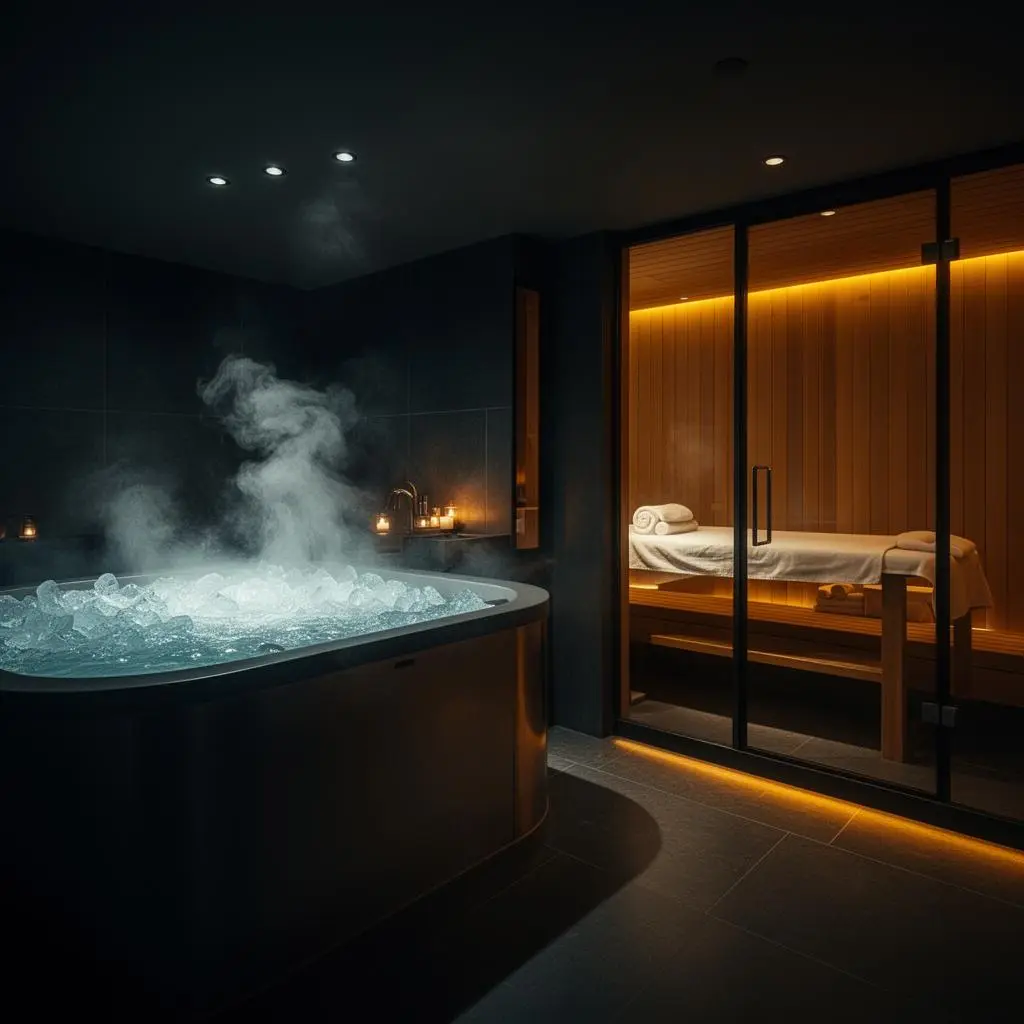
Contrast therapy — alternating hot and cold immersion — is one of the few recovery tools with both research and field evidence behind it. The protocol is simple and the gains are immediate.
If you have a sauna and an ice bath available at your gym, you have everything you need for contrast therapy — one of the most reliable, best-feeling recovery tools there is. Alternating hot and cold is simple, takes about twenty minutes, and leaves you genuinely restored. Here is exactly how to do it, and when to avoid it.
What contrast therapy is
Contrast therapy means alternating exposure to heat and cold — typically a hot sauna or steam room followed by a cold plunge, repeated for several rounds. The heat dilates your blood vessels and the cold constricts them, so cycling between the two creates a pumping action in the circulatory system. That alternating dilation and constriction is the mechanism behind the recovery effect, and it is why contrast therapy feels so different from heat or cold alone.
It is one of the oldest recovery practices in the world, used for centuries across many cultures, and modern recovery suites simply make it convenient.
Why it works for recovery
The pumping action from alternating hot and cold helps move blood and lymph, which supports the clearance of metabolic by-products after hard training and can reduce the stiffness and heaviness you feel the day after a tough session. Beyond the physical, the cycle is a powerful nervous-system reset: the heat relaxes, the cold sharpens, and the combination leaves most people feeling calm and alert at once. Many people find contrast therapy more restorative than either the sauna or the ice bath used on its own.
The basic protocol
A simple, effective protocol is three to four rounds, each consisting of roughly three to four minutes in the heat followed by one to two minutes in the cold. Always finish on cold if your goal is alertness and a cooled-down core — which, in Abu Dhabi's climate, is usually what you want after training. If your goal is relaxation and sleep later that evening, you can finish on heat instead.
So a standard session looks like: sauna three to four minutes, cold plunge one to two minutes, and repeat that cycle three or four times. The whole thing takes about twenty minutes.
How to breathe and manage the cold
The cold portion is where people struggle, and breathing is the key. The instinct on entering cold water is to gasp and tense every muscle; the skill is to breathe slowly and deliberately through the nose and consciously relax. Get into the cold deliberately rather than easing in, because a committed entry is mentally easier than a hesitant one. Within a couple of rounds your body adapts and the cold becomes far more manageable.
If you are new, shorten the cold portion and lengthen the heat until you are comfortable, then balance them out over a few sessions.
When to use it
Contrast therapy fits best after a hard training session, on a rest day to flush out stiffness, or any time you want both physical recovery and a mental reset. It pairs especially well with a hot-climate training routine because the cold finish leaves your core temperature properly down rather than elevated. Two to four contrast sessions a week is a sensible dose for most people who train regularly.
The one timing caveat mirrors the ice bath: if your single priority for a session is maximising muscle growth, do your contrast therapy a few hours later or on a separate day rather than immediately after heavy lifting. For general recovery, that nuance does not matter.
Who should be cautious
Because contrast therapy combines two cardiovascular stressors, the cautions of both apply. Anyone with heart conditions, high or low blood pressure, or who is pregnant should get medical clearance first. Never do it after alcohol, never plunge alone if inexperienced, and stop if you feel unwell at any point. Used sensibly by healthy people it is very safe, but the combination of heat and cold deserves respect.
How RPM makes it easy
The RPM recovery suite is built specifically for this: a Finnish sauna, an aroma steam room and a 4°C ice bath behind the same private door, included on the relevant memberships. That layout means you can run a full contrast cycle without dressing, walking across the gym, or queuing — sauna, plunge, repeat, all in one place. Having the hot and cold steps side by side is what turns contrast therapy from an occasional novelty into a sustainable weekly habit.
The bottom line
Contrast therapy — alternating hot sauna and cold plunge — is one of the most reliable recovery tools available, and it takes about twenty minutes. Run three to four rounds of three to four minutes hot and one to two minutes cold, breathe slowly through the cold, finish on cold for a cooled-down core, and use it two to four times a week. Get medical clearance first if you have a heart condition or are pregnant.