Why Recovery Is As Important As Training (And What to Do)
The session is the stimulus. Recovery is where the adaptation happens. A serious member trains hard four times a week and recovers seriously the other three.
Here is the truth most beginners discover too late: you do not get fitter during your workout. You get fitter afterwards, while you recover. Training is the stimulus; recovery is when the adaptation actually happens. Understanding why recovery is as important as training changes how you build your whole week — and usually produces better results from less effort.
The principle: training breaks you down, recovery builds you up
A workout is a controlled stress. You break down muscle fibres, deplete energy stores and fatigue the nervous system. None of that is the result — it is the signal. The actual improvement, the rebuilding of stronger muscle and the upgrading of your systems, happens in the hours and days afterward, during recovery. Train without recovering and you keep applying the stress without ever letting the adaptation complete, which is why more is not always better.
This is the single most important mindset shift for anyone serious about results. Recovery is not the absence of training; it is the other half of the same process.
What happens when you skip it
Chronically under-recover and the signs show up quickly: stalled progress despite hard work, persistent fatigue, poor sleep, irritability, nagging aches that never quite resolve, and eventually a higher risk of injury and illness. Many people who feel "stuck" despite training hard do not have a training problem — they have a recovery problem. Adding more sessions to break a plateau often makes it worse, because the body never gets the chance to consolidate the work already done.
If you are training hard and not progressing, the first thing to examine is not your programme; it is your sleep, nutrition and rest.
Sleep: the foundation of recovery
Nothing replaces sleep. It is during deep sleep that most physical recovery and adaptation occur — muscle repair, hormonal regulation and nervous-system restoration all depend on it. Seven to nine hours of quality sleep does more for your results than any supplement or recovery gadget. If you have to prioritise one recovery lever above all others, prioritise sleep. A late night undoes a surprising amount of a hard day's training.
In a hot climate, keeping the bedroom cool and managing evening screen and caffeine habits matter even more, because both can quietly erode sleep quality.
Nutrition and hydration
Recovery needs raw materials. Adequate protein gives your body what it needs to rebuild muscle; enough total food gives you the energy to adapt rather than just survive. Hydration is doubly important in Abu Dhabi's heat, where fluid loss through sweat is high and dehydration directly impairs both performance and recovery. You do not need a complicated supplement stack — you need enough protein, enough total food, and consistent hydration.
Getting these basics right accounts for the large majority of the nutrition side of recovery. Everything else is fine-tuning.
Active recovery vs complete rest
Recovery does not always mean lying still. Active recovery — a walk, easy mobility work, a gentle Pilates session, light swimming — promotes blood flow and can help you feel better and move better without adding training stress. Complete rest days are also valuable, especially when you are run down. The art is reading your body: gentle movement when you are merely stiff, true rest when you are genuinely depleted.
A good week usually contains both: a couple of hard training days, a couple of moderate ones, some active recovery and at least one full rest day.
Recovery tools that actually help
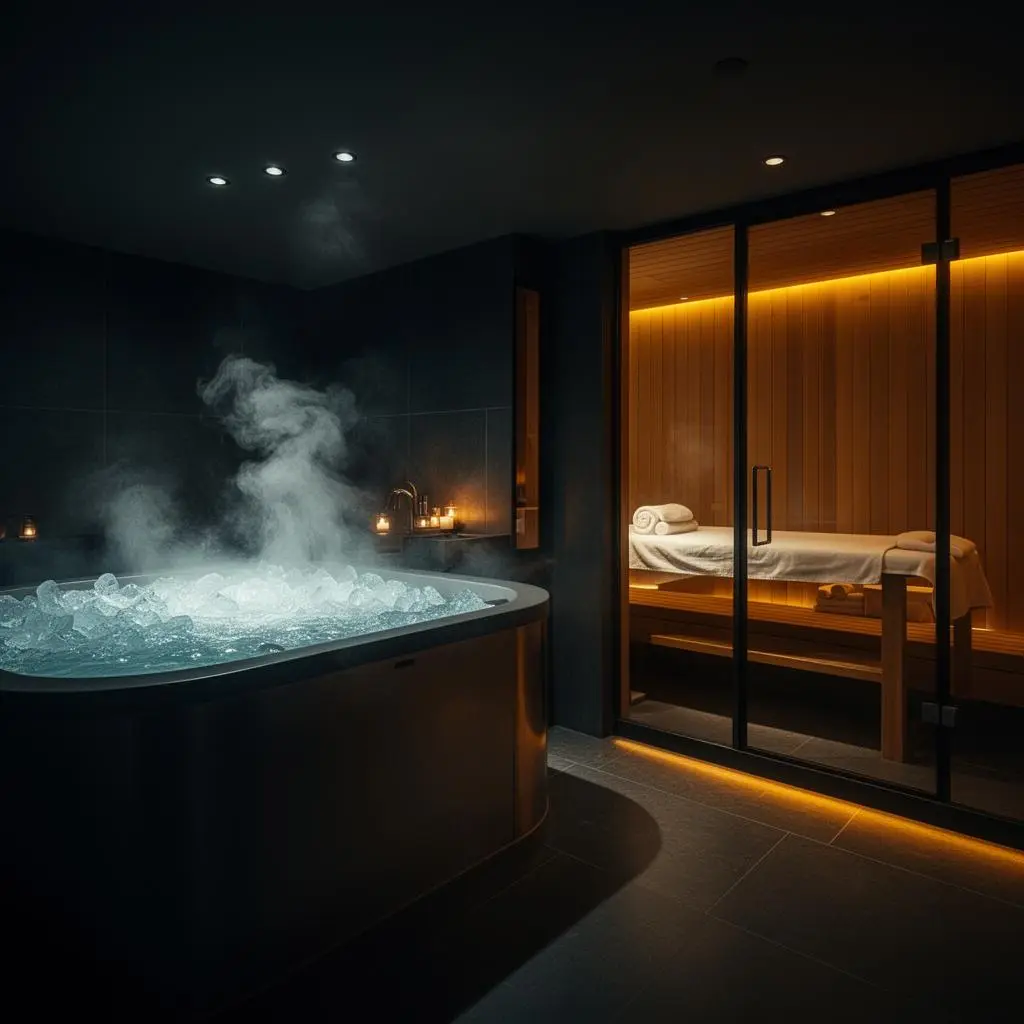
Beyond the foundations, dedicated recovery tools accelerate the process. Contrast therapy, ice baths, sauna and steam all support recovery in the ways covered in their own guides — reducing soreness, cooling an overheated core, flushing stiffness and resetting the nervous system. These are genuinely useful, but they are amplifiers, not substitutes. A recovery suite on top of good sleep and nutrition is powerful; a recovery suite instead of sleep and nutrition is decoration.
This is why the best gyms build recovery in rather than treating it as an afterthought.
Building recovery into your week
Plan recovery as deliberately as you plan training. Schedule your rest days rather than taking them only when you collapse. Protect your sleep as the non-negotiable foundation. Hit your protein and hydration consistently. Use active recovery on easy days and recovery tools after hard ones. At RPM, the recovery suite — sauna, steam and ice bath — sits inside the same membership as the training floors precisely so that recovery is part of the routine, not a separate trip you never quite make.
The bottom line
You do not improve during training — you improve while recovering from it. Treat recovery as the other half of the process: protect seven to nine hours of sleep, eat enough protein and total food, hydrate hard in the heat, use active recovery and rest days deliberately, and add recovery tools on top of those foundations. Do this and you will progress faster on less training than you would by simply doing more.