Ice Bath Benefits: Why Cold Plunges Work in Abu Dhabi's Heat
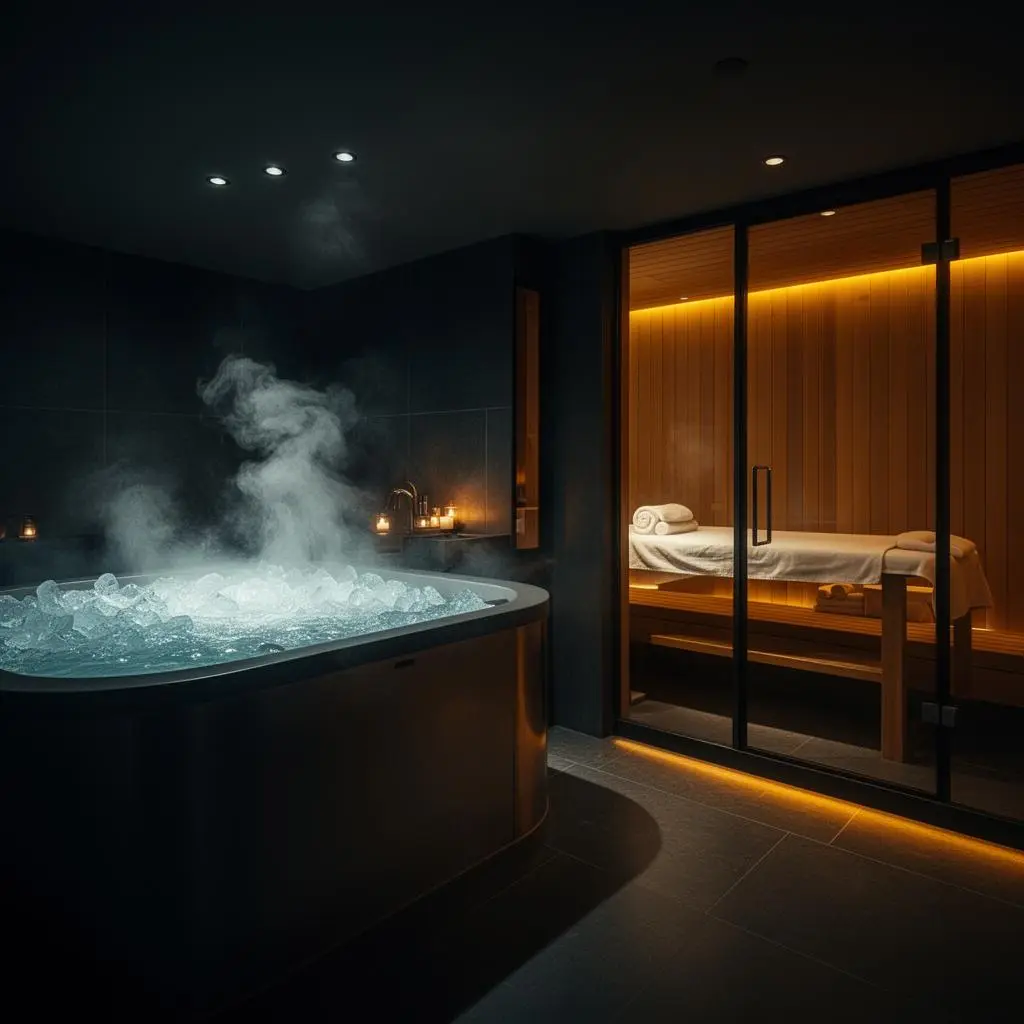
Abu Dhabi's climate makes recovery harder than most cities. A 4°C cold plunge does several useful things at once — and most members feel the difference within a week.
In a city where summer temperatures push past 45°C, an ice bath is more than a recovery fad — it is a genuinely useful tool. The benefits of ice baths go well beyond sore muscles, and in Abu Dhabi's heat the cold plunge does something it cannot do in a cooler climate. Here is what cold-water immersion actually does, and how to use it.
What an ice bath actually is
An ice bath, or cold-water immersion, means submerging the body in water held at roughly 4°C to 15°C for a short period — typically two to five minutes. A proper recovery ice bath, like the one in the RPM recovery suite, holds a stable cold temperature with filtration and circulation, rather than a tub of melting ice that warms up as you sit in it. The stable temperature is what makes the effects reliable.
The cold triggers a cascade of physiological responses: blood vessels constrict, the nervous system shifts, and the body works hard to maintain core temperature. Those responses are where the benefits come from.
The recovery benefit
The best-known benefit is reduced muscle soreness. Cold-water immersion constricts blood vessels and reduces inflammation and swelling after hard training, which lowers the delayed-onset muscle soreness most people feel a day or two after a tough session. For anyone training frequently, that means being able to come back for the next session feeling fresher.
There is a nuance worth knowing: if your specific goal is to maximise muscle growth from a session, immersing immediately afterward may slightly blunt the adaptation signal. The practical fix is simple — use the ice bath on rest days, after conditioning or skill sessions, or a few hours after heavy lifting rather than straight after. For general recovery and feeling good, timing matters far less.
The heat-specific benefit
This is the benefit unique to a hot climate, and the reason ice baths make so much sense in Abu Dhabi. After training in the heat, your core temperature stays elevated, which leaves you feeling drained and slows recovery. A cold plunge drops core temperature efficiently and quickly, far faster than sitting in air conditioning. You walk out genuinely cooled down rather than slowly winding down over the next hour. In a climate this hot, that thermoregulation benefit alone justifies the cold plunge.
The mental and sleep benefits
Cold exposure has effects that have nothing to do with muscles. It triggers a sharp release of noradrenaline, producing a clean, alert focus that many people find more effective than caffeine and which lasts well beyond the plunge itself. Used in the right part of the day, regular cold exposure is also associated with better sleep quality and a more resilient stress response, because deliberately exposing yourself to a controlled stressor trains the nervous system to handle stress better. For people with demanding jobs, this mental and stress-regulation benefit is often the one they keep coming back for.
How to use an ice bath properly
Keep it short and controlled. Two to four minutes at around 4°C to 10°C is plenty for recovery and the mental benefits; longer is not better and can be counterproductive. Breathe slowly and deliberately — the instinct is to gasp and tense, but slow nasal breathing is what turns the plunge from an ordeal into a controlled stressor you can actually relax into. Get in deliberately rather than easing in inch by inch; a committed entry is easier than a hesitant one.
If you are completely new, start with a shorter time and a slightly less cold temperature, and build up. The goal is a controlled, repeatable practice, not a one-off endurance test.
Who should be cautious
Cold-water immersion is a real physiological stressor, so it is not for everyone without advice. Anyone with cardiovascular conditions, high blood pressure, or who is pregnant should get medical clearance first, because the cold causes a sharp cardiovascular response. Never ice bath alone if you are inexperienced, and never combine it with alcohol. Used sensibly by healthy people, it is very safe — but it deserves respect rather than bravado.
Building it into your week
For most people, two to four ice baths a week is a sensible dose — after hard sessions, on rest days, or whenever you need the mental reset. Pair it with the sauna for contrast therapy (alternating hot and cold) for an even stronger recovery effect. In the RPM recovery suite, the ice bath sits alongside a Finnish sauna and an aroma steam room behind the same private door, which makes that hot-cold cycle easy to build into a normal training week.
The bottom line
In Abu Dhabi's heat, the benefits of an ice bath go beyond sore muscles: it cools an overheated core fast, sharpens focus, supports sleep and stress resilience, and speeds recovery between sessions. Keep plunges short (two to four minutes), breathe slowly, get clearance if you have a heart condition or are pregnant, and use it two to four times a week — ideally paired with the sauna for contrast therapy.