Sauna vs Steam Room: Which Is Better for Recovery?
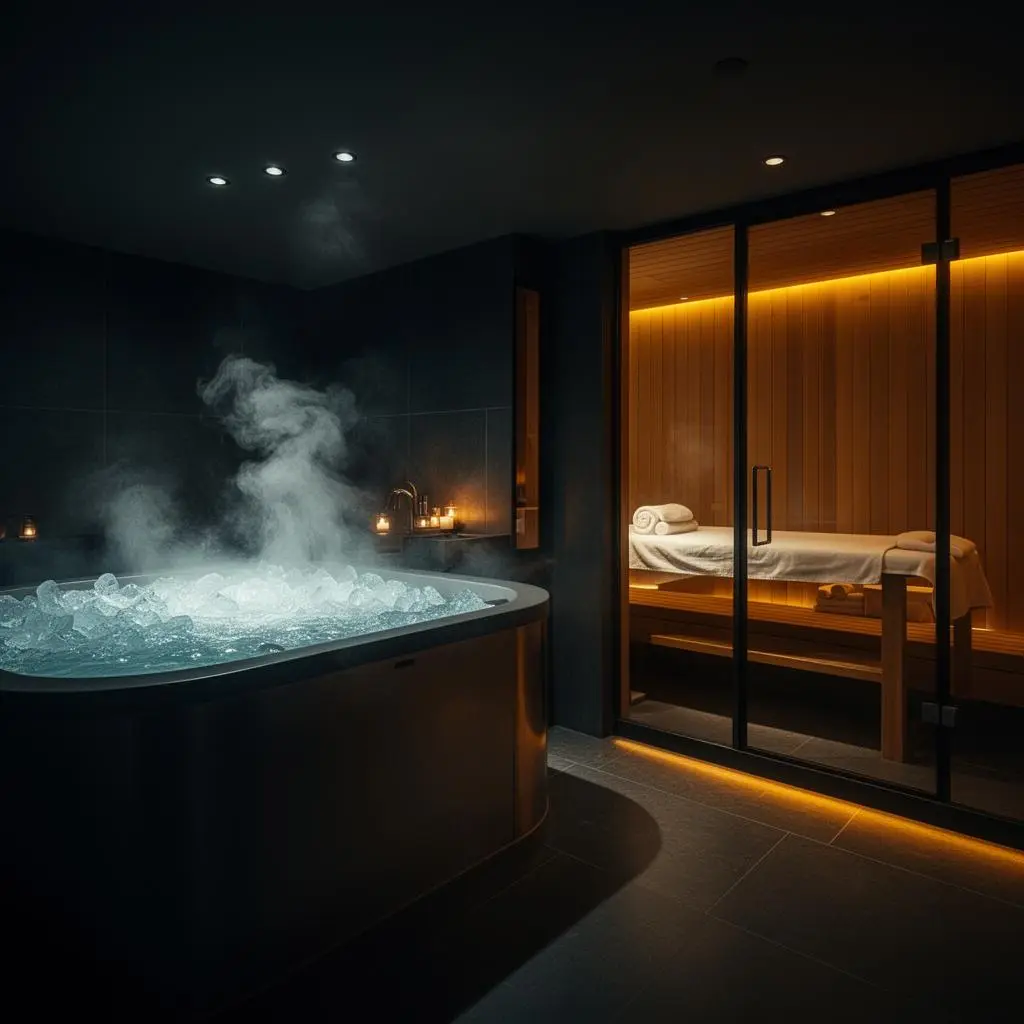
Most premium recovery suites include both a Finnish sauna and an aroma steam room. They feel similar but train your body differently.
Most premium gyms in Abu Dhabi now offer both a sauna and a steam room, and members routinely ask which one they should use. The honest answer to sauna vs steam room is that they do different things, and the best move is usually to understand both rather than pick a winner. Here is how each works, and when to use it.
The core difference: dry heat vs wet heat
A sauna uses dry heat — typically 70°C to 90°C with low humidity, often from a Finnish-style heater. A steam room uses wet heat — lower temperature, around 40°C to 45°C, but close to 100% humidity. That single difference, dry versus wet, drives everything else. Dry heat lets sweat evaporate and feels less intense at higher temperatures; wet heat prevents sweat evaporating, so it feels hotter and heavier on the skin and airways even at a lower temperature.
Neither is hotter in any meaningful sense — they feel hot in different ways and act on the body differently.
What the sauna does
The dry, high heat of a sauna raises your core temperature and heart rate in a way that mimics light cardiovascular exercise. Regular sauna use is associated with cardiovascular benefits, improved circulation and a deep relaxation response, and many people find it the more effective tool for muscle relaxation and winding down after training. The dry environment also tends to feel cleaner and more tolerable for longer sessions.
For post-workout recovery, general relaxation and the cardiovascular-style benefits, the sauna is usually the stronger choice. It is also the half of the pair used in contrast therapy with a cold plunge.
What the steam room does
The wet heat of a steam room is gentler on core temperature but excellent for the skin and airways. The humidity opens pores and hydrates the skin, and many people find it eases congestion and feels soothing for the respiratory system — which is why it is often the preferred choice when you feel a cold coming on or your sinuses are blocked. The moist heat can also feel kinder to tight, achy muscles for those who find dry heat too intense.
For skin, breathing and a gentler, more soothing heat experience, the steam room wins.
When to choose each
Reach for the sauna after a hard workout for muscle relaxation and the cardiovascular benefit, when you want a deep wind-down, or as the hot half of contrast therapy. Reach for the steam room when your focus is skin and breathing, when you feel congested, or when you simply prefer a gentler, more humid heat. There is no rule that you must pick one forever — many members use the sauna on training days and the steam room when they want something softer.
How long to stay in
For both, ten to fifteen minutes is a sensible session for most people. Listen to your body, get out if you feel lightheaded, and never push through dizziness. Hydration matters more than people expect: you lose significant fluid sweating in either room, so drink water before and after. If you are doing multiple rounds, cool down and rehydrate between them rather than stacking long exposures back to back.
Safety and who should be cautious
Heat exposure is a real cardiovascular load. Anyone with heart conditions, low or high blood pressure, or who is pregnant should get medical clearance before regular use. Never use either room after drinking alcohol, and never stay in so long that you feel unwell. Used sensibly, both are very safe — the main risks come from dehydration and overstaying, both of which are easy to avoid.
Combining heat and cold
The most powerful way to use the sauna is as part of contrast therapy: alternating the hot sauna with a cold plunge. The hot-cold cycle drives blood flow, sharpens the recovery effect, and feels excellent. In the RPM recovery suite, the Finnish sauna, aroma steam room and 4°C ice bath sit behind the same private door, so you can run a full contrast cycle — sauna, plunge, repeat — without leaving the suite.
The bottom line
Sauna vs steam room is not a contest — it is a choice of tool. The dry-heat sauna is the stronger pick for muscle relaxation, cardiovascular benefit and contrast therapy; the wet-heat steam room is better for skin, breathing and a gentler experience. Use ten to fifteen minutes, hydrate well, get medical clearance if you have a heart condition or are pregnant, and use the sauna with a cold plunge for the best recovery effect.