Strength measured by what you lift outside the gym
General strength is the kind nobody scores. It shows when you lift a suitcase into the boot at the airport, carry the week's shopping up from a basement car park, or get a sleeping child into a car seat without a twinge. The aim is to find these easy and keep finding them easy as the years go by.
That goal changes what you need from a gym. Instead of chasing one heavy number, you train a handful of movement patterns that cover how the body actually lifts, pushes and carries. See strength training at RPM for one club's floor, and choosing a gym for strength training for how to judge equipment you can progress on.
Six movement patterns and the kit for each
Two options per row is the minimum. Three means a busy hour will never cost you the pattern.
| Pattern | Where you use it | Machine or cable | Free weights | Bodyweight or functional kit |
|---|---|---|---|---|
| Squat | Getting up from a low sofa or out of the car | Leg press | Goblet squat, barbell squat | Squat to a step box |
| Hinge | Lifting a suitcase off the floor | Back extension bench | Romanian deadlift, kettlebell deadlift | Kettlebell swing |
| Push | Lifting a bag into an overhead locker | Chest press, shoulder press | Dumbbell bench press, overhead press | Press-ups against a bench |
| Pull | Hauling a heavy bag or a kayak paddle towards you | Pulldown, seated cable row | Dumbbell row | Sled pull with a rope |
| Lunge | Climbing stairs when the lift is out of order | Leg press one leg at a time | Split squat, walking lunge with dumbbells | Stepping onto a box |
| Carry | Shopping from the car park to your door | Not a machine job | Farmer's carry with dumbbells or kettlebells | Sled push along a turf lane |
Machines teach a pattern with less to balance. Free weights and carries ask you to control the load yourself, which is closer to how loads behave outside.
Walk the table around any gym you are considering. If a row has only one option, find out how busy that station is at your hour.
Two sessions that cover all six
The World Health Organization's 2020 guidelines advise adults to do muscle-strengthening activity that works all the major muscle groups on two or more days a week. Two full-body sessions built from the six patterns can cover that, and they fit an Abu Dhabi week with room to spare, for example one on the weekend and one midweek after office hours.
- Session A: squat, push, pull and carry. For example leg press, dumbbell bench press, seated cable row and a farmer's carry.
- Session B: hinge, lunge, push and pull. For example kettlebell deadlift, split squat, shoulder press and pulldown.
- A third session, when you have time, can repeat whichever pattern feels weakest.
The same guidelines advise starting with small amounts of activity and building up gradually over time. In practice, that means loads you can move with tidy form, then small additions over the weeks.
What an everyday-strength gym can skip
Lifters chasing competition numbers need platforms, calibrated plates and long rack time. You probably do not. That widens your choice, because a well-run general gym will often suit you better than a hardcore one.
- Can skip: platforms, speciality bars, competition benches and a chalk-friendly culture.
- Cannot skip: dumbbells and kettlebells in small jumps, a few machines for learning the patterns, and open floor where you can lunge or carry without weaving between benches.
- Worth having: a turf lane or clear strip for carries and sled work, so the last two rows of the table have a home.
- Worth asking: whether the floor gets crowded at your hour, since a carry needs a clear lane.
Learning the patterns properly
The hinge and the carry look simple, yet both are easy to get wrong without someone watching. A few coached sessions or a well-run group class will teach them faster than videos. RPM runs group classes in both sections. Because the schedule shifts, check with the team which current sessions teach the basic patterns.
For one-to-one help, the roster lists Taha Ragab for general fitness in the Mixed section and Coach Maria for strength and conditioning in the Ladies section. Ask a coach to watch all six patterns in your first session and write down a starting load for each. If you are new to lifting and unsure whether to start alone, read starting alone or with a coach.
Everyday strength at RPM: what fits
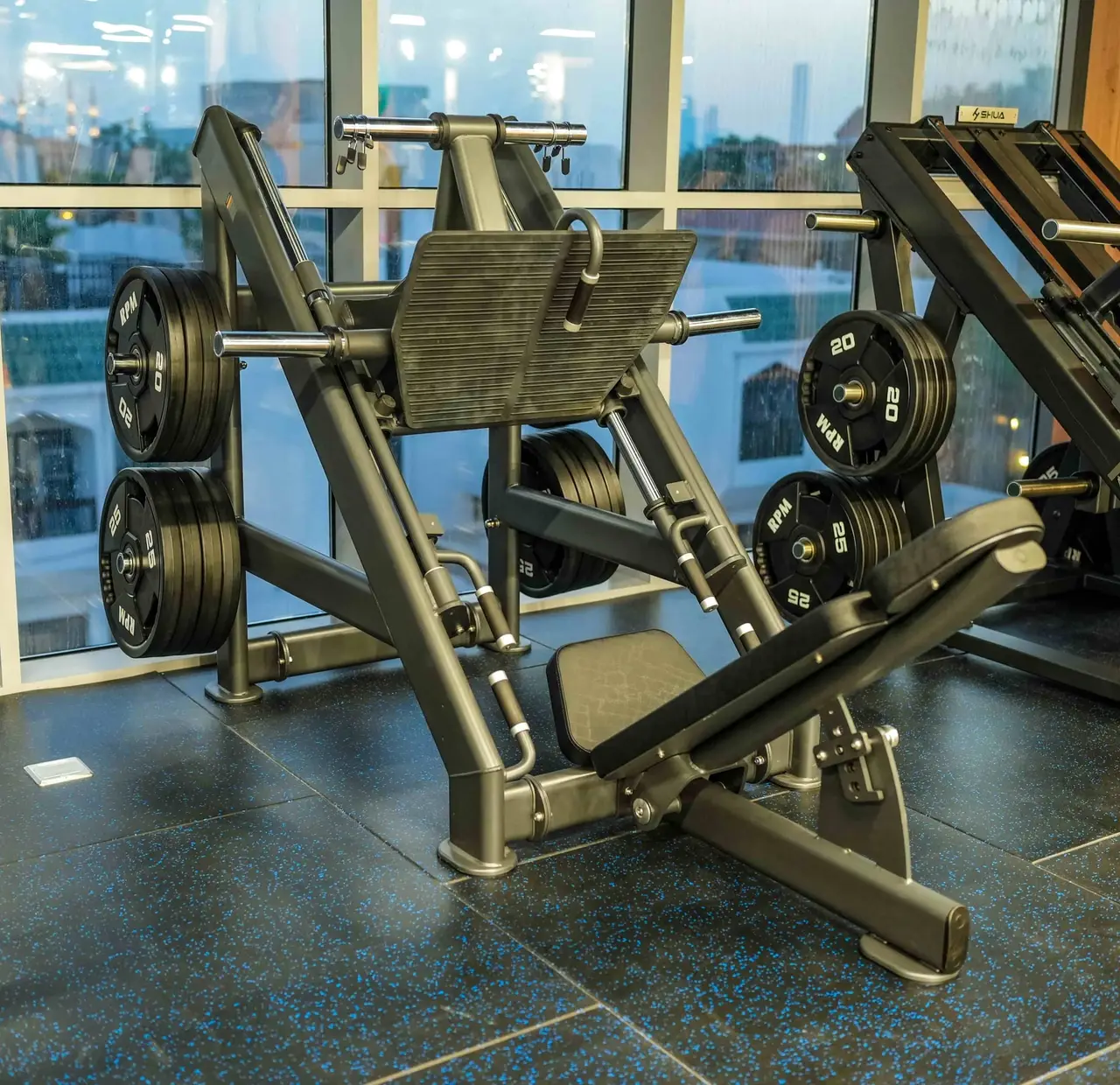
RPM is one club, on Level 4 of AD HUB Sports Complex in Al Manhal. Its floor photos show plate-loaded machines including a leg press and a pulldown, multi-station cable towers, benches, dumbbells and fixed-weight barbells. The functional area adds a turf lane with a sled, plus kettlebells and step boxes. On paper, every row of the table has at least two options there.
The turf lane and sled belong to the Mixed section's functional area. The women-only Ladies section has strength equipment of its own, so women who want to stay there should ask on a free guided tour which carry and hinge options it holds. Men train in the Mixed section. RPM is not a powerlifting gym, which matters little for this goal.
Sources
Questions, answered.
Is general strength the same as powerlifting?
No. Powerlifting tests a one-rep max in three barbell lifts. Everyday strength spreads the work across six patterns at loads you can move for several reps. The serious lifters' guide covers the competitive end.
Do carries need special equipment?
A pair of heavy dumbbells or kettlebells and a clear lane are enough. A turf lane helps, because nobody walks across it mid-set.
How heavy should I lift for everyday strength?
Heavy enough that the last rep or two of each set feels hard but stays tidy. Add load in small steps over weeks, not in one jump.
Can I start if I have an old injury?
Ask your doctor or physiotherapist which movements to avoid or adapt, then tell your coach before the first session. A coach can choose a different option from the same row of the table.