What the extra 15 minutes buys
Thirty minutes gets one lift done properly. Forty-five gets you two, plus time for the smaller exercises that fill the gaps: arms, shoulders, calves, the backs of the thighs. It does not stretch to a long list of exercises with full rests after every set, which is where most 45-minute plans overrun.
The trick is pairing. Do a set of one exercise, then a set of another that uses different muscles, and you rest less overall without rushing either. If 45-minute sessions are your plan, start with RPM's membership tiers to see which one covers the floor at your hours.
A 45-minute template
| Part | Share of the 45 | Example pairing | Keeps it moving |
|---|---|---|---|
| Opening | About 7 minutes | Easy bike, then lighter sets of the first lift | Pick a bike or treadmill within sight of the rack |
| Lift A with a filler | About 13 minutes | Squat, with a plank in each rest | The filler needs no equipment, so nobody can take it |
| Lift B with a filler | About 12 minutes | Dumbbell bench press, with calf raises in each rest | Bench and dumbbells in one spot |
| Accessory pairs | About 10 minutes | Cable row with cable lateral raise, then leg curl with rope pushdown | Use one cable tower for both moves where you can |
| Finish | About 3 minutes | Slow walking, then stretch whatever feels tight | Leave the floor on the 45 |
Loads and reps come from your coach or your programme. The shares flex: if Lift A runs long, take the time from the accessory block, never from the opening.
Session A and session B
Alternate the two. On three visits a week you run A, B, A, then B, A, B the following week. Because each session pairs a lower-body lift with an upper-body lift, every visit works the whole body, so three visits a week train each major muscle group on three days, above the minimum of two that WHO advises for muscle-strengthening.
- Session A: a squat pattern (back squat or leg press) and a horizontal press (bench or dumbbell press), then rows, lateral raises, leg curls and triceps work.
- Session B: a hinge (Romanian deadlift or hip thrust) and a vertical pull (lat pulldown), then overhead press, split squats, face pulls and biceps work.
Keep the two main lifts the same for several weeks and add a little load when the sets feel controlled. Change the accessories more often if you get bored, since they matter less for tracking progress.
Where the extra quarter hour leaks away
Plenty of people with 45 minutes train for 30 and lose the rest. The leaks are predictable:
- The phone between sets. Leave it in the locker, or use it only as a timer.
- Waiting for a station instead of switching to the stand-in.
- Rests that grow because the next exercise is across the floor.
- Choosing exercises on arrival. Write the session down the night before.
- Chatting. Train with a friend by alternating sets on one station, not by standing together between them.
If you often finish with ten minutes to spare, add a set to the main lifts before you add exercises. If you often run over, cut the accessory block. On days when only half an hour is left, switch to the 30-minute plan.
Floor layout that keeps a 45 on time
Pairing only works if both stations are a few steps apart. On a tour, look for these:
- Benches beside the dumbbell rack, so a press and its filler happen in one place.
- Cable towers with several stations, so one person on a tower does not block your accessory pair.
- A rack with room next to it for a plank or a stretch between sets.
- Machines that are quick to set. Plate-loaded machines need plates carried and loaded, which takes longer than moving a pin on a weight stack, so allow for it in the accessory block.
- A short, clear route from the changing area to the floor.
For a floor that is busy at your hour, running your own plan covers swaps for each piece of kit in more detail.
Forty-five-minute sessions at RPM
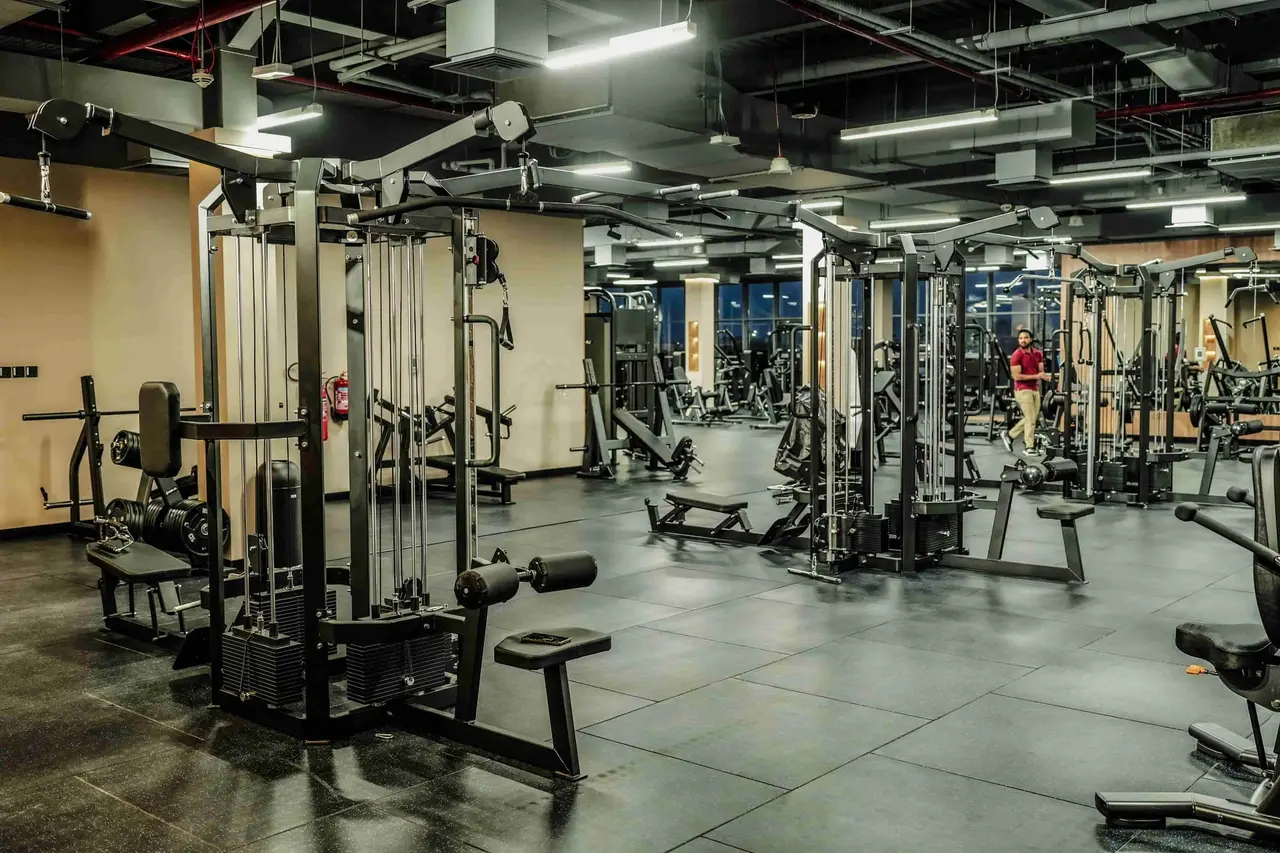
The club sits on Level 4 of AD HUB Sports Complex in Al Manhal, RPM's one location, with free on-site parking and a lift up to the training floor. The training floor photos show multi-station cable towers, benches, dumbbells, a squat rack with colour bumper plates, and plate-loaded machines including a leg press and a pulldown.
Those plate-loaded machines are worth planning for on a 45-minute session: budget the time to load them, or move accessories to the cable towers when you are short. The women-only Ladies section has its own strength and cardio equipment, and men train in the Mixed section.
If you run the A/B plan yourself, ask about Floor. If you want it written for you, ask about Engine, which adds coached programming. RPM shares prices and inclusions when you enquire. It does not publish busy times, so take a free guided tour at your training hour and check the benches and cable stations your pairs depend on.
Sources
Questions, answered.
Should I add cardio to a 45-minute session?
Keep it to the opening few minutes, or give it a separate session. For ways to split time between the two, cardio and weights in one gym compares six orders.
Is 45 minutes better than 30?
It gives you a second main lift and accessory work, which matters more as you gain experience. Beginners can progress on 30-minute sessions, so choose the length you can keep up every week.
Does the 45 include changing?
In this plan it does not: it is time on the floor. If your 45 includes parking and changing, use the 30-minute template instead.
Can a 45-minute class replace it?
It can if the class repeats the same lifts often enough for you to track them. Many classes change the workout every time, which suits general fitness but makes strength harder to measure.