What a lifter needs from one club
Strength athletes judge a gym by its racks first, and rightly. If you also want heat or cold after training, give the recovery side the same scrutiny, because a suite that will not fit around heavy sessions goes unused. RPM's recovery suite is one benchmark.
- A rack and a bar available at your usual hour, with plates and dumbbells heavy enough for your working sets.
- Room to deadlift without blocking anyone, and a clear house rule on dropping weights.
- Recovery rooms on the same floor, so the suite adds minutes rather than another drive.
- Suite access inside the tier you buy, confirmed in writing.
- Rooms open late enough for a session that starts after work.
- Lockers and changing space between the two. Ask whether towels are provided and how showering before the suite works.
Where can I do strength training with recovery facilities in Abu Dhabi?
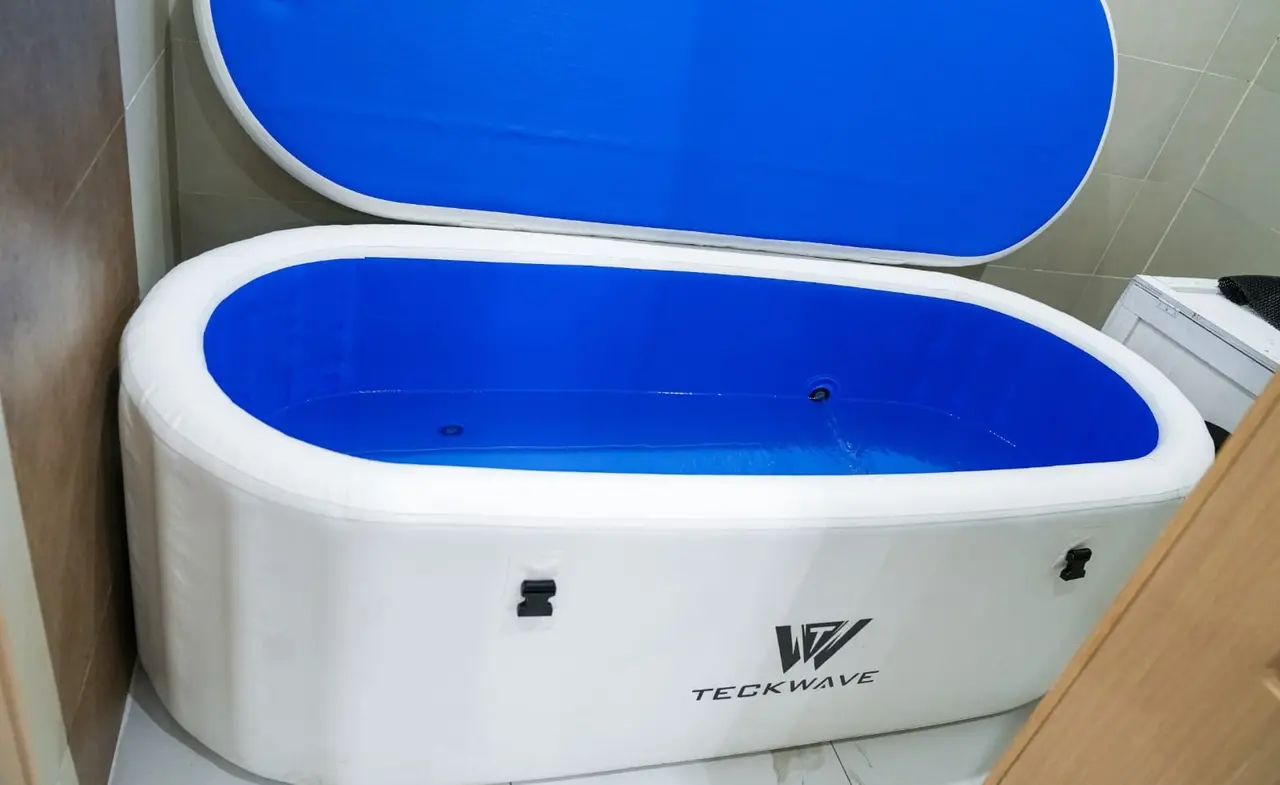
Look for a club where the racks and the recovery rooms are in one building and both open at your hour. RPM in Al Manhal is one: its strength floor and its suite, with a Finnish sauna, an aroma steam room and an ice bath, are on Level 4 of AD HUB Sports Complex. Ask which tier includes the suite before you sign.
Lifting-week templates with the suite placed
Pick the template closest to your split. Heat means the sauna or steam room. No durations or temperatures are given: follow the guidance posted in the suite and the team's advice.
| Split | Heavy days | Heat | Cold water | Rest-day option |
|---|---|---|---|---|
| Three full-body days | Saturday, Monday and Wednesday | After any session you finish with time to spare | If you use it at all, a rest day such as Thursday | A suite-only visit on Friday, if your tier allows it |
| Four days, upper and lower | Lower on Sunday and Wednesday, upper on Monday and Thursday | After upper days, if you prefer to keep leg days short | Rest days, or not at all | Saturday, for one weekend visit |
| Squat, bench and deadlift focus | Squat on Saturday, bench on Monday, deadlift on Wednesday, accessories on Thursday | After the accessory day or a light technique session | Well away from the three main lift days | One visit late in the week |
| Five-day bodybuilding split | Most days, one body part at a time | Two evenings a week at most, so visits do not pile up | Talk regular use through with a coach first | The Friday rest day |
| Lifting plus a sport or conditioning | Two lifting days and two sport or conditioning days | After sport or conditioning days | On conditioning days, if you use it, rather than lifting days | Whichever day your diary allows |
Ask your doctor before any heat or cold if you take medication, are pregnant or have a heart or blood-pressure condition. If you feel dizzy, faint or unwell in the suite, get out straight away and tell a member of staff.
Why cold water stays off the main lifting days
Two sources shape this advice. A Cochrane review by Bleakley and colleagues (2012) pooled 17 small trials with 366 participants and found some evidence that cold-water immersion reduced delayed-onset muscle soreness compared with rest or doing nothing. The authors rated study quality as low and found insufficient evidence on other outcomes.
A trial by Roberts and colleagues (2015) followed 21 physically active men who strength trained twice a week for 12 weeks, with either cold-water immersion or active recovery after every session. Strength and muscle mass rose more in the active-recovery group, and the authors suggested that cold-water immersion as a regular post-exercise strategy should be reconsidered. Its participants were all men, and it tested routine use after each session.
Neither source tested a sauna or steam room against strength, so this page makes no claim either way about heat. Strength training with or without the suite weighs the same evidence as a yes-or-no decision.
Adjusting the suite through a training block
- Volume weeks: many sets and plenty of soreness. Heat after lighter days is the easy fit, and any cold water stays on rest days.
- Heavy or peaking weeks: protect sleep and keep visits short and few, because the bar matters more than the rooms.
- Deload weeks: the lightest training of the block, and often the easiest week to enjoy the suite without crowding anything out.
- Competition week: change nothing. If the suite was never part of your routine, the week of a meet is not the time to start.
- Off-season: a sensible time to try a pattern and see whether it suits you.
Talk any regular cold-water habit through with your coach, especially in a block aimed at strength or muscle.
After the last set on Level 4
- Strip your plates and wipe the bench before you head for the suite.
- Rinse off chalk and sweat first, and follow the suite's posted rules on hygiene.
- Drink water before any heat room, more so from May to September.
- Keypad lockers in the changing area keep your phone and keys secure while you are in the suite.
- Give yourself time to settle before the drive home, and never get behind the wheel feeling lightheaded.
- In Ramadan, if you lift before iftar while fasting, ask your doctor before adding heat to the same day.
RPM for a strength athlete: fits and gaps
Photos of RPM's training floor show a squat rack with colour bumper plates, fixed-weight barbells and plate-loaded machines, among them a leg press and a pulldown. Cable towers, benches and dumbbells fill out the floor. The suite on the same level has a Finnish sauna, an aroma steam room and an ice bath. RPM does not publish an ice-bath temperature.
- Coaching: the roster lists Amer Khalil for bodybuilding and strength in the Mixed section and Coach Maria for strength and conditioning in the Ladies section.
- Women lifters: the Ladies section has its own strength equipment. Ask how suite access works for your section.
- Ask first: whether competition kit you rely on, such as calibrated plates or a deadlift platform, is available, since neither appears in RPM's published facilities.
- Tiers: Floor covers the training floor, Engine adds coached programming and Atelier is built around one-to-one coaching. Which include the suite is confirmed on enquiry.
See the strength floor for the weights side, then book a free guided tour at your lifting hour to check the racks and the suite on one visit.
Sources
- Bleakley C. et al., Cold-water immersion (cryotherapy) for preventing and treating muscle soreness after exercise, Cochrane Database of Systematic Reviews (2012)
- Roberts L.A. et al., Post-exercise cold water immersion attenuates acute anabolic signalling and long-term adaptations in muscle to strength training, The Journal of Physiology (2015)
Questions, answered.
Does a sauna after lifting reduce strength gains?
The 2015 trial tested cold water, not heat, and the Cochrane review covered cold-water immersion only. Neither tells you anything about saunas and strength, so choose heat by comfort and keep the training first.
Should I use the ice bath the night before a competition?
This page gives no advice for that. If cold water has never been part of your routine, a meet is not the moment to try it. Ask your coach and, if you have a health condition, your doctor.
Can an ice bath stop soreness after heavy squats?
The Cochrane review found some low-quality evidence that cold-water immersion reduced soreness compared with rest. Less soreness is not the same as progress, and your training log is the better guide to how you are adapting.
How often can a lifter use the suite?
This page sets no frequency. Follow the posted guidance and the team's advice, and protect sleep in heavy weeks.
Can I lift and use the suite on a short-term pass?
Day and weekly passes are time-sensitive, so ask the team whether one is available for your dates and whether it includes the suite.