Who makes the calls during the hour
A class and a self-guided session can use the same room and even the same kettlebells. The difference is who decides what happens. In a class, the coach picks the exercises, demonstrates them, runs the clock and tells the room when to rest. On your own, every one of those decisions is yours: what to do, how heavy, how long between sets and when to stop.
This page compares the two session formats, not two gyms. If you are still choosing a venue, a gym with a timetable or a floor-only gym covers that decision. For the classes RPM runs and how to get the current timetable, see group classes at RPM.
Structure, technique, company and flexibility, compared
| Coach-led class | Self-guided session | |
|---|---|---|
| Structure | Planned for you, start to finish | Planned by you, or by a programme you follow |
| Warming up | Built in and done together | Easy to cut short on a rushed evening |
| Technique feedback | Demonstrations and quick corrections shared across the room | Mirrors, phone video and your own judgement |
| Progression | Exercises rotate, so loads are harder to track | The same lifts come back, so adding weight is simple to plan |
| Social pull | Regulars, a coach who expects you, a shared finish | Headphones and your own pace |
| Flexibility | A fixed start time, and places can fill | Any time the gym is open |
| Equipment | Set out for the class | Shared with the whole floor, which matters at peak hours |
| Effort | Lifted by the coach and the room | Set by you, on good days and bad |
| Cost structure | Often part of a membership tier, or sold in packs | Covered by floor access |
Read down the column that matches the problem you have now. If you drift on your own, the left column fixes that. If your numbers stopped moving in class, the right column is where progress is easier to plan.
Signs each format will suit you
Coach-led classes tend to work for you if:
- you arrive at the gym and lose ten minutes deciding what to do
- you like to see a movement demonstrated before you try it
- you work harder when the people around you are working
- your week has fixed evenings that line up with a timetable
Self-guided sessions tend to work for you if:
- you follow a written programme and can say why each exercise is in it
- your goal is a heavier squat, deadlift or press, which needs the same lifts repeated
- your free time moves around shifts, school runs or late meetings
- you prefer to train quietly and choose your own rest
What each format quietly costs you
- A class sets one pace for the room. If you are new to a movement, that pace can rush you, so tell the coach and take the easier option.
- Self-guided sessions drift. Without a written plan, many people repeat the exercises they enjoy and skip the ones they need.
- Variety keeps classes interesting, but if no lift comes back often enough, you will struggle to see your strength rise.
- Training alone gives you no outside eye. Film a set of your main lift from the side every few weeks and compare the clips.
- A habit built on one class is fragile. If it is cancelled or moves in Ramadan, the habit can go with it.
- Peak hours hit both. Popular after-work classes fill up, and the floor is busiest at the same time.
Questions to settle first
Ask the coach who runs the class:
- Do the main movements repeat from week to week, or does every session change?
- How do you adjust an exercise for someone newer, or someone with an old injury?
- How many people usually come at this hour?
Ask yourself before going self-guided:
- Can I write down this week's sessions, and how I will add load next week?
- Who will check my technique, and how often?
- What will I do when the equipment I planned on is taken?
To judge whether a class is well coached, comparing coaching quality gives you a sheet to fill in while you watch one.
Worked example: a year of classes, then a plateau
Take a reader who works at a bank in the city and has done three conditioning classes a week for a year. She enjoys them and rarely misses one. Lately she wants to get stronger, but the loads she uses in class barely change because the exercises rotate. She has never trained alone on the floor.
| She weighs | Classes only | Self-guided only | Two classes plus one session of her own |
|---|---|---|---|
| Getting stronger | Slow, since the lifts rotate | Easier to plan, if she follows a programme | One session built on three lifts she repeats |
| Turning up | Easy, the habit is there | Harder without the group | The classes keep the habit |
| Technique | Pointers in class | Her own judgement | She asks the class coach to look at her squat |
| Time | Three fixed evenings | Any time | Two fixed evenings and one flexible slot |
She keeps two classes and turns the third evening into her own session: a squat, a press and a row, written down with the weights she uses. Every fourth week she films her squat. After two months her notebook shows whether the weights are moving, and the classes still give her the group she likes. If progress stalls, she will book a coached session to review the plan, a choice that 1:1 sessions or group classes covers in detail.
Both formats under RPM's roof
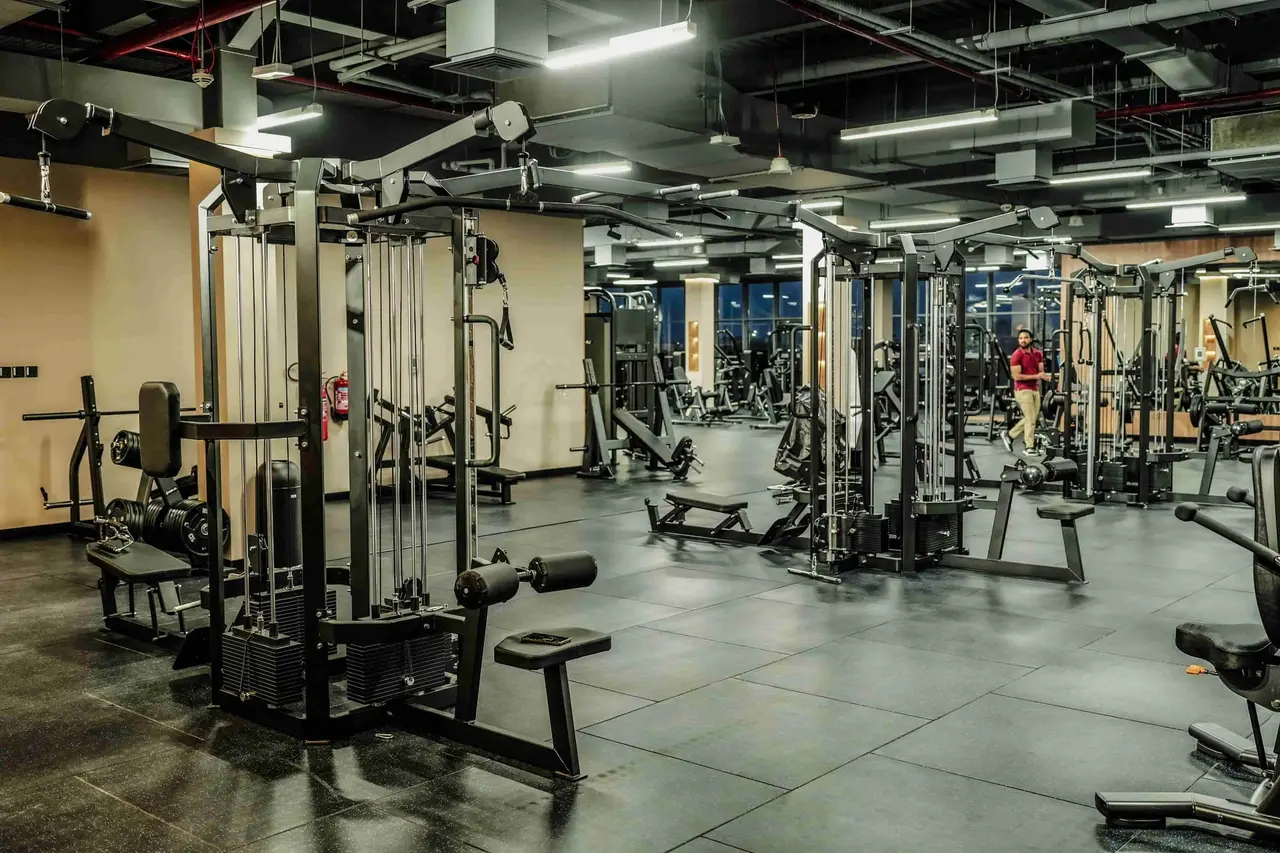
RPM is one club on Level 4 of AD HUB Sports Complex in Al Manhal, with a Mixed section and a women-only Ladies section. Group classes run in both sections, and the timetable changes, so ask the team which classes fall in the hours you can train. For your own sessions, photos of the training floor show plate-loaded machines, multi-station cable towers, benches, dumbbells and a squat rack with colour bumper plates. The functional area has a turf lane with a sled, kettlebells, battle ropes and slam balls, and the Ladies section has its own strength and cardio equipment.
The membership tiers line up with this choice. Floor covers the training floor, Engine adds coached programming and Atelier is built around 1:1 coaching. If you want a plan for the days you train alone, ask how Engine's coached programming works. Inclusions, the sections each tier covers and prices are confirmed on enquiry, and a free guided tour lets you see the floor and the class space at the hour you would train.
| Days | Opening hours |
|---|---|
| Saturday to Thursday | 06:00–23:00 |
| Friday | 09:00–22:00 |
Hours can change, for example during Ramadan. Confirm with the team before a late or early visit.
Questions, answered.
Can I join a class if I normally train alone?
Usually, yes. Ask which classes suit your level, and tell the coach about any injury and any lift you already know well, so they can adjust the session for you.
How do I know I am ready to train on my own?
If you can write out a week of sessions, explain why each exercise is there and set up the main lifts without help, try it. Start with a short plan and review it after four weeks.
Can I use the gym floor while a class is running?
In most gyms the open floor stays available, but a class may take over part of a zone such as the functional area. Ask staff which areas classes use at your usual hour.
What if my class moves during Ramadan?
Timetables often shift towards the evening after iftar. Ask for the Ramadan timetable early, and keep a short session of your own written down as a fallback.