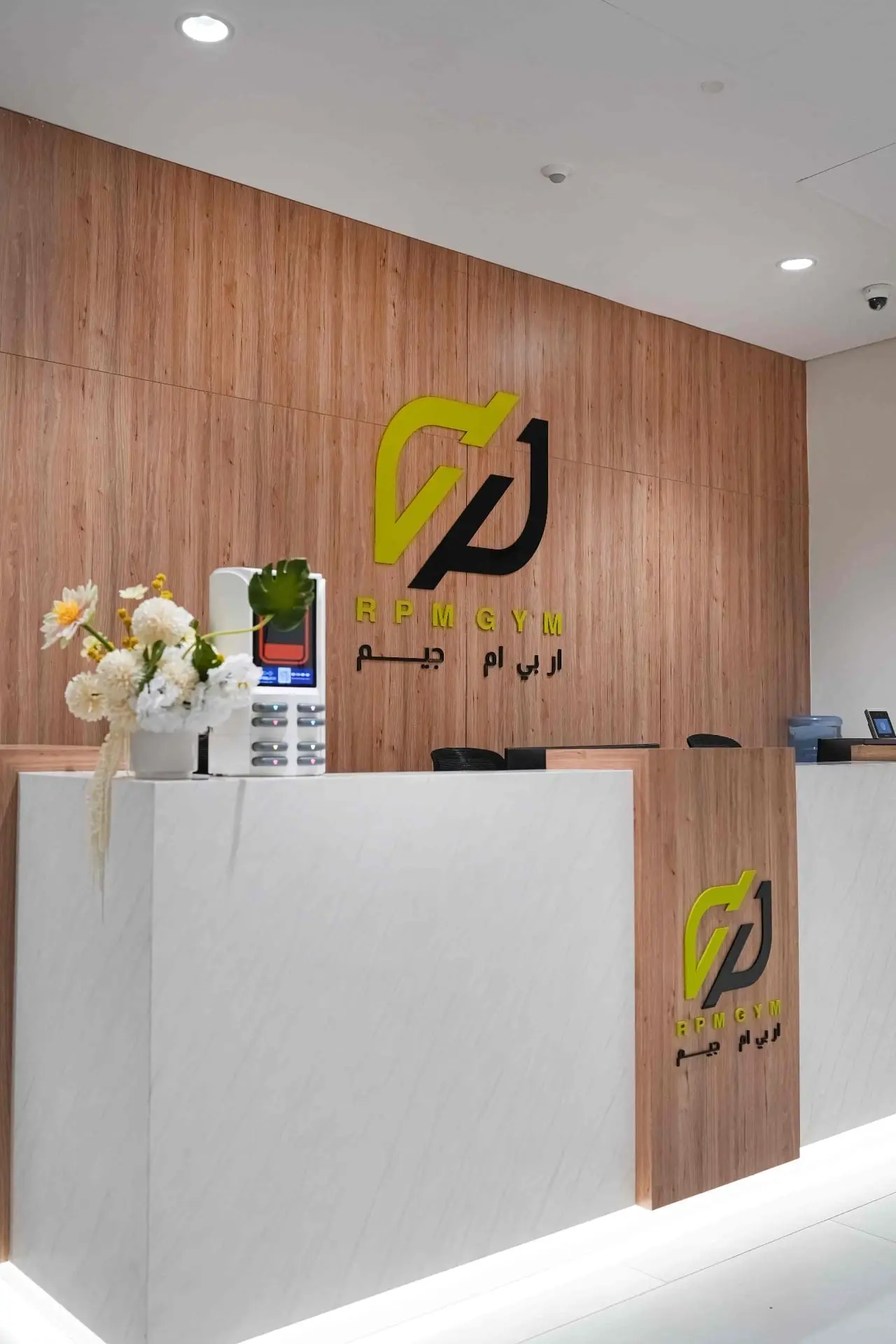
Begin with what you need
In the UAE, people with disabilities are known as People of Determination, and their needs at a gym differ widely. A wheelchair user looks first at ramps and lifts, then at the space between machines. Someone with low vision needs clear signage, good lighting and kit kept off the walkways. A person who finds noise and crowds hard may care most about quiet hours and a calm route in. Write down the two or three things that would decide a visit for you, and judge each gym on those first.
RPM's facilities page shows the club's training areas in photos, which helps you plan questions before you go. The checks below apply to any gym on your list.
From the car park to the front desk
Many Abu Dhabi gyms sit inside complexes, malls or towers, so the route in can be longer than the gym itself. In summer a covered path from the car matters to everyone, and far more to someone who moves slowly or pushes a chair.
Walk or wheel the route yourself, or ask someone to film it for you.
| Point on the route | What to check |
|---|---|
| Parking | Accessible bays, how wide they are, and how far they sit from the lift or entrance |
| Kerbs and slopes | Dropped kerbs or ramps with a gentle gradient and a handrail |
| Doors | Automatic or light to open, with a wide enough opening |
| Lift | Room for a wheelchair, buttons within reach, and Braille or audio announcements |
| Corridors | Width, turning space and nothing stored along the walls |
| Reception | A lower section of desk, or staff who come round to meet you |
On the training floor
- Clear walkways between machines, wide enough to turn a wheelchair, with plates and dumbbells racked rather than left on the floor.
- Cable stations with adjustable pulley heights, which can often be used from a seat or a wheelchair.
- Machines whose seats swing away or lift out, so a wheelchair can roll into position.
- An arm cycle (upper-body ergometer) or a recumbent bike that is easy to step onto.
- Dumbbell racks at a height you can reach, and benches stable enough to transfer onto.
- Flat changes between flooring types, with no raised lips at the edge of the turf or rubber mats.
- Signage in large print or with symbols, and lighting without dark corners.
Ask to try one or two machines you would rely on. A quick test of a cable station or a bench transfer tells you more than any description.
Toilets, changing rooms and lockers
This is where gyms most often fall short, so ask to see the rooms rather than taking a yes on trust.
- An accessible toilet inside the gym, or the nearest one in the building and the route to it.
- An accessible changing room or cubicle with grab rails, a fold-down seat and an emergency pull cord.
- Whether there are accessible showers, and if so, whether they have a seat and a handheld head.
- Lockers at a lower height, with a lock you can work easily.
- Benches at a height you can transfer onto, with space beside them.
For the wider changing-room check, from lock types to privacy, see how to compare changing facilities.
People matter as much as ramps
- Induction: will someone show you the machines and adapt the set-up for you?
- Coaching: has a coach worked with clients with similar needs, and how would sessions be planned?
- Companions: can a carer or support worker come with you, and do they need a pass?
- Assistance dogs: what is the policy, and where would the dog wait while you train?
- Quieter times: when is the floor calm, with less music and fewer people?
- Emergencies: how would staff help you leave the building if the lift could not be used?
The last question matters most at a gym on an upper floor. A clear, specific answer is a good sign. If you have a health condition, your doctor or physiotherapist is the right person to say which training suits you.
A message to send before your first visit
Sending your questions ahead saves a wasted trip and gives the team time to check the answers. Adapt this to your own needs:
"Hello, I use a wheelchair and I am thinking of joining. Before I visit, could you tell me: whether there are accessible parking bays and a route to the gym with no steps, whether the lift fits a wheelchair, whether there is an accessible toilet and changing room, which machines I could use from my chair, and how staff would help me leave in an emergency if the lift were out of use? Thank you."
A reply that answers each point, or says honestly which ones need checking, tells you a lot about how you would be treated as a member.
What RPM has confirmed, and what to ask
Everything at RPM is in one place: Level 4 of AD HUB Sports Complex in Al Manhal. Two parts of the route are confirmed: free on-site parking at AD HUB, then the lift to Level 4. The contact page shows the address and how to find the club. Inside, the club has a Mixed section and a women-only Ladies section, and the changing area has keypad lockers.
Accessible parking bays, the lift's size, accessible toilets and changing, adapted equipment and staff support are not confirmed, so ask the team about each one before you visit. A free guided tour, a walk-through with a member of the team rather than a workout, is a chance to try the route and one or two machines for yourself.
Questions, answered.
Can I bring a carer or support worker to the gym?
Ask before your first visit. Some gyms let a carer come in with a member as a matter of course, others ask for a pass. Get the answer in writing so the front desk knows.
Are assistance dogs allowed in gyms?
Policies differ, so ask the gym directly, and ask where the dog would wait while you train. A gym that has thought about it will have a clear answer.
What if the lift is out of service when I arrive?
Ask on your tour how the gym lets members know when the lift is down, and whether staff would contact you before you travel. For a gym on an upper floor, that is a fair thing to expect.
Do I need a doctor's note to train with a disability?
Gyms differ. Some ask for one with certain health conditions. Either way, your doctor or physiotherapist is the right person to say which training suits you.