What size changes on a normal training day
Floor size is easy to dismiss as décor, but it decides how a session feels: how often you wait, how loud the room is, and how much attention you get. A big floor and a small studio can both be excellent. They are good at different things.
RPM's facilities page walks through one club's areas in order, which shows how a club with several zones is laid out. Use it as a reference point, then judge any gym on your list by the five factors below.
How size plays out on five factors
| Factor | Large gym floor | Small studio |
|---|---|---|
| Equipment range | Several of each common item, plus specialist kit such as sleds, cable towers and plate-loaded machines | A focused set, often chosen for one style of training |
| Waiting | If one rack or bench is taken, another is usually open | One item in use can stall your plan, though fewer people compete for it |
| Atmosphere | Busy and anonymous, with music and movement and a crowd at peak | Quiet and personal, with the same few faces |
| Supervision | Staff and coaches cover a wide area, so you may need to ask for help | A coach can see every person in the room |
| Noise | Dropped weights and music from several zones at once | Usually calmer, though one loud session fills a small room |
Who does better on each
A large floor tends to suit:
- lifters whose programme moves between racks, cables, machines and a sled in one session
- people who train at peak hours and need a fallback when a station is taken
- anyone who likes to train anonymously, headphones in, without being watched
- people who mix strength and cardio with conditioning on a turf lane
A small studio tends to suit:
- beginners who want a coach within arm's reach
- people who find a crowded floor intimidating, including women who prefer fewer onlookers
- anyone following a coached programme where the coach plans every station
- people who are sensitive to noise, or who want a calmer start to the day
Things people notice only after joining
- A big floor can still be crowded. What counts is people per station at your hour, not total size.
- Small rooms magnify one person. A single loud group, or someone holding the only rack, changes everyone's session.
- On a big floor, supervision has to be asked for. Find out whether coaches walk the floor or stay with the clients they are booked with.
- Air conditioning works harder in a packed small room in July. Check how the room feels at your hour in summer.
- Layout matters as much as size. Zones that keep heavy lifting apart from stretching make a large floor feel calmer.
- A large club may contain small rooms. A studio or a separate section inside a big gym can give you both, if your membership covers it.
Questions to settle on a visit
- How many people use the floor, or the studio, at the hour I would train?
- How many of the items I use most are there, and what do I do if they are all taken?
- Do coaches walk the floor, and can I ask them for help without booking?
- Is there a quieter zone or room for stretching and warm-ups?
- Which areas does my membership cover?
Score the answers the same way at every gym. The facilities comparison matrix gives you a weighted sheet for that.
A worked example: a nervous beginner with a lifting goal
Take a reader in her first year of training who wants to get stronger but feels exposed on a crowded floor. She can train after the school run on weekdays and on some Saturday mornings.
| What she needs | Large floor | Small studio |
|---|---|---|
| Help learning squats and presses | Coaches on the floor, if she asks | A coach watching every repetition |
| Equipment for a full-body plan | Everything, with a fallback | Most of it, depending on the studio |
| A calm room | Busy at peak, quieter mid-morning | Calm most of the time |
| Room to progress over two years | Plenty | May run short as she gets stronger |
She starts with a few coached sessions in a quieter space, where she learns the lifts without an audience. After a few months she wants heavier work and more stations, so she moves her main sessions to a larger floor in the calm mid-morning slot and keeps one coached session a week. If one club offers both under one roof, she avoids a second membership.
RPM: open floors with a studio inside
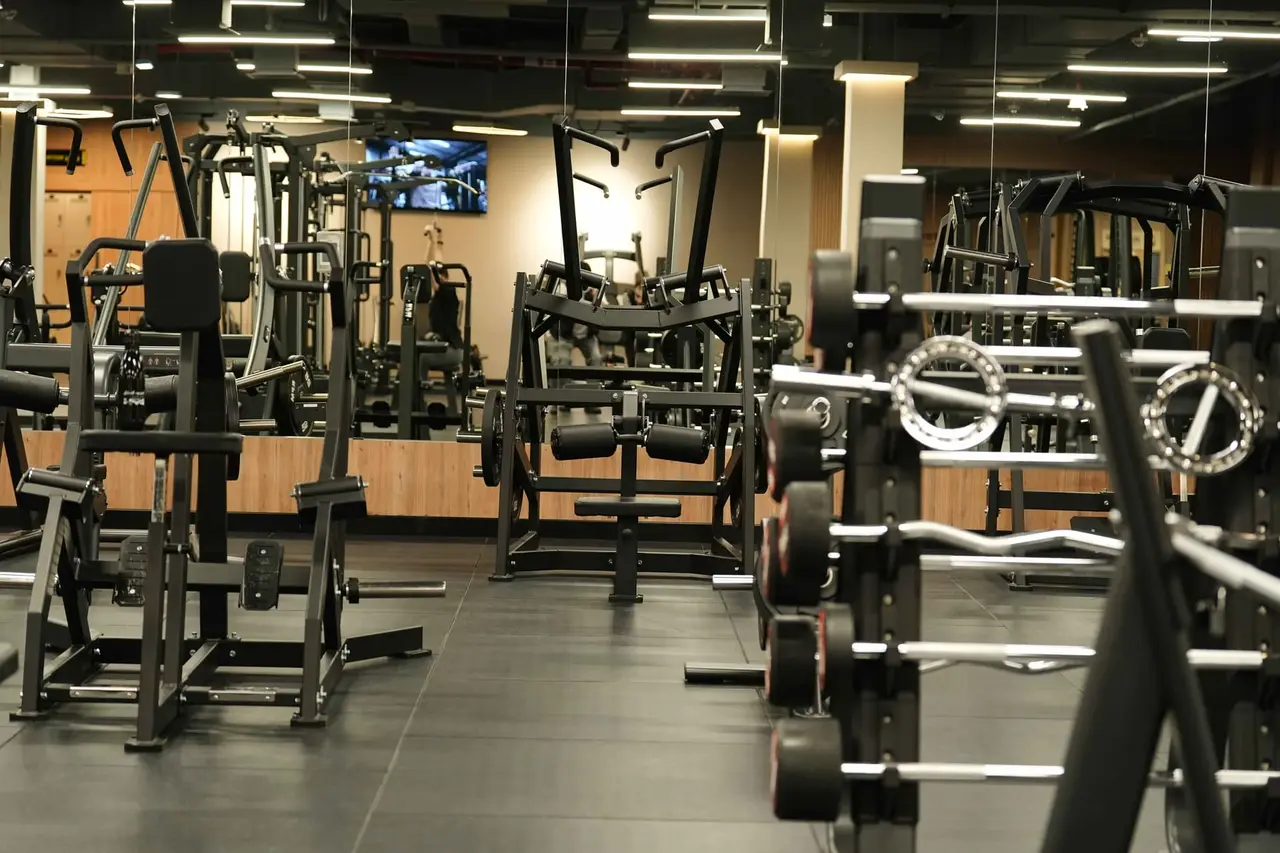
RPM has some of each. It is one club on Level 4 of AD HUB Sports Complex in Al Manhal. Photos of the Mixed section's training floor show plate-loaded machines, multi-station cable towers, benches, dumbbells, a squat rack with colour bumper plates and cardio machines. Beside it, the functional area has a turf lane with a sled. The women-only Ladies section is a separate space with its own strength and cardio equipment and the Pilates studio, and female coaches on the roster work there.
Men train in the Mixed section. Which sections a membership covers depends on the tier, so confirm yours, then visit at your usual hour on a free guided tour to judge the crowd and the noise yourself. The gallery shows the floor before you go.
Questions, answered.
Is a small gym easier for beginners?
Often, because a coach can see you and the room is calmer. A large floor works too if you book a few coached sessions first and train at quiet hours.
Do small studios have enough equipment for strength training?
Some do, especially studios built around small-group strength. Check that the items in your plan are there, in the weights you need, and that you will not be waiting for the only rack.
Is a bigger gym always busier?
No. A big floor with many members can be as crowded per station as a small room. Count people per station at your hour, and use when the gym is least busy to choose when to visit.
Can I find a quiet corner in a big gym?
Many larger clubs have a stretching area or a separate studio. Ask on the tour where people warm up and whether any room is set aside for quieter work.