What each half of the week does
Pilates trains posture and the deep trunk muscles through slow, deliberate movement. Most classes are not designed to keep your heart rate raised for long stretches, so they rarely cover the aerobic part of a week. Cardio does that job, whether it is brisk walking, cycling, a cross-trainer or a spin class.
WHO's 2020 guidelines advise adults to build up 150 to 300 minutes of moderate-intensity aerobic activity a week, or 75 to 150 minutes of vigorous activity, or an equivalent mix of the two. Because the vigorous range is half the moderate one, a minute of hard effort counts for roughly two minutes of moderate effort.
For the studio itself, who can book it and what to ask, see Pilates at RPM. This page is about arranging the week.
The sample week
Built for someone who trains six days, with the weekend on Saturday and Sunday and Friday kept for rest.
| Day | Session | Effort | Minutes towards WHO's range |
|---|---|---|---|
| Saturday | Brisk incline walking on a treadmill for 50 minutes | Moderate | 50 |
| Sunday | Pilates class | Varies with the class | Not counted |
| Monday | Bike or cross-trainer at a steady pace for 45 minutes | Moderate | 45 |
| Tuesday | Pilates class | Varies with the class | Not counted |
| Wednesday | A brisk walk of 30 minutes, outdoors in the cooler months | Moderate | 30 |
| Thursday | Bike intervals: six rounds of two minutes hard and two minutes easy, with an easy warm-up and cool-down | Vigorous in the hard rounds | 12 hard minutes count as 24, plus about 20 easier ones: 44 |
| Friday | Rest | None | Not counted |
The total comes to about 169 moderate-equivalent minutes, inside WHO's range. If 50 minutes is too long for you now, start at half of each figure and add five minutes a week.
Judging effort without a heart-rate monitor
A talk test is the simplest guide, and it works on any machine.
- Moderate: you breathe harder and can still talk in full sentences, but singing would be a struggle.
- Vigorous: you can manage only a few words before taking a breath.
- Too hard for a steady session: you cannot speak at all. Slow down.
- Pilates: some classes leave you out of breath for moments. Count them as Pilates, not as cardio minutes.
If you have a heart condition or high blood pressure, or you are pregnant or postnatal, ask your doctor how hard you should work before adding intervals, and tell your Pilates instructor too.
Which day gets which session
- Steady cardio the day after a class is the easiest pairing, because a Pilates session seldom leaves your legs too tired to walk or ride.
- Keep intervals at least a day away from your hardest class, so you can give each one full attention.
- If a class and cardio must share a day, take the class first while your concentration is fresh, then do steady cardio. Save intervals for another day.
- Friday's shorter opening hours make it a natural rest day, or a day for an easy walk in your own neighbourhood.
- When the week falls apart, keep one class and the longest steady session. They carry the most value per hour.
Indoor cardio for an Abu Dhabi summer
From May to September, indoor machines take the heat out of the plan. Each suits a different kind of session.
| Machine | What it suits | Watch for |
|---|---|---|
| Treadmill | Brisk or incline walking, and steady jogging | Holding the rails on a steep incline takes the work away from your legs |
| Cross-trainer | Steady sessions with little impact | Let your legs drive it, with the arms helping rather than pulling |
| Upright bike | Steady rides and simple intervals | Set the saddle so your knee stays slightly bent at the bottom of each pedal stroke |
| Spin bike or spin class | Intervals, with a group setting the pace | A class can run ahead of your plan, so ride to your own effort |
If you walk outdoors in the hotter months, go early in the morning or after dark, drink water before you set off, and stop if you feel dizzy or sick.
Building up to the full week over eight weeks
- Weeks 1 and 2: two Pilates classes and two cardio sessions of 20 to 30 minutes, all at moderate effort.
- Weeks 3 and 4: add a third cardio session, and five minutes to each one.
- Weeks 5 and 6: swap one steady session for short intervals.
- Weeks 7 and 8: reach the sample week if it still feels manageable. If it does not, stay at the weeks 5 and 6 level for longer.
Pilates and cardio at RPM
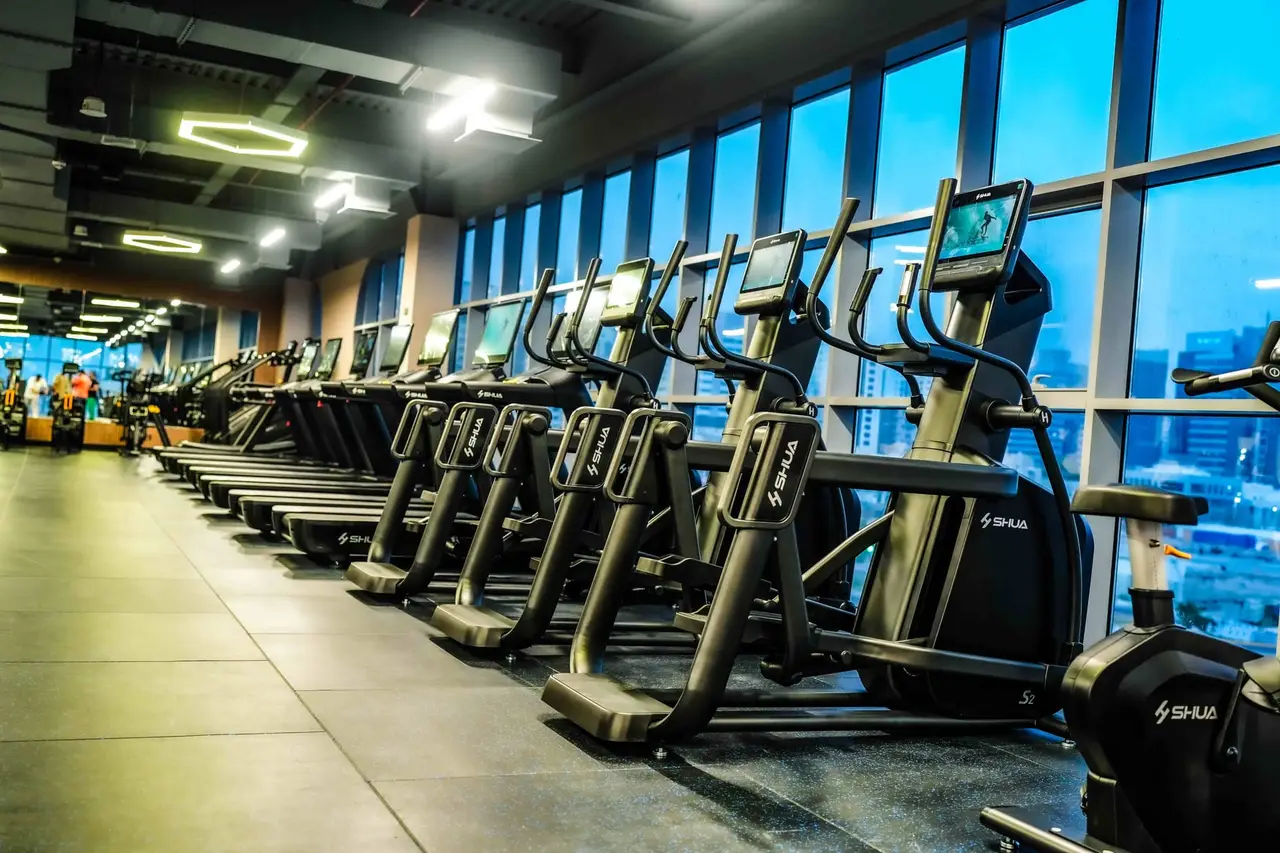
RPM's Pilates studio sits inside the women-only Ladies section, and that section has its own cardio equipment, so a woman can take a class and do her cardio in the same space. RPM has not published which cardio machines the Ladies section holds, so check on a tour. Photos of the club's training floor show treadmills, cross-trainers, an upright bike and spin bikes. Group classes run in both sections and the timetable changes, so ask what is on.
Which sections and sessions a tier covers is confirmed on enquiry. Men can use the cardio side of the Mixed section, described on RPM's cardio page, but the Pilates studio is for women only.
Sources
Questions, answered.
Does a Pilates class count as cardio?
Usually only a little. Most classes are built around control rather than keeping your heart rate up, so count your cardio minutes separately.
What if I can only train three days a week?
Keep two Pilates classes and one longer moderate cardio session, then add brisk walking on other days where you can, even in short bouts. WHO's guidelines note that some activity is better than none.
Will cardio make my Pilates worse?
Not if hard intervals stay away from your most demanding classes. Better aerobic fitness may make long classes feel easier.
I am new to both. Where do I start?
Start with the eight-week build above, and tell the instructor at your first class that you are adding cardio. For the gym side of the choice, improving cardiovascular fitness covers what to look for.