What the building has to do for a beginner
In your first months you will use a narrow slice of any gym: a handful of machines, a rack of light dumbbells, a bench, a mat and one cardio machine. What stops beginners is rarely missing equipment. It is friction: a machine you cannot work out how to adjust, a dumbbell rack that starts too heavy, nowhere to practise a movement without feeling watched, nobody to ask.
This page is about the facility, not the training plan. For help with coaching and classes, or with contract terms, see what beginners should look for in a gym. For a week-by-week first month, see the guide for complete beginners. RPM's facilities page shows the areas of the club, so you can check them against what follows.
Machines that guide and explain
Selector and plate-loaded machines set the path of the movement for you, which is why they are the easiest place to start. Not every machine is kind to a newcomer, though. Look for these on the floor:
- A placard on each machine with a diagram, the muscles it works and the setup steps.
- Numbered seat and pad positions, so you can note your settings and find them again next time.
- A light starting weight. On some selector stacks the first plate is already heavy for a beginner, so ask whether small add-on weights are available.
- One job per machine. Dual-purpose machines that switch between two exercises save space but confuse people who are new.
- Machines grouped in a sensible order, such as legs in one row and pushing and pulling in another, so a simple circuit does not send you across the room.
- Cable towers with pulley heights that are easy to change, and handles kept on hooks beside them.
Then sit in two or three machines on your tour and try to set them up from the placard alone. If you cannot, a beginner on a busy evening will not manage either.
The light end of the weights
Experienced lifters check how heavy a gym goes. A beginner should check how light it starts and how small the steps are.
| Kit | A good light end | When it falls short |
|---|---|---|
| Dumbbells | Very light pairs with small, even jumps between them | The rack starts at a weight you cannot press yet, or pairs are missing |
| Fixed-weight barbells | Light bars for curls, rows and presses while you learn | Only heavy bars, so every barbell exercise means loading plates |
| Plates | Small plates, so you can add weight a little at a time | Big jumps that stall your first presses |
| Kettlebells and medicine balls | Light ones for learning swings, carries and throws | Only heavy ones |
| Selector machines | A first plate that suits a beginner, or add-on weights | A first plate that is already too heavy |
Where the light kit sits matters too. A light rack placed in the middle of the heavy-lifting area puts a beginner in the busiest traffic on the floor.
Room to practise without an audience
Learning a squat, a hip hinge or a lunge takes repetition with light weight or none, often in front of a mirror. That needs space that is not in anyone's way.
- An open mat or stretching area for warm-ups and bodyweight practice, away from the main walkway.
- A mirror you can use without standing in front of a crowded bench.
- A quieter corner, or a time of day when the floor is calm. In Abu Dhabi that is often mid-morning on weekdays, outside the rush after office hours, but check your own gym at your own hour.
- For women who prefer it, a women-only section with its own equipment, so the first months happen away from the mixed floor.
Look at the practice area during your tour. If it doubles as a storage corner or is booked for classes most evenings, it will not be there for you.
Signs, labels and rules you can read
Gyms that suit beginners explain themselves on the walls.
- Weights marked clearly in kilograms, on dumbbells and plates as well as machine stacks.
- Zone signs, so you can find the cable area or the stretching space without asking.
- Posted floor rules on putting weights back, wiping down and dropping weights, so you know the etiquette before anyone has to tell you.
- Wipes and spray stations in obvious places.
- Emergency stop clips on treadmills, with a sign showing how to use them.
Staff on the floor at your hour
Reception staff check you in. What a beginner needs is someone on the training floor itself, easy to spot, who will show a machine setup or fix a seat height mid-session. Ask who covers the floor at the hour you will train, and whether they help with setups or only supervise.
Structured help is a separate question. At RPM, the Engine tier adds coached programming and Atelier is built around one-to-one coaching, while Floor covers the training floor. Inclusions are confirmed on enquiry, and personal training at RPM explains how sessions with a coach work.
A five-minute test to run on any tour:
- Set up two machines from their placards alone.
- Find the lightest dumbbell pair and the one after it.
- Stand in the practice area for a minute and notice whether you feel watched.
- Ask who is on the floor at your hour.
- Ask whether a first session or an equipment walk-through comes with the tier you are considering.
RPM for a new lifter: shown, and to ask
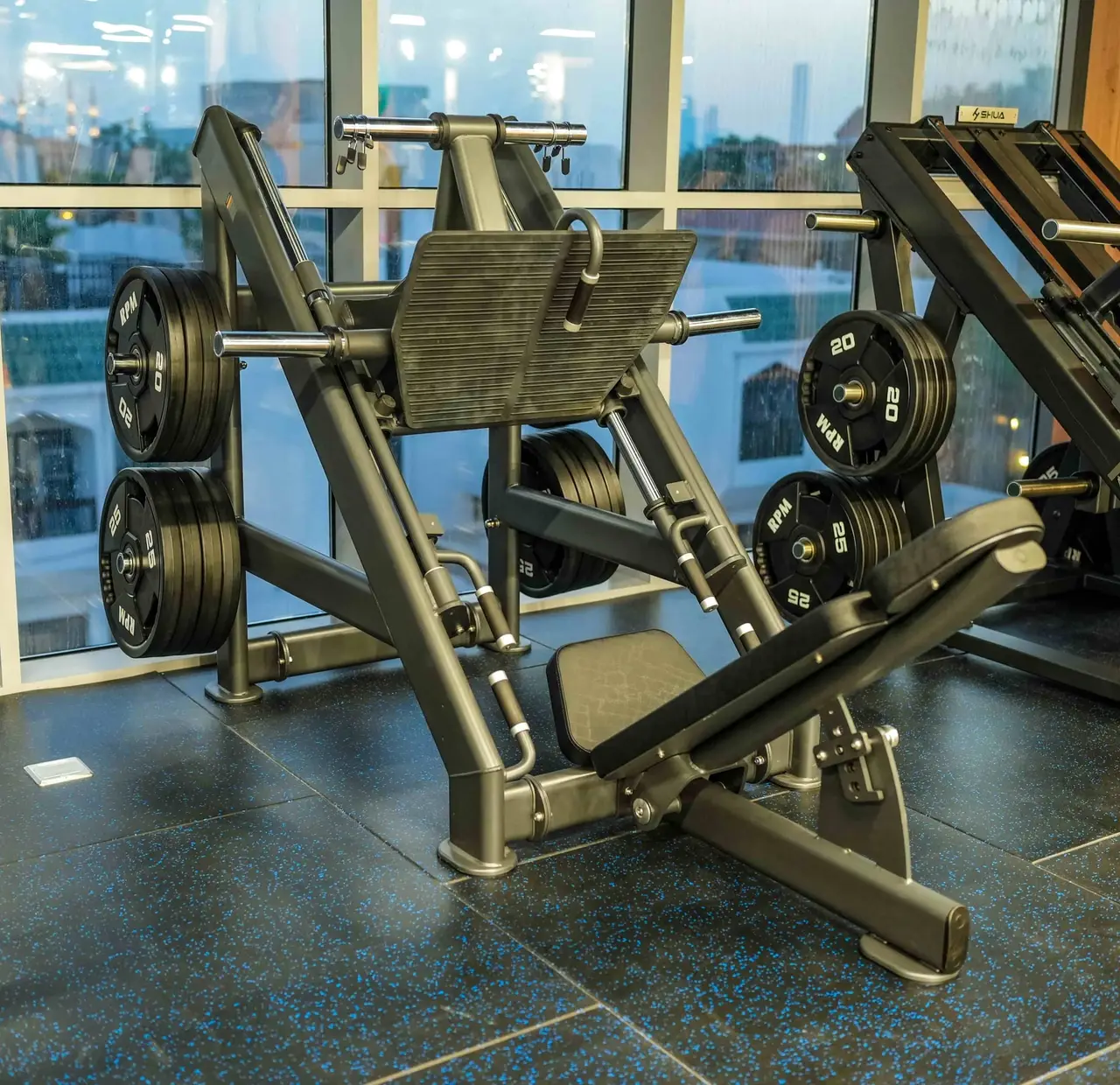
Photos of RPM's training floor show plate-loaded machines including a leg press and a pulldown, cable towers with several stations, fixed-weight barbells, benches and dumbbells. The Ladies section, for women only, has its own strength and cardio equipment, and female coaches on the roster work there. Men use the Mixed section. The coaching roster spans strength, conditioning, Pilates, combat fitness and physique training, in both sections.
Not confirmed here: the lightest dumbbell pair, whether machines carry instruction placards, what a first session includes and who is on the floor at each hour. The free guided tour is a walk-through with a member of the team, not a workout, which makes it the right moment to run the test above and ask.
Questions, answered.
Is it awkward to use the lightest weights on a busy floor?
Most people on any floor started there, and the regulars are busy with their own sets. Pick the weight that lets you do every rep well. Moving up in small steps is the point, not a sign you are behind.
What if I cannot work out how to adjust a machine?
Ask staff to show you once, then note the seat and pad numbers in your phone, and next time you will set it up in seconds. A gym where nobody is around to ask at your hour has a facility problem, not you.
How do I know the staff will actually help?
Watch them on your tour. Staff who walk the floor, put weights away and talk to people at their stations will usually help a newcomer too. If the only staff you see are behind the desk, ask who you would go to mid-session.
Should I see a doctor before starting at a gym?
If you have a health condition or an old injury, or you are unsure, yes. Ask your doctor before you start, and tell any coach you work with. A gym can adapt how you train, but it cannot judge your medical situation.