The core kit for every session
Start with a list that never changes. Whatever you are training tomorrow, these go in the bag the night before, so a rushed morning cannot leave one behind.
| Item | Why it earns a place | Check before you go |
|---|---|---|
| Training shoes | Grip, and a stable base under a load | Soles clean enough for an indoor floor |
| Clothes you can squat and reach in | Nothing pulls or rides up halfway through a set | That leggings stay opaque when you bend |
| A filled water bottle | Sweat rates differ a lot from one person to the next | Where you can refill it at the club |
| A small towel of your own | For your face, and to lay on a bench or mat | Whether the club provides towels: ask |
| A bag for used kit | Keeps damp clothes away from everything else | A washable drawstring bag does the job |
| Phone and keys, plus a card | Getting in and getting home again | Keep valuables to these, nothing more |
If you have booked coached sessions, ask your coach what the first one needs. Some want flat shoes for a lifting session, others plan a few easy rounds in the functional area. Personal training at RPM runs in both the Mixed section and the women-only Ladies section, so the coach can tell you which part of the club to head for.
Extras by session type
Add these to the core kit for the session you have planned.
| Session | Add to the bag | Ask the team |
|---|---|---|
| Strength on the training floor | Flat-soled shoes, and a notebook or phone for your log | Whether chalk is allowed |
| Treadmill or spin bike cardio | Running shoes for the treadmill, a second top for long sessions | Whether the spin bikes take clip-in cycling shoes |
| Functional area with the sled and kettlebells | Trainers with a firm grip on turf, and a light layer for between rounds | Any shoe rules for the turf lane |
| Fitness boxing | Hand wraps, plus gloves if you own a pair | Whether gloves can be borrowed for a first session |
| Reformer Pilates in the Ladies section (women only) | Grip socks and close-fitting clothes | Which socks the studio expects |
Clothes and shoes get a fuller treatment, including sports hijabs and dressing for a mixed floor, in what to wear to the gym in Abu Dhabi. This page sticks to what goes in the bag.
Hygiene items that keep shared kit cleaner
Health bodies give simple advice for anyone who uses shared equipment and changing rooms, and most of it turns into things to pack. The US Centers for Disease Control and Prevention (CDC) tells athletes to clean their hands before and after using shared weight-training equipment, to avoid sharing towels and to wash towels and training clothes after each use. The NHS advises wearing flip-flops in places such as changing rooms and showers, and not sharing towels, socks or shoes.
- Hand sanitiser, for before and after the weights area.
- Flip-flops or sliders for the changing area.
- Your own towel, used only by you.
- A drawstring bag, so used clothes and the towel go straight into the wash at home.
- Deodorant and any toiletries you rely on. The grooming hub has products, but ask which ones before you leave your own at home.
This is everyday hygiene, not medical advice. A cut, rash or skin problem that worries you is a question for a doctor before you share equipment.
Water and fuel for an Abu Dhabi session
Between May and September, the trip from the car park to the lift can warm you up before the first set, and chilled indoor air hides how much you are sweating. The American College of Sports Medicine's position stand on fluid replacement notes that sweat rates vary considerably between individuals and recommends a customised approach rather than one amount for everyone. In practice, drink normally through the day, arrive with a full bottle and drink between sets.
| When you train | Pack alongside the water |
|---|---|
| Early morning | A small snack if you train before breakfast and tend to feel flat |
| Lunch break | Lunch, ready to eat at your desk afterwards |
| After work | A snack for the drive home if dinner will be late |
| In Ramadan | Whatever suits the hour you actually train, which may move to the evening |
Ask where you can refill a bottle at the club. Anyone told by a doctor to limit fluids, or with a heart or kidney condition, should follow that doctor's advice on drinking.
The work-day add-on
Training before work, or at lunch, adds a second list. Pack it so the change back into work clothes is quick and nothing creases.
- Work clothes rolled or folded flat, or on a hanger left in the car.
- A small washbag that lives in the gym bag, so toiletries never get forgotten.
- Hair ties, a brush and whatever you use to style your hair.
- A spare pair of socks.
- Work shoes, so trainers stay out of the office.
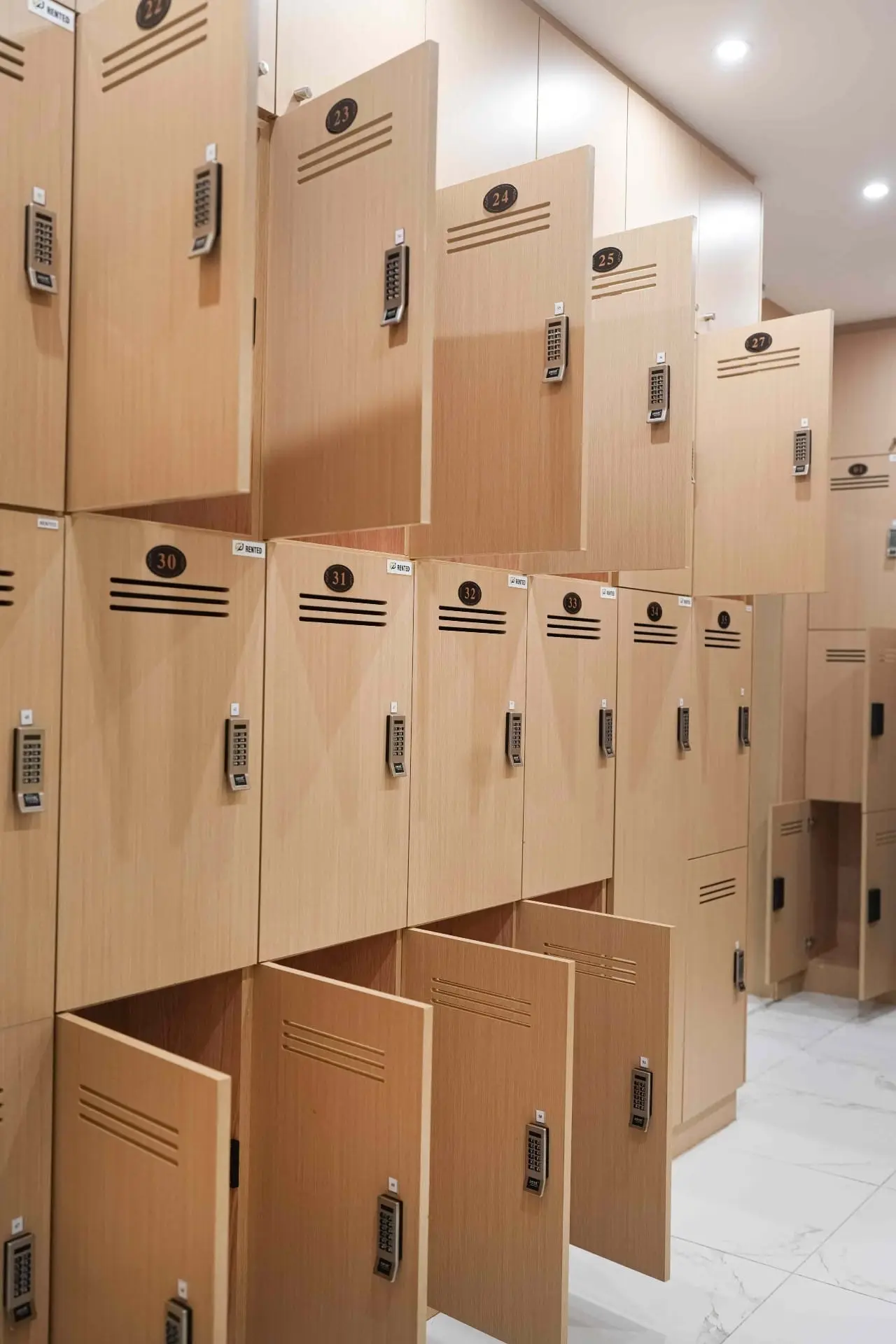
At RPM, the grooming hub has a vanity area with hairdryers and products, and the changing area has keypad lockers. Whether towels and showers are available is not confirmed, so ask before you build a before-work routine around them. For timing a morning session around the getting-ready, see training before work with a grooming hub.
Better left at home
- A laptop bag you have not measured against the locker. Ask how big the lockers are first.
- Large amounts of cash, or anything you would hate to lose.
- Glass bottles, which do not mix with dropped dumbbells.
- Kit that is still damp from yesterday.
- A full-size wash kit when two or three small bottles would do.
Keypad lockers mean you lock up with a code rather than a key, so there is no padlock to remember at RPM. Pick a code you will recall after a hard session, and keep it to yourself.
A packing routine that survives a busy week
| When | What to do |
|---|---|
| The night before | Pack the core kit, then the extras for tomorrow's session |
| As you leave | Fill the bottle and check for phone, card and keys |
| After training | Used kit and the towel straight into the drawstring bag |
| Back home | Empty the bag, wash the kit, restock the washbag |
| Once a month | Replace the sanitiser, check the grip on your shoes, wash the bag itself |
If your week is unpredictable, keep a spare top and socks in the car with an empty bottle. A forgotten bag then costs you a session's comfort at most, not the session.
Sources
Questions, answered.
Do I need a padlock for the lockers at RPM?
No. The changing area has keypad lockers, so you set a code. Ask the team how large they are if you carry a work bag or a laptop.
Should I bring my own towel?
Yes, until you know otherwise. Whether RPM provides towels is not confirmed, so ask. Both the CDC and the NHS advise against sharing towels, so keep yours for your own use.
Can I bring a protein shake or a snack?
Most people carry a shaker or a snack for after the session. Ask where food and drink can be used, because many clubs keep food off the training floor.
What should I bring to a free guided tour?
Very little. RPM's free tour is a walk-through with a member of the team, not a workout, so everyday clothes are fine. Bring your questions, including which sections your membership would cover.
Is a lifting belt worth packing as a beginner?
Not at the start. Learn the lifts first, then ask a coach whether a belt would add anything. How to breathe and brace when lifting covers the bracing that comes before any belt.