What a beginner needs from each side
A new boxer and a new lifter want the same thing from a gym: someone who teaches the basics before letting you go hard. On the boxing side that means beginner sessions, a coach who corrects your stance and hands, and a straight answer on gloves and wraps. On the gym side it means an introduction to the machines and a simple plan, so you are not guessing on the floor.
Having both in one club matters more for a beginner than for anyone else, because early habits are fragile. One membership and one drive through the evening traffic are easier to keep up than two. See boxing at RPM for how sessions are arranged there.
Your first month, week by week
A starting split for someone with three or four spare evenings a week. Technique sessions are coached boxing, in a class or one-to-one. Gym sessions are short and simple.
| Week | Boxing technique | Gym sessions | What to focus on | Move on when |
|---|---|---|---|---|
| 1 | 2 sessions: stance, guard, footwork and the jab | 1 session: a walk-through of the machines with light full-body work | Learning positions, not getting tired | You can hold your guard while moving |
| 2 | 2 sessions: jab and cross, and first pad work with the coach | 1 or 2 sessions: leg press, pulldown, a row and a goblet squat | Hands back to your face after every punch | Jab and cross land cleanly on the pads |
| 3 | 2 sessions: add hooks and your first short bag rounds | 2 sessions: the same lifts, slightly heavier | Wrapping your hands without help | You finish bag rounds with your form intact |
| 4 | 2 or 3 sessions: combinations on bag and pads, plus a little conditioning | 2 sessions: add carries and a simple trunk block | Breathing and loose shoulders during rounds | The coach suggests longer or harder rounds |
| Week 5 onwards | Bag and pad rounds become the main event | Lifting builds steadily, kept off the day before boxing if your shoulders feel tired | A plan for the next block, agreed with your coach | You can say what you are training for |
If you have a medical condition, or an old injury to a wrist, shoulder or back, tell the coach in week 1 and follow your doctor's advice.
What a first technique session teaches
- How to stand side-on with your weight balanced, so you can move and punch without tipping over.
- The guard: hands up, elbows in, chin down.
- Footwork: stepping without crossing your feet.
- The jab and the cross, each one snapped out and pulled straight back.
- Wrapping your hands, and how tight is tight enough.
- Simple defence, such as slipping a punch on the coach's call.
Nothing in month one should involve being hit. Sparring is a separate question to ask much later, and plenty of people never spar at all.
Gym sessions that back up your boxing
Your first gym sessions are not about big numbers. They teach you the machines, build the habit, and strengthen what boxing leans on: legs for your stance, upper back for your guard, trunk for rotation.
- Legs: leg press or goblet squat, two or three sets.
- Upper back: a pulldown and a seated or cable row.
- Pushing: a light chest press or press-ups, kept easy in boxing weeks.
- Trunk: carries and planks rather than endless crunches.
- Grip: carries again, which also help wrist control on the bag.
Two short sessions a week is plenty in month one. Keep heavy shoulder work off the day before a pad session. For a longer-term weekly plan, see boxing plus weights or boxing only.
Fitting both into an Abu Dhabi week
- Evenings after office hours are busy on most gym floors. Ask when beginner boxing runs before you plan the week around it.
- Saturday and Sunday mornings suit a gym session if weekday evenings are taken.
- Friday has shorter hours, so many people make it a rest day.
- In Ramadan, many people train after iftar and drop to lighter technique work. Ask your doctor first if you have a health condition and plan to train while fasting.
- From May to September, arrive a few minutes early to cool off and drink water before your first round.
A beginner boxer who lifts, at RPM
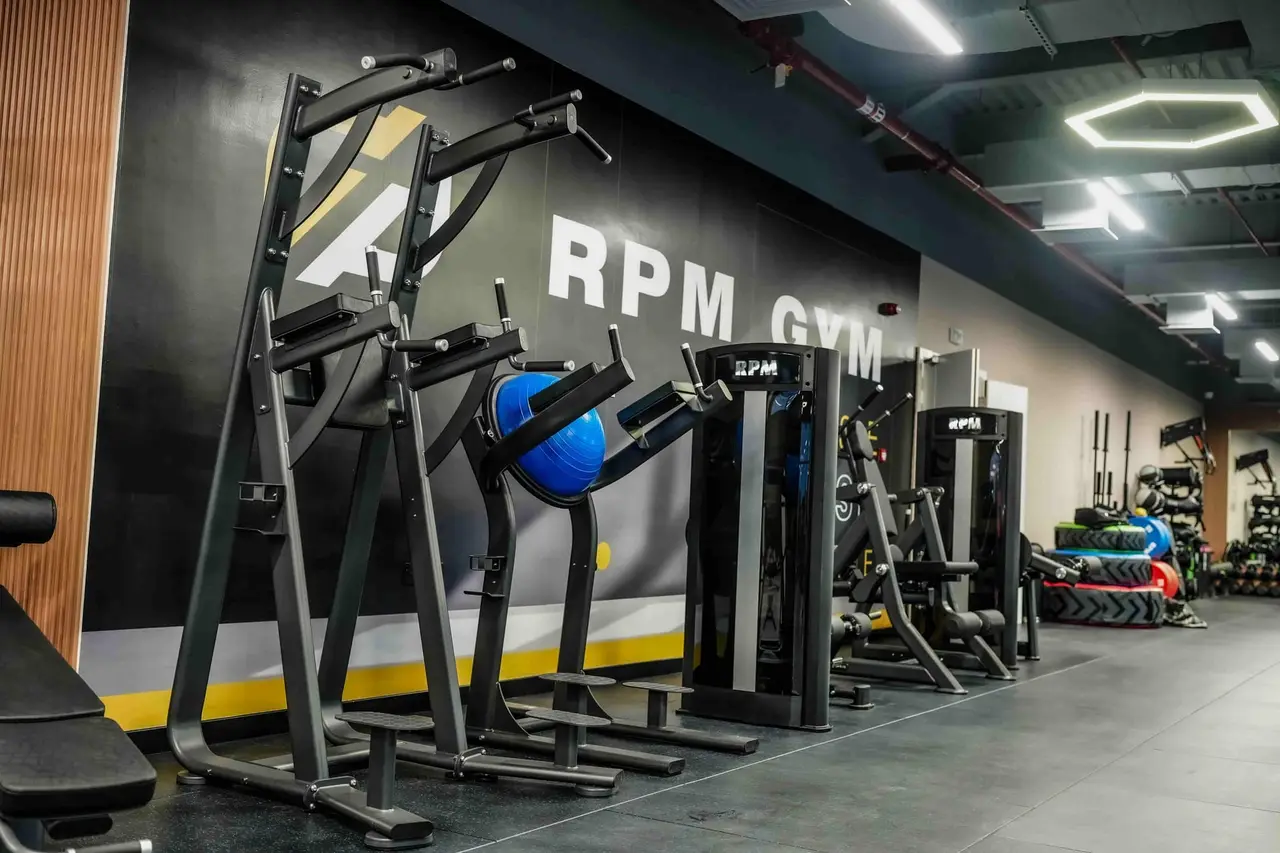
At RPM, fitness boxing means bag work, pad work and conditioning, and it runs in the functional area of the Mixed section, in the same club as the weights floor. The training-floor photos show plate-loaded machines such as a leg press and a pulldown, along with cable towers and dumbbells, which covers every lift in the table. Ask the team what the boxing set-up includes beyond bags and pads, and see sparring as something to ask about, never a promise.
- Women: the Ladies section roster lists Imen Hasnaoui as the combat and self-defence coach, and the section has its own strength equipment, so a woman can ask about doing both halves of the month in a women-only space.
- Kit: ask whether to bring your own gloves and wraps.
- Membership: Floor covers the training floor, Engine adds coached programming and Atelier is built around one-to-one coaching. Which tiers include boxing sessions is confirmed on enquiry.
- Not a fit: if you already know you want to compete, start at a boxing club.
Book a free guided tour and ask to see where beginner sessions run.
Questions, answered.
Should I learn in a group or one-to-one?
Either works. One-to-one gets you more corrections per minute, and a group is usually cheaper and more sociable. Some people take a few private sessions first, then join a group.
When will I hit the heavy bag?
Usually within the first two or three weeks, once your stance and guard hold. Short rounds come first.
Could weight training make my punching slower?
Many boxers lift as part of their training. In month one, keep technique as the priority and lift with control rather than to exhaustion.
Do I need to be fit before I start?
No. Week 1 is about positions, not fitness. The conditioning comes with the rounds.
Can I start with boxing and add the gym later?
Yes. If two new things at once feels like too much, box for two weeks, then add the first gym session. The boxing conditioning guide shows where the rounds lead.