Machines are a way to train, not a stage to pass
Plenty of people train on machines for years by choice. A fixed path, a seat that holds you in place, a weight you can change in seconds and no need for a spotter are good reasons to prefer them. If that is you, judge a gym by its machines first and its barbells second.
Machines are not all alike, though. The three main types load differently and suit different jobs, and a floor heavy on one type can leave gaps. For how one club splits its floor, start with RPM's gym overview. For how machine-led gyms compare with free-weight gyms in general, read free weights or machines.
Plate-loaded, pin-loaded and cables compared
Pin-loaded machines are also called selectorised. Most well-stocked floors mix all three.
| Type | How the weight goes on | Suits | Suits less well | Adjustment tip | Watch for |
|---|---|---|---|---|---|
| Plate-loaded | You slide plates onto horns, as on a barbell | Heavy leg and back work alone, lifters moving away from barbells | Quick circuits, since loading takes time | Line your working joint up with the pivot before you load | The weight of the empty arm or sled, which adds to your plates |
| Pin-loaded stack | You move a pin in a stack of plates | Short sessions, beginners, sets where you drop the weight | Strong lifters who reach the top of the stack | Set the seat height first, then the start position | Big jumps between plates in the stack |
| Cable station | A stack or plates pulls a cable through a pulley | Angles, one arm at a time, isolation work, warm-ups | Very heavy pressing or leg work | Set the pulley to the line of the movement | Missing attachments and shared towers at peak hour |
On a tour, try one machine of each type you plan to use, with your own working weight.
Setting up any machine in under a minute
- Find the pivot. Many machines mark it with a coloured dot or label.
- Adjust the seat so the joint you are training lines up with that pivot.
- Set the back pad and any thigh or ankle pads so you cannot slide.
- Set the range limiter or start position, if the machine has one.
- Choose a weight you can move for every planned rep, then do one light test rep.
- Write the settings in your log, so the next session starts in seconds.
Ask staff to walk you through any machine you have not used. A good gym expects the question and answers it without a sales pitch.
When the next pin is too heavy
Pin-loaded stacks often jump in steps that are too big for slow progress, especially on upper-body machines. Machine trainers stall here more than anywhere. These options keep you moving without leaving the machine.
- Add reps at the same weight until you clear the top of your rep range, then move the pin.
- Slow the lowering phase, so the same weight asks more of you.
- Pause at the hardest point of each rep for a second or two.
- Ask whether the gym has small add-on weights that sit on top of a stack.
- Train one side at a time where the machine allows it.
- Move the exercise to a plate-loaded machine, where small plates make smaller jumps.
What a machine-heavy floor should get right
- Working order. Cables without fraying, pins that seat cleanly, adjusters that lock.
- A machine or cable option for every body part in your plan. The muscle-gain coverage table lists what trains what.
- Space between machines, so you can step in and out without waiting for the next person.
- Wipes or spray within reach, and people using them.
- No long queues on your key machines at your hour. Visit after office hours on a weekday to see the worst case.
Machines at RPM: shown and to confirm
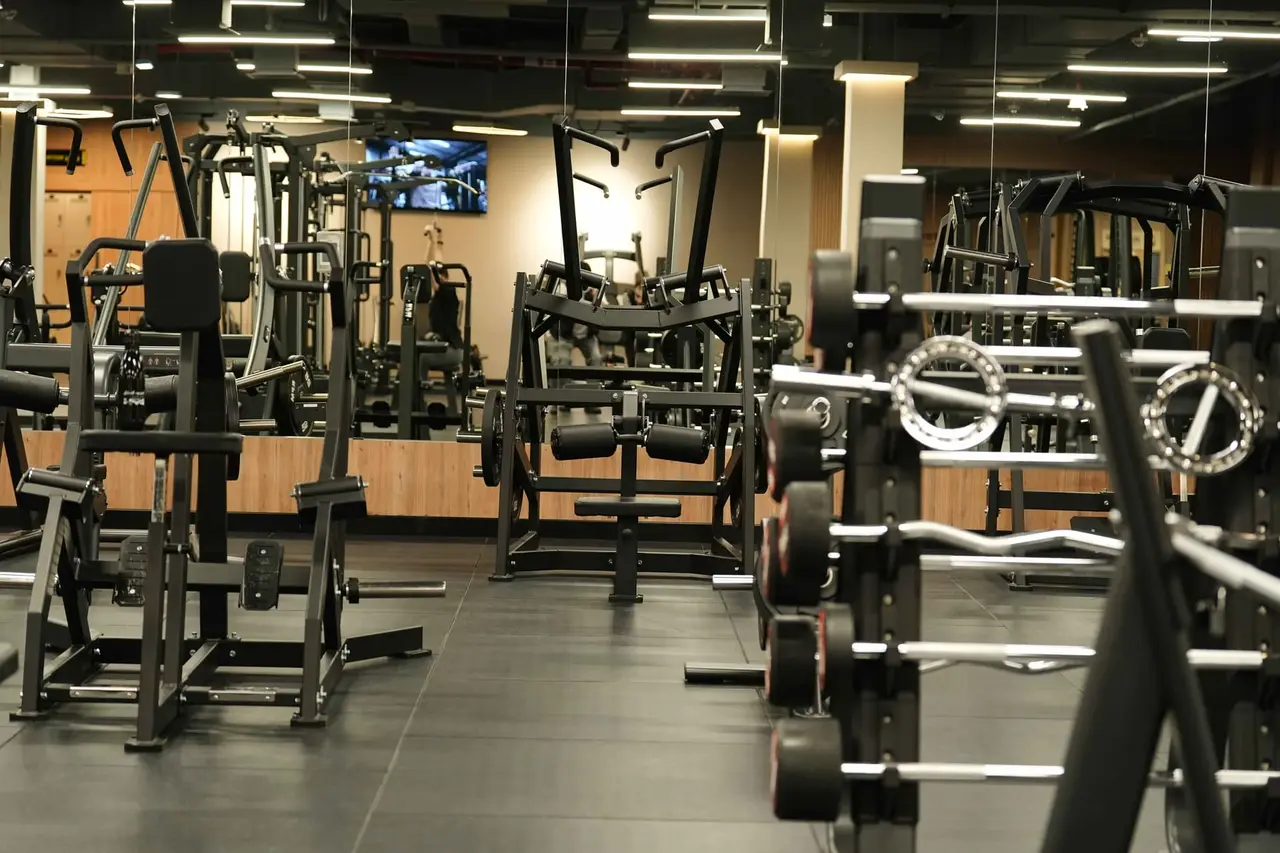
RPM is one club, on Level 4 of AD HUB Sports Complex in Al Manhal. Its floor photos show plate-loaded machines, including a leg press and a pulldown, and multi-station cable towers, alongside benches, dumbbells and fixed-weight barbells. The photos do not settle which pin-loaded machines are on the floor, so ask on a free guided tour if your plan relies on a leg curl, a chest press or a similar stack.
Men train in the Mixed section. The women-only Ladies section has its own strength and cardio equipment, so women who prefer machines should ask to see which ones sit there, and whether their tier covers the Mixed section too. For a plan built around your machines, Issam Almasaalmeh is listed for personal training in the Mixed section and Coach Maria for strength and conditioning in the Ladies section.
Questions, answered.
Do I need a spotter on plate-loaded machines?
Usually not. Many have stops or safety catches you can set before you start. Ask staff to show you where they are on each machine you use.
Can I use cables if I am new to training?
Yes. Cables start light and let you choose the line of pull. Ask staff to show you how to move the pulley and change the attachment.
Are machines a good choice if I have joint pain?
Ask a physiotherapist or doctor first which movements and ranges to use, then ask a coach to set the machines to match. Machines let you limit range, but they do not replace that advice.
Can I train only on machines and still make progress?
Many people do, as long as every body part has a machine or cable option and the weight jumps let you progress. Log your settings and loads so you can see it happening.