Why cooling matters more here than almost anywhere
From May to September, much of Abu Dhabi's training moves indoors. The World Health Organization advises against strenuous activity outside during the hottest time of day, notes that the body's effort to cool itself puts strain on the heart and kidneys, and lists athletes among the groups exposed to excess heat. A gym's cooling is what lets you keep training through those months, so it deserves a proper check rather than a quick feel at reception.
Cooling and fresh air are separate things. A room can be cold and stuffy at once, or comfortable at mid-morning and airless at the after-work peak. RPM's facilities page shows its training areas, and the checks below apply to any gym you are comparing.
Zones that run warm, and what to look for
The entrance is usually the coolest spot in the building, which makes it the worst place to judge. Walk to these zones instead.
| Zone | Why it runs warm | What to look for |
|---|---|---|
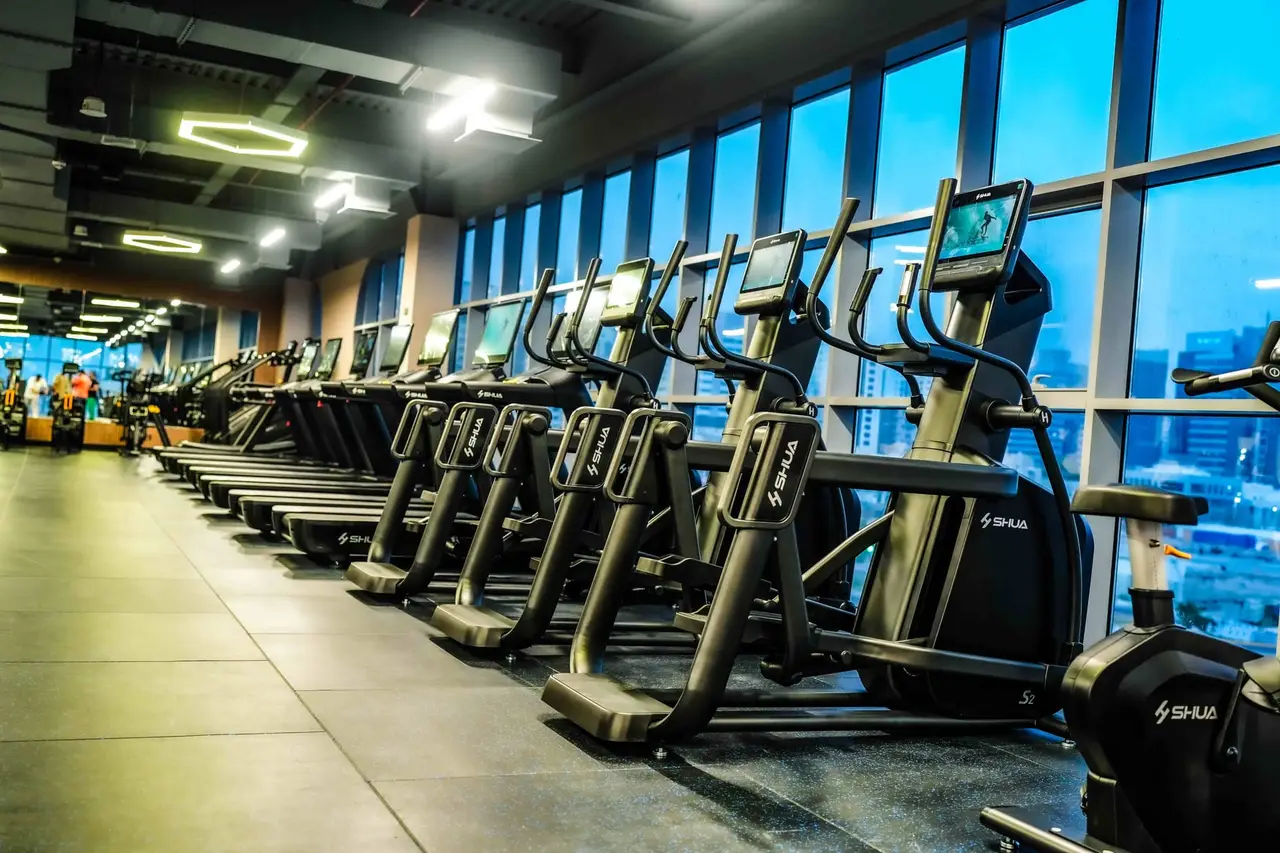
| Cardio row by the windows | Sun through glass, and machines that give off heat | Blinds or tinting, and whether the far end of the row feels as cool as the end by the aisle |
| Functional area | Hard, fast work like sled pushes and battle ropes | Air moving at head height, not only cold air pooled by the floor |
| Studios with the door shut | A full class in a closed room | Its own vent or control, and how the room feels as a class ends |
| Free-weight area | Long sessions and crowding at peak | Stale air in the corners furthest from the vents |
| Changing area | Steam and damp towels | Extraction that clears the mist, and no musty smell |
Signs the air is tired
Ventilation is harder to judge than temperature, because poor air can still feel cool. These signs do not prove a problem, but each one is worth a question.
- A heavy, used smell that lingers after a class has left the room.
- A musty or damp smell, especially around the changing area or in a corner studio.
- Water dripping from vents, or condensation on windows and ceiling panels.
- Black streaks or thick dust on the vent grilles.
- Strong air freshener that seems to be covering something else.
- Air that feels cool but clammy, which can mean humidity is not being controlled.
Smell and dust are also part of a gym's cleaning routine, which the cleanliness audit covers in more detail.
What to ask the team
- How often is the air-conditioning system serviced, and by whom?
- How often are the filters cleaned or changed?
- Do the studios and the changing area have their own ventilation or controls?
- If a zone feels too warm, who do I tell, and how quickly is it looked at?
- What happens when a unit fails in summer: does the zone close, or does training carry on?
- Is fresh air brought in from outside, or is most of it recirculated?
You do not need technical answers. A gym that knows its servicing routine and tells you who to call when a zone overheats is a gym that is watching its building.
A summer test in four steps
Any gym feels fine in January. If you are joining in winter, ask whether you can come back once in the hot months before your first renewal, or judge it as closely as you can now.
- Arrive the way you normally would, from a hot car park or street, and notice how long it takes to stop feeling warm.
- Spend a few minutes on a cardio machine by the windows at the after-work peak.
- Stand in the functional area while a session is running, and notice whether the air moves.
- Walk into a studio just as a class finishes, then into the changing area.
If one zone fails and it is the zone you would use most, that counts for more than a cool reception and a pleasant cardio row.
Sections, clothing and personal comfort
People feel heat differently, so judge for yourself rather than taking the staff's word that it is cool. If you train in long sleeves, leggings or a hijab, a warm corner matters more to you than to someone in shorts. Where a gym has a women-only section, ask whether its cooling is controlled separately, and check it at your hour as well. In Ramadan, when many people train after iftar, the evening peak can be fuller than usual, which is worth testing too.
If you feel dizzy, sick or unwell while training in a warm room, stop, move somewhere cooler and tell a member of staff. The WHO describes heatstroke as a medical emergency, and names older people and those with heart, lung or kidney conditions as especially at risk from heat. If that applies to you, ask your doctor about training in hot weather.
RPM's cooling: what to ask on a visit
RPM is a single club on Level 4 of AD HUB Sports Complex in Al Manhal, reached by lift from free on-site parking. Its photos show treadmills, cross-trainers and an upright bike by tall windows, which makes the cardio row a sensible place to test the cooling on a summer afternoon. RPM does not publish details of its air conditioning or ventilation, so ask the questions above, including how the women-only Ladies section, with its own strength and cardio equipment, is cooled.
The cardio page shows the machines by the windows. Book a free guided tour at the hour you would train, ideally in the hot months.
Sources
Questions, answered.
Why does a gym feel cold at the door and warm at the back?
Cooling is often strongest at the entrance and beside the vents, while busy zones far from them warm up with people and machines. Test the corner where you would train.
Is a very cold gym a well-ventilated one?
Not necessarily. Air that is very cold but stale or damp is not well managed. Aim for steady cooling and air that smells of nothing, and keep a light layer for between sets.
Do air purifiers mean the air is clean?
They show the gym is paying attention, but a unit in one corner does not replace ventilation across the whole floor. Ask how fresh air reaches the busy zones.
What should I do if the air conditioning stops mid-session?
Ease off or stop, move to a cooler area and tell staff. On your tour, ask how the gym handles a fault and whether it closes the affected zone until it is fixed.