Why twelve weeks is the right test
The first month at any gym feels varied because everything is new. By the third month you have used the same stations dozens of times, and gaps start to show: the one hip-hinge option that is always taken, the dumbbells you have outgrown, the conditioning session you have run so often it bores you. Twelve weeks is long enough to expose those gaps and short enough to plan on paper.
It also matches the way many plans are written, in blocks of about four weeks that change exercises or rep ranges. In Abu Dhabi, twelve weeks can take in a change of season, Ramadan or a summer travel month, so the gym has to cope with a shifting week too. RPM's facilities page shows one club's areas, so you can run the steps below against a real example.
Count the options for each movement
List the movement patterns your plan uses, then find at least three ways to train each one in the gym: one for each block, with a fourth as a backup at busy times.
| Movement | Block 1 | Block 2 | Block 3 | Backup when busy |
|---|---|---|---|---|
| Squat | Barbell back squat | Goblet or front squat | Leg press | Dumbbell split squat |
| Hip hinge | Deadlift | Dumbbell Romanian deadlift | Cable pull-through | Back extension |
| Horizontal push | Barbell bench press | Incline dumbbell press | Chest press machine | Dumbbell floor press |
| Vertical push | Standing barbell press | Seated dumbbell press | Shoulder press machine | Kettlebell press |
| Horizontal pull | Barbell row | Seated cable row | Dumbbell row on a bench | Cable row with one arm |
| Vertical pull | Lat pulldown | Pulldown with a different grip | Cable pulldown with one arm | Bodyweight pull or hang |
| Single leg | Walking lunge | Box step up | Bulgarian split squat | Reverse lunge |
| Carry and core | Farmer's carry | Suitcase carry | Pallof press at a cable | Plank variations |
| Conditioning | Bike intervals | Sled pushes | Kettlebell circuits | Battle ropes or slam balls |
Swap in your own exercises. The test is the count, not the names: three or more realistic options per movement, all available in the section and tier you would use.
Check there is room to progress
Variety without progress is only rotation. Over twelve weeks your working weights should rise, so check the ceiling as well as the menu. The priority list for strength equipment explains which ceilings matter most.
- Dumbbells. If your heaviest set already uses one of the last pairs on the rack, you may run out before week twelve.
- Machine stacks. Note the top plate on the leg press, pulldown and chest press you would use. A stack where your pin already sits low will not carry a whole block.
- Small steps. Light plates and add-on weights let you add a little each week instead of jumping and stalling.
- Bars and racks. If you plan to add barbell work in a later block, check that a rack is realistic at your hour, not only that one exists.
- Women-only sections. If you will train in one, check its own range against your plan rather than assuming it matches the mixed floor.
Variety beyond the weights
Boredom usually shows up in conditioning and in the weeks when motivation dips, not in the main lifts. Options away from the weights floor keep a 12-week block on track.
- A functional area with sled work and kettlebells, for conditioning that is not another treadmill session.
- A cardio mix of treadmills, bikes and cross-trainers, plus rowers if your plan uses them.
- Classes you can join in a week when you would rather follow than plan.
- A studio discipline such as Pilates, or boxing for fitness, as a second interest that still counts as training.
If you want several styles under one membership, the guide to one gym for many training styles maps them by section. For a muscle-building plan, the body-part coverage check is the closer test.
A worked example: the gap that shows in week nine
Two gyms both look well equipped on a tour. A lifter plans three blocks of upper and lower body days and checks each block against each gym.
| Weeks | What the plan asks for | Gym A | Gym B |
|---|---|---|---|
| 1 to 4 | Back squat, bench press, rows, pulldowns | All available at their hour | All available, racks often busy |
| 5 to 8 | Front squat, incline dumbbell press, cable rows | All available | All available |
| 9 to 12 | Leg press, heavier dumbbell presses, sled conditioning | Top dumbbell pair reached in week 10, no sled | Range continues, sled lane open |
Gym A wins the first two blocks and fails the third. The lifter could swap dumbbell presses for a machine, but the conditioning gap has no fix there. Gym B's busy racks are a nuisance in block one, solved by training a little earlier. Over twelve weeks, Gym B is the one that still works.
Run the test in four steps
- Write your three blocks on one page: the movements, and roughly what weights you expect to reach.
- Tick off each option you can see in the gym's photos and on its website, and mark anything you cannot see.
- On the tour, find each option on the floor, check the top weights and note which ones were taken at your hour.
- Mark every movement with fewer than three options or a ceiling you will hit, and decide whether you can live with it.
One gap you can work around is normal. Gaps in two or three movements mean you will spend the third month improvising.
RPM and the 12-week test
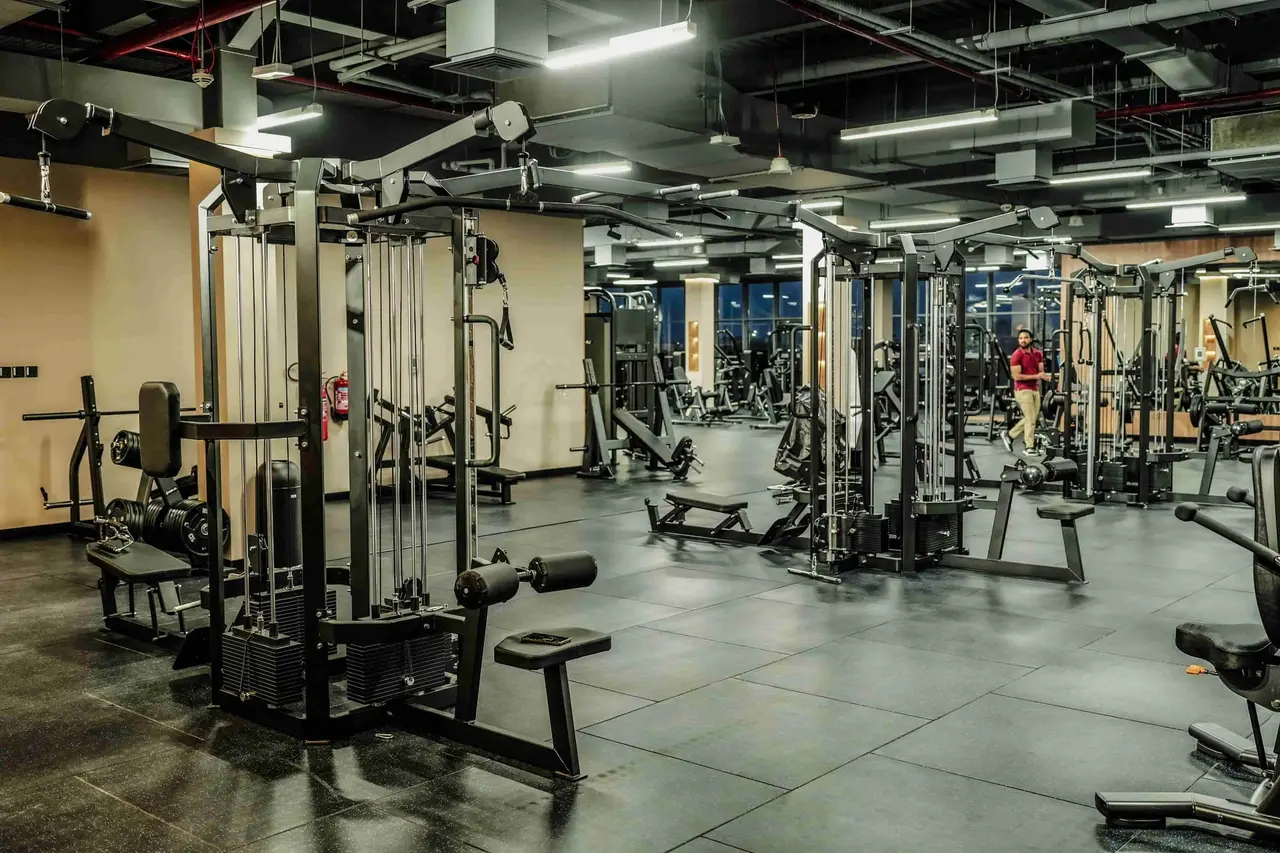
For the strength menu, RPM's floor photos show plate-loaded machines including a leg press and a pulldown, cable towers with several stations, a squat rack with colour bumper plates, fixed-weight barbells, and benches with plates and dumbbells. For conditioning, the functional area has a turf lane and sled, battle ropes, kettlebells, slam balls and medicine balls, step boxes and heavy bags, and the cardio row includes treadmills, cross-trainers, spin bikes and an upright bike. Group classes run in both sections on a changing timetable, and the Ladies section, for women only, has its own strength and cardio equipment and the Pilates studio.
The heaviest dumbbell pair, the top of each machine stack and whether rowers are available are not confirmed here, so take your three-block sheet to the free guided tour and ask. If you would rather someone else wrote the blocks, the Engine tier adds coached programming, with inclusions confirmed on enquiry.
Questions, answered.
What if a gym has a gap in only one movement?
Usually you can live with it. Pick the closest alternative for that block, or train that movement with bodyweight or a band. Two or more gaps are much harder to work around.
Can classes fill a variety gap?
They can fill a conditioning or motivation gap, and they help in weeks when you would rather follow than plan. They rarely fill a strength gap, because most classes do not let you load the same lift a little heavier each week.
Do Ramadan or the summer change the test?
They change your hours more than the kit. If your twelve weeks include Ramadan, ask about the gym's hours that month and whether the stations you need are available after iftar. If they include summer travel, ask about freezing the membership.
Is variety more important than consistency?
No. The main lifts should stay steady long enough to progress, often for a whole block. Variety is for swapping variations between blocks and keeping conditioning fresh, not for changing everything each week.