Why equipment needs its own comparison
A whole-facility comparison asks whether a gym has a free-weight area, a cardio area or a studio. That is the right first pass, and the facility comparison matrix handles it. Once two or three gyms survive it, the difference usually sits in the detail of the kit. One gym's dumbbells stop short of your working sets. Another has plenty of cable stations, but half of them have frayed cables.
This matrix zooms in on that detail. It works alongside the tour inspection guide, which tells you where to walk, and RPM's facilities page, which shows one club's kit in photos so you can draft its column before a visit.
Three scores for every category
| Score | Range | Availability at your hour | Condition |
|---|---|---|---|
| 0 | Missing, or stops well short of what you need | Taken every time you look, with a queue | Out of order, taped up or unpleasant to use |
| 1 | Covers most of your plan with a gap or two | Yours after a short wait | Works, with visible wear such as split pads or sticky adjusters |
| 2 | Covers your plan with room to progress | Usually open when you reach it | Clean and smooth, with nothing missing |
Add the three scores for a category total out of 6. Score condition strictly: a machine that does not work is a gap, whatever the brochure says.
The equipment matrix
In each cell, write the three scores in order, such as 2-1-2, then the total. Leave out any category your plan never uses.
| Category | What range means here | Gym A | Gym B | Gym C |
|---|---|---|---|---|
| Racks and barbells | Racks with safety arms, bars that spin, collars | |||
| Plates | Enough for a busy hour, small plates included | |||
| Dumbbells | From light to past your top sets, with no missing pairs | |||
| Benches | Flat and adjustable, locking firmly | |||
| Selector machines | Your movements covered, with light starting plates | |||
| Plate-loaded machines | A leg press or hack squat, plus chest and back machines | |||
| Cable stations | Adjustable pulleys, with handles and bars on hand | |||
| Cardio | The machines your plan uses, with screens and belts working | |||
| Functional kit | Open space with a sled, kettlebells, ropes and boxes | |||
| Total | Out of 6 for each category you use |
Score the section you would actually train in, under the tier you would buy. A women-only floor is scored on its own kit, and a category outside your membership scores 0.
Filling the cells on a visit
Each score needs a different kind of look.
- Range: find the lightest and heaviest dumbbell pairs and note any gaps between them. Read the first plate on two selector stacks, and check the smallest plates on the rack.
- Availability: stand by the category for a few minutes at your hour and count how often someone waits. A visit outside your slot cannot score this, so mark it as provisional.
- Condition: sit, pull and push. Two or three units per category are enough for a fair score. A full check of every machine is a longer job.
- Write each score down straight away. After the third gym, the details blur.
If you are not sure which categories deserve the closest look, the priority list ranks them for strength training.
A worked example: three gyms, one plan
Take a lifter who trains four days a week after office hours. The plan is built on squats and presses, with rows and cable work alongside, and sled pushes on Saturdays. They score three gyms on the categories that plan uses.
Scores are range, availability and condition, in that order, then the category total.
| Category | Gym A | Gym B | Gym C |
|---|---|---|---|
| Racks and barbells | 2-0-2 = 4 | 1-2-1 = 4 | 2-2-2 = 6 |
| Plates | 2-1-2 = 5 | 1-2-1 = 4 | 2-2-1 = 5 |
| Dumbbells | 2-1-2 = 5 | 1-2-2 = 5 | 1-2-1 = 4 |
| Benches | 2-1-1 = 4 | 2-2-1 = 5 | 2-2-2 = 6 |
| Cable stations | 2-1-2 = 5 | 2-2-0 = 4 | 1-2-2 = 5 |
| Functional kit | 1-1-2 = 4 | 0-2-0 = 2 | 2-1-2 = 5 |
| Total | 27 | 24 | 31 |
Gym C leads on total, but the total is not the whole story. Gym A scores 0 for rack availability at this lifter's hour, the category a squat-led plan leans on most, so it drops out despite good kit. Gym B scores 0 for cable condition, so for this lifter it effectively has no cable station. Gym C's weak spot is the top of its dumbbell range: fine today, worth checking against where the presses will be in a year.
Two rules keep the matrix honest. A 0 on availability or condition in a category your plan depends on rules a gym out. A tie on total goes to the gym with the higher score in your most-used category.
Mistakes that skew an equipment comparison
- Counting units instead of usable units. Ten cable stations with five working are worth less than six that all work.
- Scoring at a quiet hour. Availability judged mid-morning says little about a weekday evening, or about the rush after iftar in Ramadan.
- Trusting brand names. A famous logo on a worn machine still scores 1 for condition.
- Scoring a section you cannot use. Kit in a women-only section belongs only in a woman's matrix, and kit outside your tier counts for nobody.
- Falling for fresh paint. A newly refitted floor looks good on day one, so ask when the equipment was last serviced, not when it was installed.
- Forgetting the summer. From May to September indoor floors fill as outdoor training stops, so cardio and functional availability can drop.
Drafting RPM's column
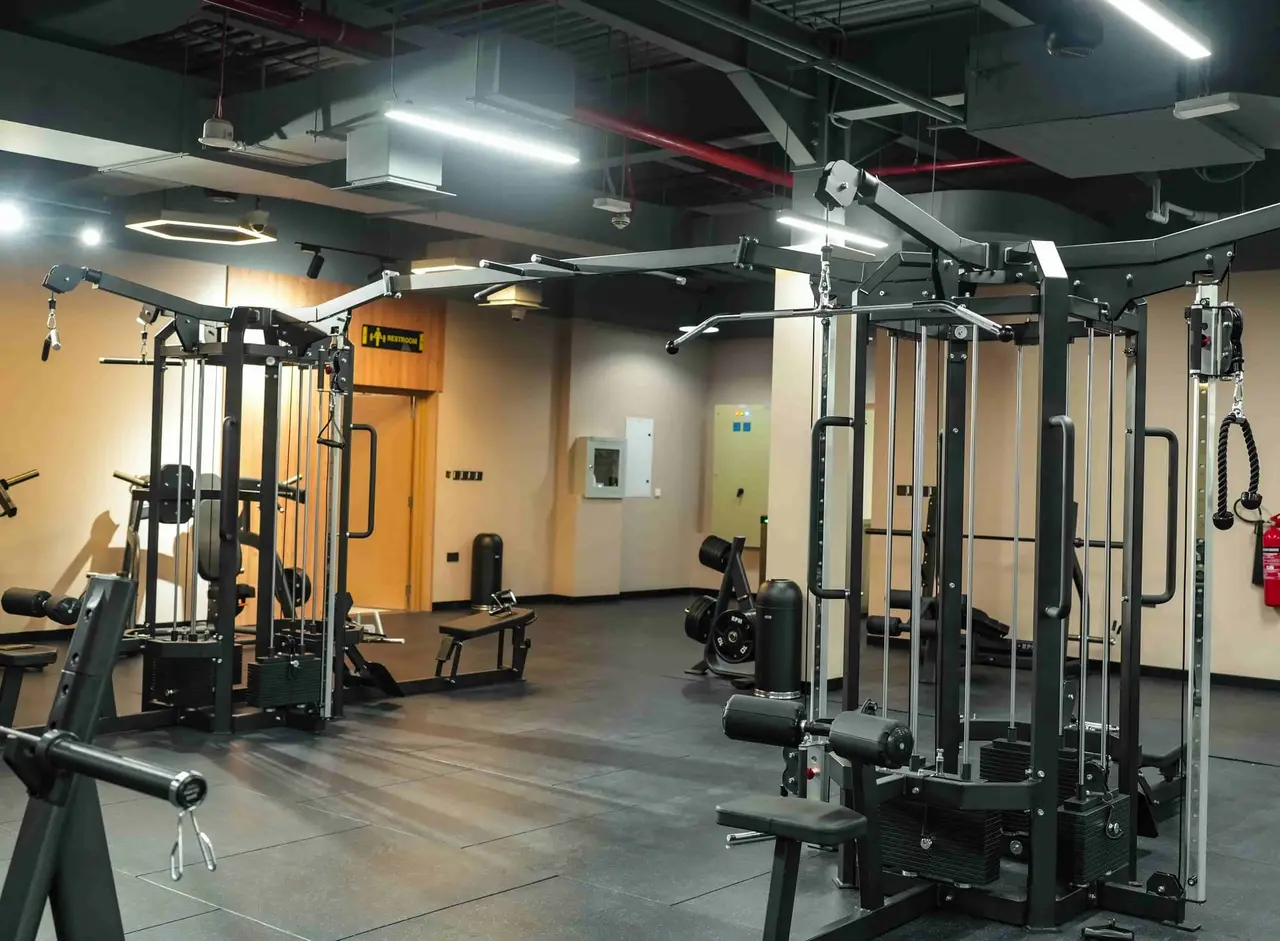
You can pre-fill RPM's range scores from its photos. They show a squat rack with colour bumper plates, fixed-weight barbells, benches, plates and dumbbells, multi-station cable towers, and plate-loaded machines including a leg press and a pulldown. The functional area has a turf lane with a sled, kettlebells and dumbbells, battle ropes, medicine balls and slam balls, step boxes and heavy bags. Cardio photos show treadmills, cross-trainers, an upright bike and spin bikes. The Ladies section, for women only, has its own strength and cardio equipment.
Availability and condition need the tour, and some range details are not confirmed here: the number of racks and stations, the heaviest dumbbell pair, and whether rowers or a lifting platform are available. Ask the team, and fill those cells only once you have an answer. The free guided tour is a walk-through with a member of the team, not a workout, so book it at your training hour if you can.
Questions, answered.
How many gyms should go into the matrix?
Two or three. With more, the visits blur together and you will not get back to each one at your hour. Use photos and a whole-facility comparison to cut a longer list down first.
What if two gyms tie on total?
Look at the category your plan uses most. The gym that scores higher there wins, because you will feel that difference every session. If they tie there too, the shorter trip usually decides it.
Should availability count as much as condition?
For the categories you use every session, yes. A perfect rack you never get is worth as little as a broken one. For kit you use now and then, condition matters more than availability.
How long do my scores stay valid?
Score every gym within the same few weeks, and check again before you sign. Equipment gets moved, serviced and replaced, so a score from months ago may no longer hold.