Two kinds of training, side by side
Lifting and reformer Pilates overlap less than people expect. Each answers a different question about how you train, which is why many people who lift add a reformer class rather than giving up a gym day. Reformer Pilates at RPM explains how the machine works and what a first session involves.
| Question | Gym training | Reformer Pilates |
|---|---|---|
| Where does the load come from? | Plates, dumbbells, cables and machines | Springs attached to a sliding carriage |
| How does it get harder? | Adding weight or repetitions in small steps | Changing springs, slowing down or moving to a harder exercise |
| What does the coach watch? | Technique under load | Control and alignment through the whole movement |
| What does a session feel like? | Hard sets with rests between them | Slower, continuous work with fewer pauses |
| How do you track progress? | A written log of weights and repetitions | Exercises you can now control, and the springs you use |
A general comparison. Coaches and instructors vary, so ask how they run their sessions.
What a combined week can look like
WHO guidelines advise adults to do muscle-strengthening activities on two or more days a week, alongside aerobic activity. Many people who combine the two keep their lifting days and add one or two reformer sessions around them. Here is one example for someone training four days a week.
- Sunday: strength, lower body
- Monday: rest
- Tuesday: reformer class
- Wednesday: strength, upper body
- Thursday: rest
- Friday or Saturday: reformer class, or a full-body strength session if you prefer
This is an example, not a prescription. If you are pregnant, postnatal, injured or managing a medical condition, get clearance from your doctor, midwife or physiotherapist first, and tell both your coach and your instructor.
Spacing sessions so they do not collide
The main clash is the legs and trunk. A heavy squat or deadlift day followed the next morning by a reformer class full of footwork and bridging can leave you working tired muscles twice. Most people manage it in one of three ways.
- Put the reformer on the day after an upper-body session rather than after a leg day.
- If both fall on one day, lift first and keep the reformer class gentle, or the other way round, and tell the instructor what you have already done.
- Make a reformer class the lighter day in a hard week, not an extra hard session.
The heat plays a part too. In summer, the trip to the gym and back can tire you before you start. If something hurts rather than feels worked, stop and speak to a doctor or physiotherapist before you carry on.
Two venues or one: what combining really costs
Combining has a cost beyond the fees, and most of it is time. With a gym and a separate studio you pay two sets of fees, keep two timetables and make two trips, each with its own drive and parking. In summer that second trip is the first to be dropped. Doing Pilates and strength training in one place compares the two set-ups in more detail.
- Are reformer sessions included in a membership tier, or sold as packages?
- What is the price per session in each package, and when do packages expire?
- What is the late-cancellation window? A missed class usually counts as used.
- Can one coach see both your lifting log and your progress on the reformer?
When adding the reformer is not worth it
- You can only train twice a week. Two good strength sessions may serve you better than one of each, unless you prefer the reformer.
- You are working towards a specific strength goal and the extra classes leave you too tired to lift well.
- The booking rules mean you miss more classes than you attend.
- You do not enjoy it. A class you dread is a class you will stop booking.
None of these has to be permanent. Plenty of people add the reformer later, once their lifting routine has settled.
Combining both at RPM
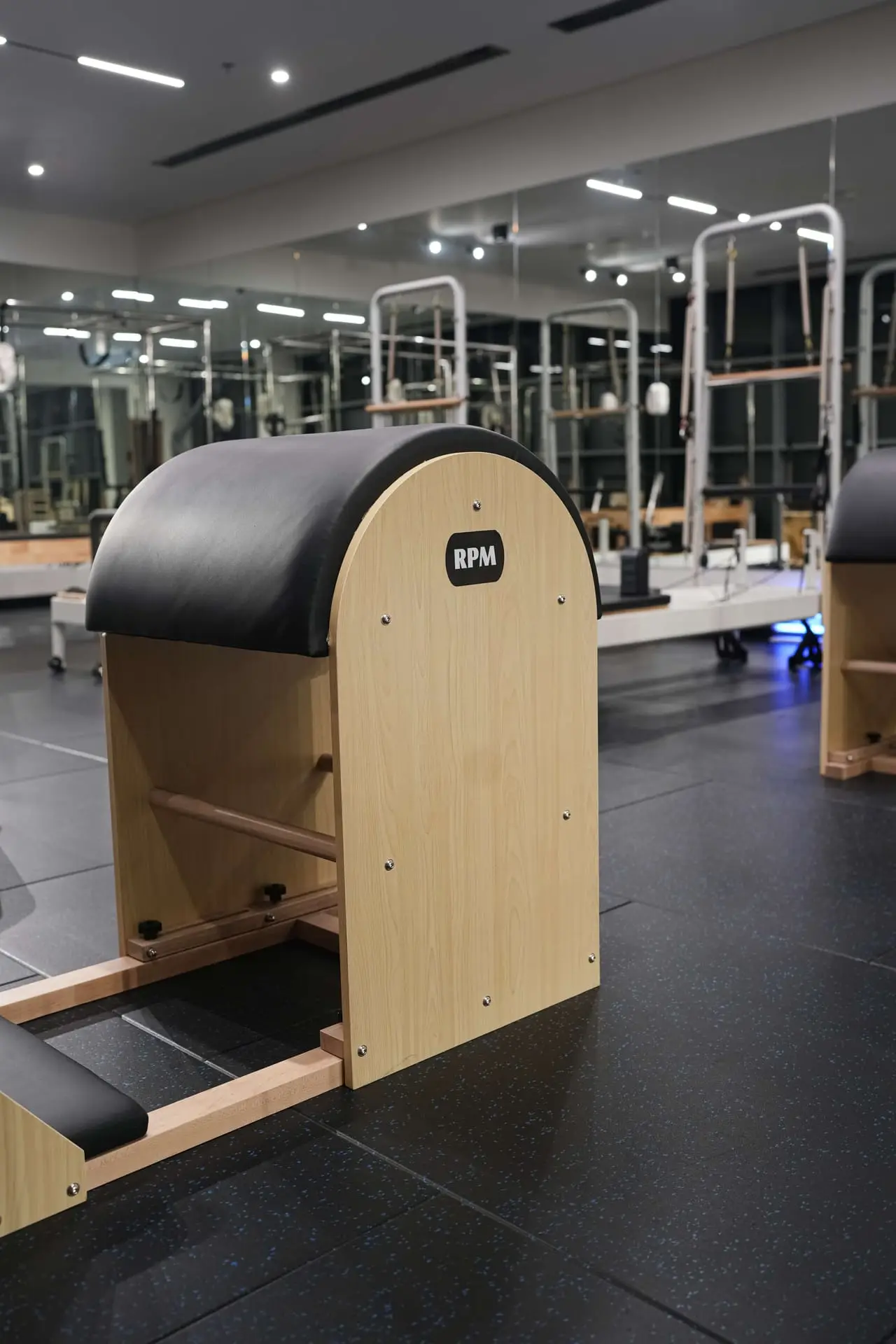
At RPM, the Pilates studio sits inside the women-only Ladies section, and reformer classes run there. The studio photos show reformers, some with towers, along with trapeze-table frames and a ladder barrel, so ask which apparatus a session uses. The Ladies section also has its own strength and cardio equipment, and women whose tier covers the Mixed section can use that floor as well. Men train in the Mixed section and cannot use the studio. For the lifting side, see strength training at RPM.
Female coaches on the roster work in the section, including Giana Suleiman Daqnoush (Pilates and aerobic) and Coach Maria (strength and conditioning). RPM does not publish prices online, so ask whether reformer sessions come with a tier or as a package, then book a free guided tour to see the studio and the strength equipment in one visit.
Sources
Questions, answered.
Does reformer Pilates count as strength training?
The springs provide resistance, so it works your muscles, but it loads them differently from lifting and progress is harder to measure in numbers. Many people use it alongside lifting rather than instead of it. If a strength target matters to you, keep your lifting days.
I am new to both. Which should I start first?
Start with whichever you are more likely to keep, settle into it for a few weeks, then add the other. On the reformer, an introductory or private session first makes group classes easier to follow.
Will reformer classes leave me too sore to lift?
The first few sessions can leave you sore in places your lifting does not reach. Keep them away from your hardest lifting day at first, and tell the instructor what you trained the day before.
Can men combine the two at RPM?
Not under one roof. The studio is inside the women-only Ladies section, so a man would lift at RPM and take reformer classes at another studio.
What if I am pregnant or have recently given birth?
Speak to your doctor or midwife before starting or continuing either, and tell your coach and instructor. Recovery after birth differs from woman to woman, so wait for clearance that applies to you rather than following a general timeline.