Three rules for numbers you can believe
- Same method: the same machine, the same seat setting and the same test every time.
- Same conditions: a similar time of day, similar food and sleep beforehand, and never straight after a long drive in the heat.
- Written down: in a log or an app, not in your memory.
Break any of these and a change in the number may say more about the conditions than about you. A coach who records a baseline in your first week makes the rules easier to keep. The page on personal training at RPM lists recorded progress among the things to expect from good coaching.
What to measure, and how often
| Measure | How to take it | How often | What it tells you |
|---|---|---|---|
| Main-lift log | Weight, sets and reps for your main exercises, plus how hard the last set felt | Every session, reviewed monthly | Whether you are getting stronger, and how quickly |
| Rep test | Your top set of five or eight on one main lift, after the same warm-up each time | Every four to six weeks, or at the end of a block | Strength change you can compare across months |
| Conditioning test | A fixed effort you can repeat, such as the distance covered on the same bike in a set time, or sled pushes on the turf lane in a set time | Every four to six weeks | Whether your engine is improving |
| Tape measurements | Waist and any other sites, at the same spot and the same time of day | Every two to four weeks | Shape changes that body weight alone does not show |
| Photos | Same place, same light, same clothes, from the front and the side | Every four weeks | Visible change over months |
| Body weight | Several mornings a week, then the weekly average | Weekly average | The trend, not the daily figure |
| Session effort | A rating from 1 to 10 for how hard each session felt | Every session | Whether the plan is too easy or too hard |
| Attendance | Sessions completed against sessions planned | Weekly | Whether the plan fits your life |
Pick three or four of these. Tracking everything usually means tracking nothing well.
Setting a baseline in your first week
- Choose your measures with a coach, or on your own if you train independently.
- Write down the conditions: day, time, which machine, seat settings and warm-up.
- Do each test once at an effort you could repeat next month, not a heroic one.
- Put the retest dates in your calendar.
- Tell the coach about any medical condition or injury before testing. Some tests may not suit you, and anything health-related is a question for your doctor.
Abu Dhabi adds two variables. In the hot months, the trip in and how much you have drunk that day can shift both body weight and test results, so note them. In Ramadan, fasting changes energy and weight through the day, so either pause the tests or compare Ramadan results only with each other.
Reading the numbers honestly
- Look at trends over several weeks. One bad test is noise.
- Change one thing at a time. If the plan and your sleep both change in the same month, you will not know which one worked.
- Expect plateaus. A flat month in the log is a reason to review the plan with a coach, not to give up.
- Compare like with like. A new gym's bike or plates may not match the old ones, so set a fresh baseline after a switch.
- Keep health readings separate. A resting heart rate or blood pressure reading that worries you is for a doctor, not a coach.
A one-rep max calculator can turn a rep test into an estimate, but it stays an estimate. Compare your rep tests with each other rather than chasing the calculated figure.
What a gym needs for tests you can repeat
| Need | Why | Ask on a tour |
|---|---|---|
| The same machines week to week | A different bike or leg press changes the numbers | Which machines are usually available at my hour? |
| A coach who records results | A baseline nobody wrote down cannot be retested | How do you record and review a client's progress? |
| Somewhere discreet for measurements | Tape measurements and photos feel personal | Where would measurements be taken, and by whom? |
| Clear photo rules | Your progress photos must not catch other people | What are the house rules on phones and photos? |
| A plan that responds to the data | Numbers only matter if they change the plan | What happens to my plan if a retest goes down? |
For a weekly coached block with tests built in, see structured coaching.
Tracking progress at RPM
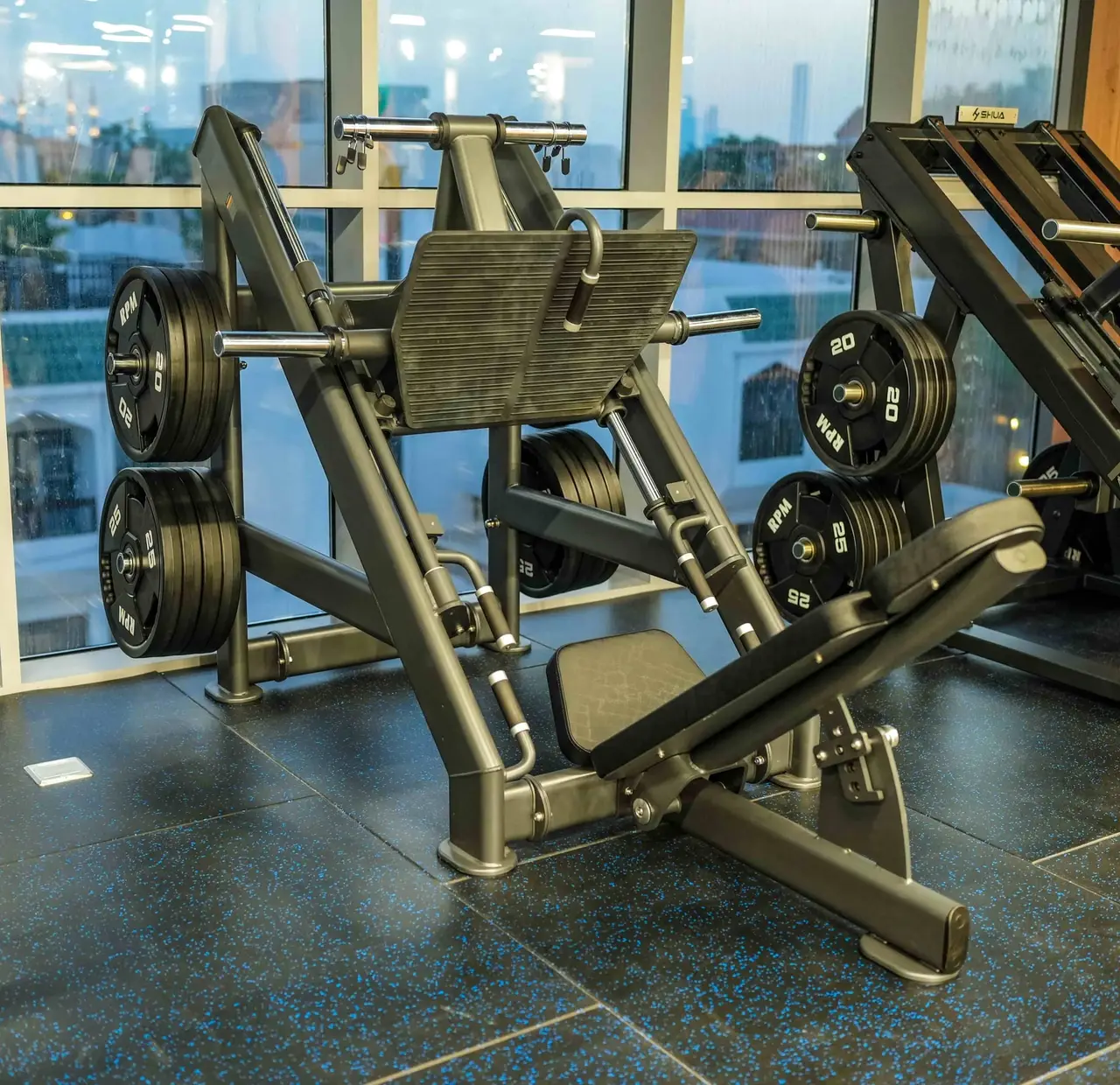
RPM is one club on Level 4 of AD HUB Sports Complex in Al Manhal. The training floor photos show treadmills, cross-trainers, an upright bike and spin bikes. They also show plate-loaded machines, a squat rack with colour bumper plates and a turf lane with a sled. That is the kind of kit repeatable tests are built from, so ask which machines you can count on at your hour.
- Coaches on the roster cover strength, conditioning, Pilates, combat fitness and physique training. Ask how a coach records a baseline and when they retest.
- Women who would rather be measured by a woman can ask for a female coach in the Ladies section.
- Engine adds coached programming and Atelier is built around one-to-one coaching. Ask which tier includes progress reviews, and how often. Inclusions and prices are confirmed on enquiry.
- Ask the team what measuring tools they use, rather than assuming any particular device.
Progress depends on your plan, your consistency and life outside the gym. No gym or coach can promise a particular result.
Questions, answered.
How often should I weigh myself?
If you track body weight at all, weigh yourself on several mornings a week and use the weekly average. Day-to-day figures can swing for reasons that have nothing to do with training.
Are progress photos worth the awkwardness?
For many people, yes, because change over months is hard to spot in a mirror. Keep them private, and take them at home if a gym's photo rules make you uneasy.
Can I trust my smartwatch?
Use it for trends in your own data, such as how often you train. Read its other figures as estimates, and take any health concern to a doctor.
Do I need a coach to track progress?
No, but a coach keeps retests regular and honest. A check-in every few weeks is often enough, as occasional coaching explains.
What if my numbers go down?
Check the conditions first: sleep, heat, fasting, a different machine. If those were the same, review the plan with a coach. Pain that comes with the drop is a matter for a doctor.