Returning is not the same as starting
Someone coming back already knows where the leg press is and what a hard set of eight feels like. That is the advantage. The risk is the memory of old numbers: returners often load the bar for the person they were, not the person who walks in today. Life has usually moved on as well. A new job, children or a move across the city can mean the slot you used to train in has gone.
So the right gym for a restart is one where starting light feels normal and the hours fit the week you have now. That applies wherever you look, RPM in Al Manhal included.
Gym features that keep a restart going
| Feature | Why it matters when you return | How to check |
|---|---|---|
| Machines and dumbbells in small steps | You can restart well below your old loads without it feeling odd | Ask to see the lightest dumbbells and how the machines adjust |
| A coach you can book once | A form check when bigger lifts come back, without buying a package | Ask whether single sessions can be booked on your tier |
| A calm hour in your current week | The slot you trained in years ago may no longer exist | Visit at the hour you would train, not whenever the tour suits |
| Freeze terms | Restarts often stall at the first trip or illness | Ask for freeze conditions in writing before you sign |
| A class you can drop into | A fixed class can anchor the week while the habit returns | Ask for the current timetable in your section |
| A route you already drive | Willpower runs low in the first weeks back | Drive it at your training hour before joining |
Which gym in Abu Dhabi is good for people returning after a break?
One that lets you start smaller than you used to without any pressure, has a coach you can see now and then, and sits on a route you will actually drive this year. A free tour at your training hour shows most of that. Size and branding matter less than whether you will still be going in week three.
An eight-week restart ramp
The World Health Organization's 2020 guidelines advise adults to begin with small amounts of physical activity and increase it gradually over time. They also note that doing some activity beats doing none, and they recommend muscle-strengthening work for all the major muscle groups on two or more days a week. The ramp below follows that pattern. It is a general outline for a healthy adult, not a personal prescription.
| Weeks | Sessions a week | How hard | What to watch |
|---|---|---|---|
| 1 and 2 | Two, of 30 to 40 minutes | Light. End every set feeling you could do four or more reps. Mostly machines and light dumbbells | Stiffness that lasts beyond a couple of days, or any joint pain. If either appears, stay at this level for another week |
| 3 and 4 | Two or three | Moderate. Stop with about three reps left. Bring back free-weight versions of your old exercises at light loads | Sleep and energy. Feeling flat for days after a session means the week was too much |
| 5 and 6 | Three | Add load in small steps once every set of an exercise feels comfortable. Reintroduce one bigger lift, ideally with a coach watching | Form at the end of a set. If technique slips, the weight is ahead of you |
| 7 and 8 | Three, or four if you trained that often before | Normal working sets with two or three reps left. Still no maximum attempts | Whether you recover between sessions, and whether the habit survives a busy week |
Repeat any fortnight that felt too hard. Reaching week eight in week ten is still a successful restart.
When to hold back, and when to stop
- Hold the current fortnight if soreness from the last session has not eased by the next one.
- Hold it if you are sleeping badly or a heavy work week has left you drained.
- Drop back a fortnight after an illness, even a short one, and build up again.
- Stop the session and seek medical advice if you feel chest pain, faintness or unusual breathlessness, or a pain that is sharp or getting worse.
Coaches are fitness professionals, not clinicians. If your break followed an injury, surgery, a long illness or a pregnancy, or you live with a condition such as high blood pressure, ask your doctor what is appropriate before you begin. Then share their advice with any coach you work with.
Restarts that follow the Abu Dhabi calendar
Many breaks here follow the calendar: a long summer away, a Ramadan when training lapsed, a new baby, a project that swallowed the winter. Each calls for a slightly different restart.
- After summer travel, gyms often fill up again in September as families return and school starts. Book your slots early and expect fuller evenings for a few weeks.
- After Ramadan, return to your usual sessions gradually rather than all at once in the week after Eid.
- After a pregnancy, follow your doctor's or midwife's advice on when and how to return, whatever your previous level.
- After a heavy stretch at work, start with the two-session weeks even if you feel fine. Tiredness from the office counts.
Restarting at RPM: what to ask
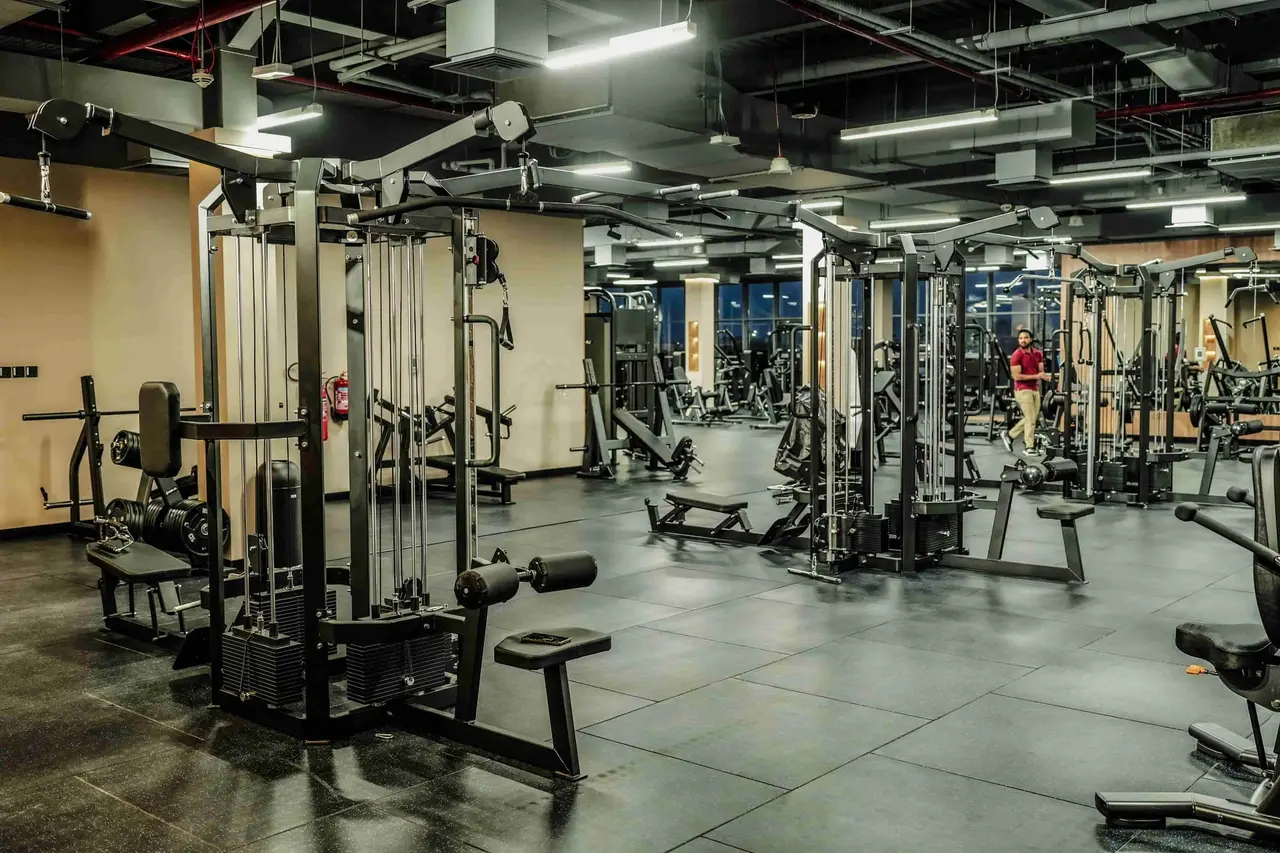
RPM is one club on Level 4 of AD HUB Sports Complex in Al Manhal, with free on-site parking and a lift up. The training floor photos show plate-loaded machines such as a leg press and a pulldown, along with cable towers. They also show dumbbells and a squat rack, so you can restart on machines and move back to free weights in the same room. Men train in the Mixed section. The Ladies section is for women only and has its own strength and cardio equipment.
- Book the free guided tour at the hour you would train, and say you are coming back after a break.
- Ask whether a single coached session can be booked around week five, when bigger lifts return.
- Ask which tier suits a restart. Floor covers the training floor, Engine adds coached programming and Atelier is built around one-to-one coaching. Inclusions and prices are confirmed on enquiry.
- Ask for freeze and cancellation terms in writing.
If you have never trained at all, the guide for complete beginners starts further back. If you have restarted several times and stopped again, rebuilding consistency looks at what made you stop.
Sources
Questions, answered.
Should I go back to my old gym or try a new one?
Go back if it still sits on your route and its hours fit your week. A new gym can break the link with the routine that stopped. Either way, visit at your training hour first. Switching gyms covers what to check.
What if an old injury starts to ache again?
Stop the exercises that aggravate it and see a doctor or physiotherapist before carrying on. A coach can swap exercises in the meantime, but cannot tell you the cause.
Is a coach worth paying for during a restart?
One or two sessions often are, especially when bigger lifts return. Occasional coaching explains how to make a few sessions count.
Should I bring back cardio as well as weights?
Yes, in the same gradual way. WHO's guidelines recommend that adults aim for at least 150 to 300 minutes of moderate aerobic activity a week, or 75 to 150 minutes of vigorous activity. Start well below that with short, easy sessions on a bike or cross-trainer, and build up.