Start from the goal, not the activity
Most people asking this have a goal in mind: fitter, stronger, leaner, calmer, or simply something they will stick with. Fitness boxing and strength training serve different goals, so the right choice depends on what matters most to you this year.
Boxing at RPM is fitness boxing: bag work, pad work and conditioning, with no sparring required. Strength training here means lifting weights or using resistance machines, with a plan that adds load over time.
What each one builds
| Fitness boxing | Strength training | |
|---|---|---|
| Main effect | Conditioning: sustained hard work in rounds | Strength and muscle, built by lifting progressively heavier loads |
| Skill | Punching technique and footwork, with timing and coordination | Lifting technique, learned once and refined over time |
| How muscles work | Through repeated effort rather than heavy load | Against loads you choose, across all the major muscle groups |
| Progress | Cleaner technique, harder rounds, feeling less spent between them | Heavier weights or more repetitions, recorded in a log |
| Session feel | Fast, loud and coached from start to finish | Steady sets with rests, often self-directed |
| Equipment | Gloves and wraps, plus bags and pads | Weights, racks, benches and machines |
| Coaching | Usually needed every session | Needed at the start, optional later |
WHO describes muscle-strengthening activity as exercise that increases muscle strength, power, endurance and mass. Its 2020 guidelines advise adults to do it on two or more days a week, on top of regular aerobic activity.
Which goal points where
| Your goal | Leans towards | Why |
|---|---|---|
| Stronger for daily life, from children to suitcases | Strength training | Load can be raised in small steps on the movements you need |
| Visible muscle | Strength training | A plan aimed at muscle relies on progressive load over months |
| Less out of breath on stairs and in five-a-side | Fitness boxing | Rounds keep you working hard for minutes at a time |
| Less body fat | Either | Both can sit in a plan alongside changes to eating, so pick the one you will keep doing |
| Switching off after work | Fitness boxing | Combinations take enough attention to push the office out of your head |
| Training alone at odd hours | Strength training | A plan and an open floor need no class slot |
| Learning a skill | Fitness boxing | There is always another combination or footwork pattern to learn |
| Confidence in a gym | Either, with coaching | A coach teaching you the basics matters more than the activity |
Who each one suits
Fitness boxing tends to suit people who:
- get bored on a training floor and like a coach calling the rounds
- want a hard workout packed into a set time slot
- enjoy learning a physical skill
- do not mind sweaty gloves and a loud room
Strength training tends to suit people who:
- like watching numbers rise in a log
- want to train when it suits them, not when a class runs
- have a goal around strength, muscle or handling daily loads
- prefer steady effort with rests to non-stop rounds
Trade-offs that are easy to miss
- Boxing depends on the timetable. Miss the session and the week has a gap, unless you can work a bag on your own.
- Strength training depends on a plan. Without one, people repeat the same few machines and stop progressing.
- Hands and wrists. Boxing needs wraps and sound technique on the bag, and lifting needs sound technique under load. Both need a coach at the start.
- Kit. Gloves get sweaty fast in Abu Dhabi's climate, so many people buy their own along with wraps.
- Seeing progress. Strength shows up in a log. Boxing progress is real but harder to see, so note your rounds and combinations.
To judge the boxing coaching itself, see what makes a gym good for boxing.
Combining the two
Many people end up doing both, and whichever goal comes first decides the split.
| Priority | A simple week |
|---|---|
| Mostly boxing | Two or three boxing sessions and one strength session |
| Mostly strength | Two or three strength sessions and one boxing session |
| Even split | Two of each, with the hardest of each on different days |
For a full sample week and how to space sessions so you recover, see boxing plus weights or boxing only.
Worked example: an analyst after a year at a desk
Take a reader who has spent a year mostly at a desk. She wants to feel fitter, get strong enough to carry her toddler comfortably, and have something to look forward to after work. She can train three times a week.
| Her goal | Points to | What she does |
|---|---|---|
| Feel fitter | Fitness boxing | Two boxing sessions a week |
| Get stronger | Strength training | One full-body session a week, two once she settles |
| Look forward to it | Fitness boxing | Picks the sessions she enjoys most |
She starts with two boxing sessions and one strength session, plus two coached sessions to learn the lifts. After two months she adds a short strength session after one boxing class, which gives her two strength days a week without a fourth trip.
Both are on offer at RPM
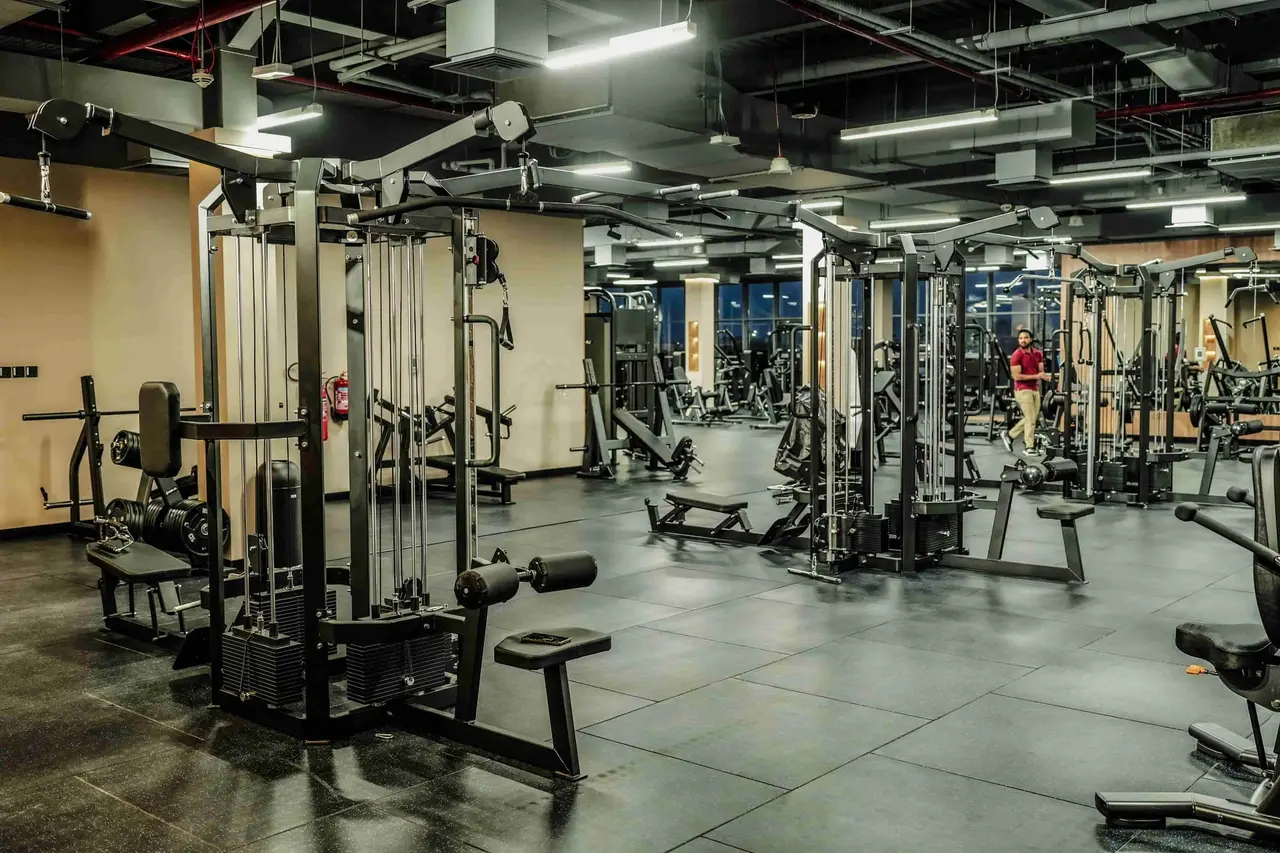
At RPM you can do either, or both, in one club. Fitness boxing runs in the functional area of the Mixed section, where heavy bags hang beside a turf lane with a sled and battle ropes. Photos of the Mixed training floor show plate-loaded machines, cable towers, dumbbells and a squat rack with colour bumper plates, and strength training at RPM describes that floor. The women-only Ladies section has its own strength and cardio equipment, and the roster lists Imen Hasnaoui there as the combat and self-defence coach.
Coaches on the roster cover strength and conditioning as well as combat fitness, across both sections. Ask which boxing sessions run and when, and ask about sparring rather than assuming it. Which sections and sessions a membership covers depends on the tier, so confirm yours.
Sources
Questions, answered.
Does fitness boxing build muscle?
It works your muscles hard, but it is not built around adding load over time, which is what a muscle-building plan relies on. If muscle is the main goal, lift.
Which is better for weight loss?
Neither on its own. Both can be part of a plan that includes changes to eating, so choose the one you will do most weeks. If you have a medical reason to lose weight, speak to a doctor or dietitian.
Can I start either with no experience?
Yes. Ask for a beginner session in boxing, where you learn stance and guard first, and book a session or two with a coach to learn the main lifts.
Do I need to spar to get fit from boxing?
No. Fitness boxing is bag work, pad work and conditioning. Sparring is a separate step, and where a gym offers it, it should be optional and supervised.
Can I do both on the same day?
Yes, if one of them is short. Many people box first, while they are fresh for technique, then do a brief strength session.