Condition matters more than the logo
New equipment from a well-known maker looks good on a tour, but upkeep decides how it feels in month six. A machine that has been serviced often for years can be in better shape than last year's model that nobody looks after. Judge what is in front of you, and ask how it is kept that way.
This guide goes machine by machine. For a walk through the whole building, use the tour inspection guide, and to set the results side by side across gyms, use the equipment comparison matrix. RPM's facilities page shows what is on its floor. Ask the guide before you touch anything, and never interrupt someone's set.
Selector and plate-loaded machines
| Part | Check it like this | Fault to look for |
|---|---|---|
| Seat and back pads | Press with your thumb and look at the seams | Splits, tape, exposed foam, pads that wobble on their bolts |
| Adjusters and pop pins | Move the seat through its settings | Pins that stick, holes worn oval, levers that slip |
| Selector pin | Pull it out and push it into two plates | A missing pin replaced by a bolt, or a pin that will not seat |
| Weight stack | Lift a light load slowly, then lower it | Plates that grind, jump or clang on the way down |
| Guide rods | Look along their length | Rust, dry metal, scoring |
| Plate horns and footplates | Load a small plate and look at the leg press footplate | Bent horns, missing sleeves, a slippery or cracked footplate |
Read the instruction placard while you are there. A machine whose placard is missing or unreadable has often been neglected in other ways too.
Cable stations
- Run your eye along the whole cable. Fraying, kinks or a flattened section where it runs over a pulley mean it is due for replacement.
- Pull slowly through the full range. It should feel smooth, with no catching at the pulleys or jerking in the stack.
- Check that the height adjuster on each tower locks and does not slip under load.
- Look at the clips and handles. Bent clips, cracked handles and missing attachments are cheap to replace, so a gym that leaves them shows how it deals with bigger repairs.
Bars and racks
- Spin the sleeves on a few barbells. They should turn freely. A sleeve that grinds or sticks makes cleans and presses awkward.
- Roll a bar along the floor or the J-hooks. A wobble means it is bent.
- Feel the knurling. Clogged with chalk and rust is a cleaning problem. Worn smooth means the bar is old.
- Check that collars are on hand and grip properly.
- On racks, look at the safety arms and hooks: pins that go in fully, no cracked welds, and padding on the hooks where it belongs.
- Make sure fixed-weight barbells are marked with their weight and have ends that do not rattle.
Plates and dumbbells
- Bumper plates should have no chunks missing and no metal centres coming loose.
- Check whether plates are in kilograms or pounds. Mixed sets make loading a bar guesswork.
- Dumbbell heads should not spin or rattle on the handle, and the rubber should not be peeling.
- Look for complete pairs in your range, racked in order. Missing pairs are a maintenance problem as well as a range problem.
- Kettlebells and medicine balls should have sound handles and no splits.
Cardio machines
- Walk on a treadmill at an easy pace. The belt should run centred and smoothly, without slipping or a burning smell.
- Check that the emergency stop clip is attached and works.
- Pedal a bike or a cross-trainer. Clicks, wobbles or a seat post that will not lock are early signs of wear.
- Press the screen. Dead or cracked screens on several machines suggest repairs are waiting.
- In summer, notice whether fans and air conditioning keep the cardio row comfortable, because faults there show quickly in the heat.
Out-of-order signs and how faults are handled
A busy gym will always have something out of action. What matters is how long it stays that way and how the gym finds out. Put these with the rest of your questions for staff.
| Ask | Reassuring answer | Worrying answer |
|---|---|---|
| How do members report a fault? | At the desk, by message or with a code on the machine, and someone logs it | Tell whoever is around |
| How quickly are faults fixed? | Simple repairs within days, with parts ordered for bigger ones | When the technician next comes |
| Who maintains the equipment? | A named person in-house or a regular service contract | Nobody is sure |
| Is there routine servicing? | A set schedule for checking cables and belts | Only when something breaks |
| What happens to a broken machine meanwhile? | A dated sign, and the machine blocked off | It stays in use, or a handwritten note is taped on |
Read the signs themselves. A printed notice with a date and an expected return reads very differently from a faded paper sign with no date at all.
Checking RPM's equipment
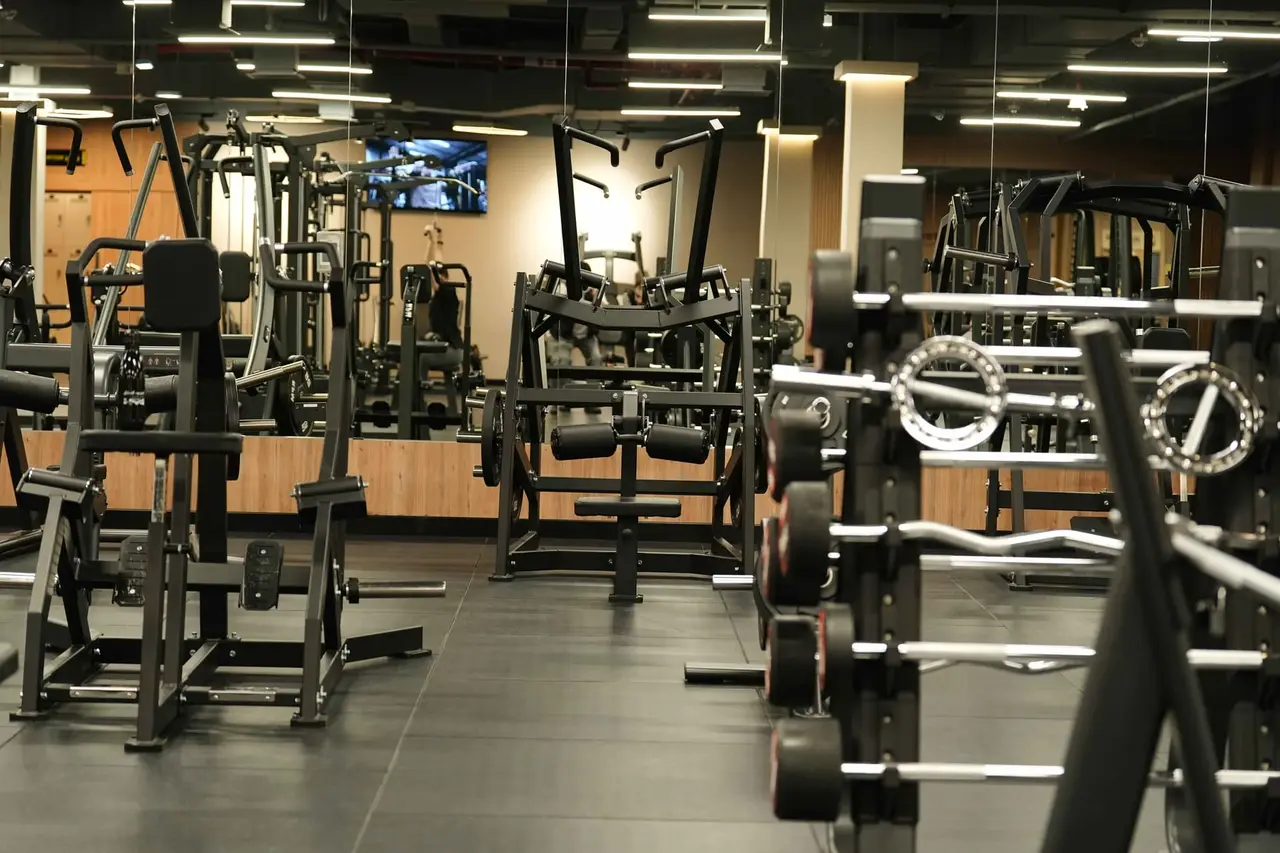
Photos of RPM's training floor show plate-loaded machines including a leg press and a pulldown, multi-station cable towers and fixed-weight barbells. They also show benches, plates and dumbbells, a squat rack with colour bumper plates, treadmills, cross-trainers, an upright bike and spin bikes. Photos show what is there, not its condition.
The maintenance routine, the way faults are reported and how quickly they are fixed are not confirmed here, so put those questions to the team directly. On the free guided tour, a walk-through with a member of the team rather than a workout, ask before testing anything and spend a minute on the kit you would use most.
Questions, answered.
Is it rude to test equipment on a tour?
Not if you ask first and keep it brief. Sitting on a machine, moving an adjuster or spinning a bar sleeve takes seconds. Never step in while someone is mid-set, and leave everything as you found it.
Is refurbished equipment a bad sign?
No. Refurbished machines can be in excellent order if the work was done well. Judge the condition in front of you and the repair routine behind it, not the purchase history.
What should I do if I find a fault after joining?
Report it the way the gym asks, note the date and follow up if nothing changes. If the same machine stays broken for weeks, raise it with the manager, because working equipment is part of what your membership pays for.
Does equipment wear faster in Abu Dhabi?
Heat and humidity can be hard on equipment, especially by doors and open areas, and dust gets into moving parts. That makes a regular service routine more important here, not less.