Pick the tool by the job, not by habit
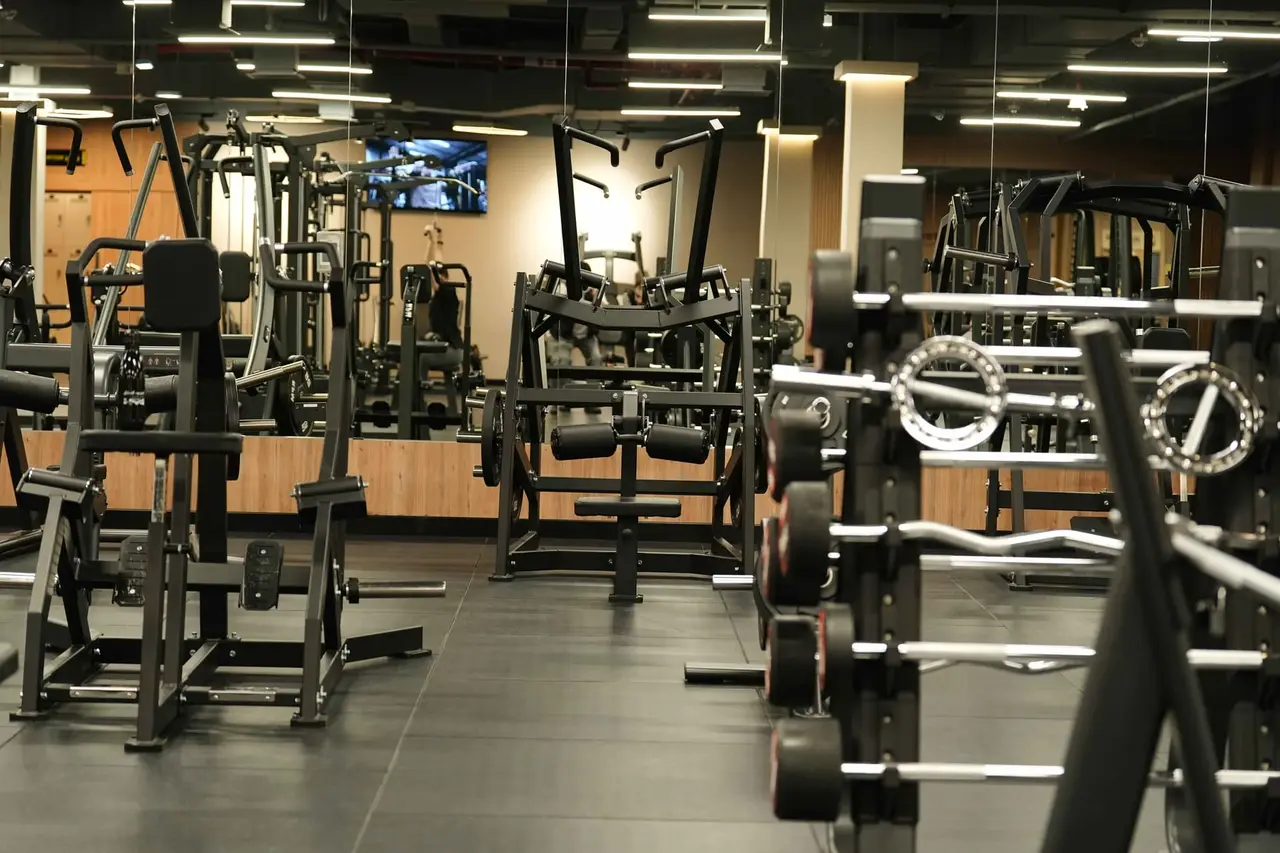
Arguments about machines against free weights usually miss that one programme contains different jobs. A heavy squat, a hard set for the hamstrings and a quick shoulder top-up on a crowded evening each have a better tool. For a photo walk-through of the floor at RPM, see RPM's facilities.
| Job in the programme | Better tool | Why |
|---|---|---|
| The heaviest multi-joint lift of the day | Free weights, such as a barbell squat, deadlift or press | Many muscles work together, and the load can rise in very small steps |
| Learning how hard a set should feel | Machines | The path is fixed, so you can think about effort instead of balance |
| Pushing a set to its limit without a spotter | Machines and cables | You can stop mid-rep and the weight settles back on its stack |
| Isolating one muscle, such as the hamstrings or the side of the shoulder | Machines and cables | Less balancing work leaves more effort for the target muscle |
| Single-leg and balance work | Free weights | Split squats and step-ups with dumbbells train each side on its own |
| Heavy leg work when every rack is taken | Plate-loaded machines | They take plates like a barbell but need no set-up or spotter |
| Short sessions on tired days | Machines | Quick to set up, and easy to repeat at the same settings |
Ordering a mixed session
The ACSM position stand on resistance training recommends an order that preserves intensity. Large muscle groups come before small ones. Multi-joint exercises come before single-joint ones, and higher-intensity work comes before lighter work. In practice that usually puts free weights first and machines later. A lower-body day might run like this:
- Barbell back squat: the heaviest and most technical lift, done while fresh.
- Dumbbell split squat or walking lunge: a lighter free-weight lift, one leg at a time.
- Leg press: more work for the quads without balance limiting the set.
- Leg curl machine: the hamstrings on their own.
- Cable crunch: the trunk, last.
If the rack is taken when you arrive, swap the first two exercises and squat once it frees up. Either way, keep the machine work at the end.
A sample four-day week using both
An upper and lower split over four days. Move the days to suit your diary, keeping a gap between the two lower-body sessions where you can.
| Day | Free-weight work | Machine and cable work | Note |
|---|---|---|---|
| Saturday, lower | Barbell squat, dumbbell Romanian deadlift | Leg press, leg curl, calf raises on the leg press | The heaviest day, at a quiet weekend hour |
| Sunday, upper | Dumbbell bench press, one-arm dumbbell row | Pulldown, cable fly, rope pushdown | Dumbbell presses keep you off the busiest bench |
| Tuesday, lower | Dumbbell split squat, kettlebell swing | Plate-loaded leg press, back extension | Lighter, with more single-leg work |
| Thursday, upper | Standing barbell overhead press, incline dumbbell press | Seated cable row, cable lateral raise, cable curl | A shorter session before the weekend |
Check that a machine is on the floor before you build a day around it, and read the exercise choices as examples rather than a prescription.
Swapping tools without losing progress
- Swap like for like: a pressing movement for a pressing movement, in the same rep range.
- Log the swap, for example 'leg press instead of squat, rack busy', so the week still makes sense when you read it back.
- When a heavy free-weight lift is impossible, a plate-loaded machine keeps the load high without needing a spotter.
- Never compare numbers across tools. A leg press load and a squat load measure different things.
- Go back to the original lift next session if you can, so the main lift keeps its own progression.
How the mix shifts over a training life
- The first months: mostly machines, with free-weight versions learned one movement at a time. Learning free weights sets out a ladder for each lift.
- After a year or so: free weights lead each session, while machines and cables carry the accessory work.
- Physique goals: a bigger share of machines and cables for isolation and extra sets, as in the hypertrophy method.
- Coming back from an injury: once a doctor or physiotherapist has cleared you, machines make it easier to limit a movement's range and change the load in small steps.
- Ramadan, travel weeks and short sessions: lean on machines, which set up quickly and need no warm-up ramp on a bar.
A mixed programme on RPM's floor
RPM's one club, on Level 4 of AD HUB Sports Complex in Al Manhal, puts both tools on the same floor. Photos show plate-loaded machines such as a leg press and a pulldown, cable towers with several stations, benches, dumbbells, plates, fixed-weight barbells and a squat rack with colour bumper plates. The functional area adds kettlebells.
- There is no published machine list, so bring your programme on a free guided tour and ask to see each machine it names.
- The women-only Ladies section has its own strength and cardio equipment, so women can ask which machines and free weights sit there.
- If you want help building the mix, the Engine tier adds coached programming and Atelier centres on one-to-one coaching. Roster roles that fit include Amer Khalil, bodybuilding and strength, and Coach Maria, strength and conditioning.
Sources
Questions, answered.
Are machines a lesser form of strength training?
No. Machines are tools that suit some jobs better than free weights do, and plenty of strong lifters use them every week.
Should a complete beginner start on machines or free weights?
Machines suit most beginners for the first weeks, with free weights added one movement at a time. Free weights or machines compares the two in detail.
Can a whole session be machines only?
Yes, on tired days, when you are short of time or while a free-weight lift is being relearned. Keep the big-muscle exercises first.
Where do cables fit?
Between the two. The stack lets you stop a set at any point, yet your arms and legs move freely. Most programmes use cables for accessory work, and the guide for machine trainers shows how to set them up quickly.