Mobility that serves your lifting
For a lifter, mobility is practical: can you reach the positions your lifts ask for, under control? A squat needs deep hips and knees with the chest up. A press overhead needs the arms to finish above the head without the lower back arching. If a position is hard to reach, the load usually finds a way around it.
The World Health Organization's 2020 guidelines describe flexibility exercises as work that enhances a joint's ability to move through its full range. Their weekly targets for adults cover aerobic activity and muscle-strengthening on two or more days, so mobility sits on top of your lifting rather than replacing any of it. To see what one club's lifting floor holds, read strength training at RPM.
Mobility add-ons for each lifting day
These are common drills. A coach or physiotherapist may give you different ones, and theirs come first.
| Lifting day | Positions the lifts need | Before you lift | Between sets or after | Tools |
|---|---|---|---|---|
| Squat day | Deep hip and knee bend, chest up | Bodyweight squats to a box, ankle rocks at a wall | A slow, supported hold at the bottom after your last set | Step box, wall, light kettlebell |
| Hinge or deadlift day | A flat back as the hips travel back | Hip hinge drills with a dowel, leg swings | A gentle hamstring hold after the session | Dowel or empty bar, mat |
| Bench or push day | Shoulder blades set, upper back extended | Band pull-aparts, upper back extension over a roller | A cable or doorway chest opener between sets | Band, foam roller, cable stack |
| Overhead press day | Arms overhead without arching the lower back | Wall slides, light overhead holds | A kneeling hip flexor stretch after pressing | Wall, light plate |
| Pull or row day | Shoulder reach and rotation | Dead hangs from a bar, band rotations | Thoracic rotations lying on your side | A bar to hang from, band, mat |
| Rest or easy day | Whatever felt tight in the week | A walk, then a longer mobility circuit | Pilates instead, for women at RPM | Mat and roller, or the reformer |
Keep each add-on to about ten minutes so it survives a busy week.
Write the add-ons into your training log under each session, so they are part of the plan and not an afterthought you drop when the car park is full and you are running late.
Space and tools to look for in a gym
- An open mat area within a few steps of the racks, so mobility happens between sets and not across the club.
- Foam rollers, bands and dowels out on the floor. Ask whether they are provided or whether you should bring your own.
- A bar you can hang from, for shoulder work on pull days.
- A cable stack you can use briefly for openers without holding up someone's set.
- A turf lane or clear strip for walking drills and lunges.
- A quieter corner away from the dumbbell traffic, for slower work on the floor.
Visit at your usual hour. A mat area that looks spacious at midday can become a second dumbbell zone after office hours.
Where Pilates fits, and who can use it at RPM
Reformer Pilates is a popular partner for lifting, because it trains slow, controlled movement on a spring-loaded machine. At RPM, the Pilates studio is inside the Ladies section, which is for women only, and reformer classes run there. The studio photos show reformers, some with towers, plus trapeze-table frames and a ladder barrel. Ask which apparatus a given session uses.
The roster lists Giana Suleiman Daqnoush as the Pilates and aerobic coach in the Ladies section. For how a reformer session and a lifting week fit together, read whether reformer Pilates is worth combining with lifting. Men cannot use the studio, so for them the table above, done on the training floor, is the mobility plan at RPM.
When stiffness needs a professional
Mobility drills are training, not treatment. If a joint hurts, catches or locks, if you feel numbness or tingling, or if your range has shrunk since an injury, see a physiotherapist or doctor before adding drills. Tell your coach what they advise, so the lifting plan can follow it. Gym coaches can drill positions with you, but they are not clinicians.
Mobility space at RPM, for men and for women
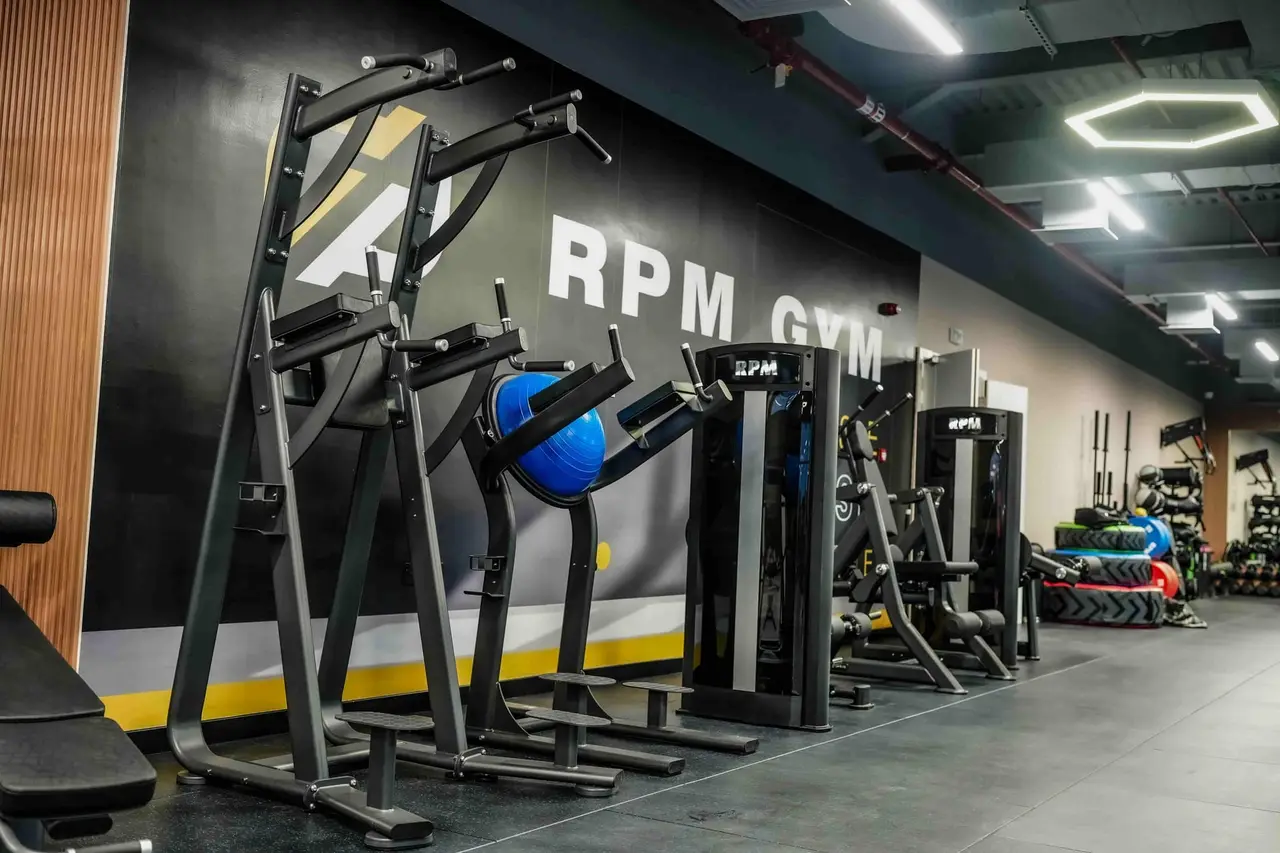
RPM is one club, on Level 4 of AD HUB Sports Complex in Al Manhal. Its floor photos show a squat rack, benches, dumbbells, plate-loaded machines and multi-station cable towers. The functional area has a turf lane with kettlebells and step boxes beside it, which suit several of the drills in the table. RPM does not publish whether mats, rollers or bands are kept on the floor, so ask on a free guided tour.
Women can train in the Ladies section, which has its own strength and cardio equipment as well as the Pilates studio, and in the Mixed section if their tier covers it. Men train in the Mixed section. Coach Maria coaches strength and conditioning in the Ladies section, according to the roster. Ask her, or any coach, how they would build mobility work into your lifting plan.
Sources
Questions, answered.
Should I stretch before lifting?
Many lifters warm up with movement drills and lighter sets of their first lift, and save longer held stretches for after the session. If a coach or physiotherapist has given you a routine, follow theirs.
Is there a mobility option for men at RPM besides Pilates?
The Pilates studio is inside the Ladies section, which is for women only, so men use the training floor. The drills in the table need only a box, a band, a roller and a bar, or men can look for a Pilates studio elsewhere that accepts them.
How long before I notice a difference?
It varies from person to person, and nobody should promise a date. Pick one position per lift, such as how deep you can squat with your chest up, and check it once a month.
Do I need my own foam roller?
It is optional. Many people like one before upper-body days. Ask whether the gym keeps rollers on the floor before you buy one.