Why strength sits at the top of the list
WHO's 2020 guidelines give every adult from 18 to 64 the same two targets. One is 150 to 300 minutes of moderate aerobic activity a week, or 75 to 150 minutes of vigorous activity. The other is muscle-strengthening activity at moderate or greater intensity on two or more days. Walking, classes and cardio machines cover the first target in plenty of ways. The second needs equipment and some know-how, so it is the part a gym has to get right.
Age changes the practical side more than the principle. Many women in their forties find that hard sessions take longer to recover from than they used to, so steady, repeatable strength work suits them better than occasional punishing sessions. Look for a gym where that kind of training is easy to fit into an ordinary week. RPM's Ladies section, a women-only floor with its own strength equipment, is one place to compare against the list below.
The strength checklist for your tour
| Look for | Why it matters after 40 | Ask on the tour |
|---|---|---|
| Dumbbells that rise in small steps | Progress comes from small, regular increases rather than big jumps | What is the lightest pair, and how far apart are the steps? |
| Machines with simple adjustments | A leg press or pulldown loads big muscle groups without a long learning curve | Can someone show me how to set the seat and the weight? |
| A rack, a bench and cables where you would train | Squats, presses and rows between them work most of the major muscle groups | Is this kit inside the women-only area, or on the mixed floor? |
| Open floor or mats | Room for warm-ups, balance drills and core work | Where do people warm up when the floor is busy? |
| A coach on call | A technique check each time you add a new lift | Can I book a single session, and with a female coach? |
Small steps matter because of how progress works. The American College of Sports Medicine's 2009 position stand suggests adding load once you can do one or two repetitions more than your target, and only by a small amount, which it puts at 2 to 10 per cent. A rack of dumbbells with big gaps between pairs makes that hard to follow.
Recovery days belong in the plan
Two or three strength days leave the rest of the week for walking, Pilates or nothing at all. A plan with rest built in is easier to keep than one that stacks hard sessions back to back, and it absorbs the weeks when work or family take over.
One way to lay out a week that meets WHO's adult targets and still leaves time to recover:
| Day | Session | Notes |
|---|---|---|
| Saturday | Strength: legs, a push and a pull | The longest session, when the weekend allows |
| Sunday | Brisk walk or easy bike | Indoors from May to September |
| Monday | Rest, or a gentle Pilates class | A light day after the weekend's strength work |
| Tuesday | Strength: hinge, press, row and carry | Shorter, around 45 minutes |
| Wednesday | Rest | Sleep and work come first |
| Thursday | Intervals on the bike or cross-trainer | Counts towards your vigorous minutes |
| Friday | A walk, or rest | RPM opens for shorter hours on Fridays |
Swap days to fit your week. If a session leaves you sore or flat for more than a couple of days, make the next one lighter.
For a longer strength block with phases and retests, see strength training for women.
Women-only section or the mixed floor?
Both can work. The questions that decide it are practical:
- Does the women-only space hold the kit your plan uses, including a rack and dumbbells heavy enough for your working sets?
- Would you skip sessions on a mixed floor? If so, the women-only option earns its cost.
- Does your tier cover both, so you can use the mixed floor for anything the section lacks?
- Is there a female coach on the roster, if that matters to you?
If you already lift and wonder whether a women-only space will keep up, the guide for women who lift weights works through that question.
Questions women over 40 ask before joining
Is it too late to start strength training at 45 or 50?
No. WHO's recommendations cover all adults, and its good practice statements say to begin with small amounts and build up over time. ACSM classes anyone without lifting experience as a novice and suggests two or three sessions a week, with weights you can lift 8 to 12 times.
Do I need to see a doctor before I start?
If you have a medical condition, take regular medication, notice symptoms such as chest pain or dizziness, or have questions about menopause, bone health or your joints, see your doctor first and pass their advice on to your coach. A gym coach is a fitness professional, not a clinician.
How RPM's Ladies section fits
RPM is one club, on Level 4 of AD HUB Sports Complex in Al Manhal, with free on-site parking at AD HUB and a lift to the floor. The Ladies section is for women only and has its own strength and cardio equipment and the Pilates studio. Women can also train in the Mixed section, and which sections a membership covers depends on the tier, so confirm that before you join.
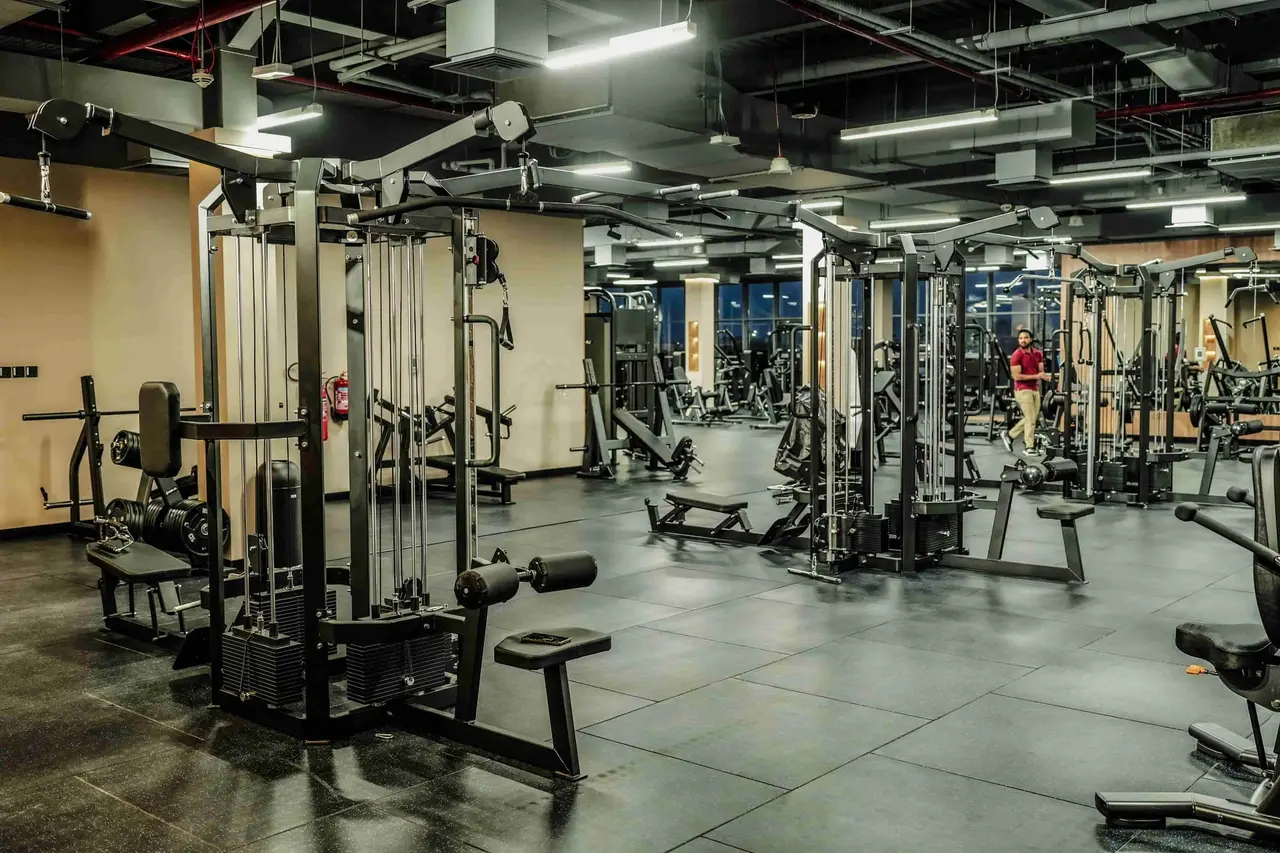
The training floor photos show plate-loaded machines such as a leg press and a pulldown, along with cable towers and benches, plus dumbbells and a squat rack. Ask which of these sit inside the Ladies section and which on the mixed floor, so you can run the checklist above against the space you would actually use.
Female coaches on the roster work in the Ladies section. If you want a coach to lead the plan, female personal training for women over 40 explains the assessment and progression. Prices are confirmed on enquiry. The free guided tour is a walk-through rather than a workout, so book it for the hour you would train.
Sources
Questions, answered.
How many days a week should I train?
Two strength days meet WHO's muscle-strengthening target, and a third is common once the first two feel routine. Walking or cardio on other days covers the aerobic minutes.
Should I join classes or train on my own?
Either can meet the targets. A class gives you a fixed time and a coach's eye, while training alone lets you follow a strength plan at your own pace. Many women do one of each.
I have trained for years. Does any of this change for me?
The targets matter less than the checklist. Look hard at the heaviest dumbbells and the rack in the space you would use, and ask whether your tier also covers the mixed floor.
Can I see the women-only section before I join?
Ask for it when you book the free guided tour. Seeing the space at your usual training hour tells you more than photos about how busy the kit gets.