What the RDL trains, and how it differs from a deadlift
The RDL starts at the top, not on the floor, so the first thing you do in each rep is lower the weight. Your knees bend a little at the start and then hold that angle while your hips travel back, which loads the hamstrings as they lengthen. The glutes work hard to bring you back up, the muscles along your spine keep your back flat, and your grip and upper back hold the bar close. Because the bar never rests on the floor, the muscles stay under tension for the whole set.
It is the most useful hinge to learn first: lighter than a full deadlift, easier to set up, and a direct way to feel the difference between bending at the hips and bending at the back. It suits almost anyone who trains legs, from beginners with a pair of dumbbells to lifters using it as their main hamstring exercise after squats, and it sits early or in the middle of a lower-body session. The hamstring exercises page shows how it pairs with curls, and the deadlift page covers the lift from the floor.
The hamstrings, not the lower back, should be what you feel most. If your lower back aches during a set, shorten the range and lighten the load; if you get pain that is sharp, spreads into a leg or lingers, stop and get it checked by a doctor or physiotherapist.
Setting up the bar or dumbbells
- Set the bar in a squat rack at about mid-thigh height so you can lift it out standing, instead of deadlifting it from the floor before every set.
- Grip just outside your thighs, palms facing you. Lifting straps are fine here, because the grip usually tires before the hamstrings.
- Step back with your feet hip width apart and your toes pointing forward or very slightly out.
- Stand tall with the bar against your thighs, shoulders back and down, and your knees unlocked: a small bend you will keep for the whole rep.
- Start light, with the bar alone or two moderate dumbbells. The weight that gives you a strong hamstring stretch with a flat back is usually well below your deadlift.
How to do a rep
- Brace your trunk and take a breath.
- Push your hips straight back, as if reaching for a wall behind you with your backside. Your torso tips forward because the hips move, not because you bend at the waist.
- Slide the bar down the front of your thighs and past your knees, keeping it in contact with your legs. Your shins stay close to vertical.
- Stop when you feel a strong stretch in your hamstrings or when your back is about to lose its flat shape, whichever comes first. For most people that is between the knee and mid-shin.
- Drive your hips forward and stand tall, squeezing your glutes at the top without leaning back.
Take two to three seconds on the way down; the lowering is what makes this exercise work. Keep your eyes on the floor a couple of metres ahead so your neck stays in line with your back. Your hamstrings set your depth, not the floor: a shorter range with a flat back is worth more than a deep one with a rounded back.
Common RDL mistakes
| Mistake | What it looks like | The fix |
|---|---|---|
| Squatting it down | The knees bend more and more and the hips drop as the bar lowers | Set the knee angle at the start and send the hips back instead of down |
| Bar drifting away | The bar hangs in front of your legs and the lower back takes over | Keep the bar touching your thighs and shins, with your lats tight |
| Chasing depth | The back rounds at the bottom so the bar can reach the floor | Stop where your back stays flat; the range grows with time |
| Locked knees | The legs are rigidly straight and the stretch is felt behind the knee | Unlock the knees slightly and hold that bend |
| Craning the neck | You watch yourself in the mirror throughout the rep | Keep your head in line with your back, eyes on the floor ahead |
| Leaning back at the top | You lean back past upright to finish | Stop when you are standing straight with your glutes squeezed |
Dumbbell, stiff-leg and single-leg versions
Every version trains the same hinge. They differ in the tool, the knee angle and how many legs you stand on.
Dumbbell Romanian deadlift
Hold a dumbbell in each hand in front of your thighs, palms facing you, and hinge exactly as with a bar, sliding the dumbbells down your legs. Dumbbells are easier to pick up, let your hands find their own path, and suit home training and lighter loads; the barbell lets you add more weight over time. Many people learn with dumbbells and then move to the bar.
Stiff-leg deadlift: how it differs
The two names are often mixed up. In a stiff-leg deadlift the knees are straighter and the bar usually starts from the floor on each rep, which gives a bigger hamstring stretch and asks more of the lower back. In the Romanian deadlift the knees stay softly bent, the bar stays on your legs, and you start from the top and stop before the floor. Most people should learn the RDL first.
Single-leg Romanian deadlift
You stand on one leg and hinge forward while the other leg reaches back behind you, holding a dumbbell or kettlebell in the hand opposite the standing leg. It trains each hamstring and glute alone and adds a balance challenge, so the load is much lighter. Begin with bodyweight and a fingertip on a rack upright for balance.
If the racks are busy, a kettlebell swing trains the same hinge explosively, and the leg curl works the hamstrings from the knee. The good morning, with the bar across your upper back, is another hinge worth learning with a coach.
Sets, reps and progression
| Goal | Sets × reps | How hard |
|---|---|---|
| Learning the hinge | 2–3 × 8–10 | Light; three or four reps left |
| Building muscle | 3–4 × 8–12 | One or two reps left, with a three-second lowering |
| Strength | 3–4 × 5–6 | Heavier, two reps left, bar never leaves your legs |
Rest about two minutes between sets. RDLs leave the hamstrings noticeably sore the first few times, so begin with two or three sets and build up.
Once or twice a week is enough, and on a day with heavy squats or deadlifts, keep the RDLs lighter. Add load in small steps once every rep reaches the same depth with a flat back. The training volume calculator helps you count your hamstring sets across the week.
Romanian deadlifts at RPM
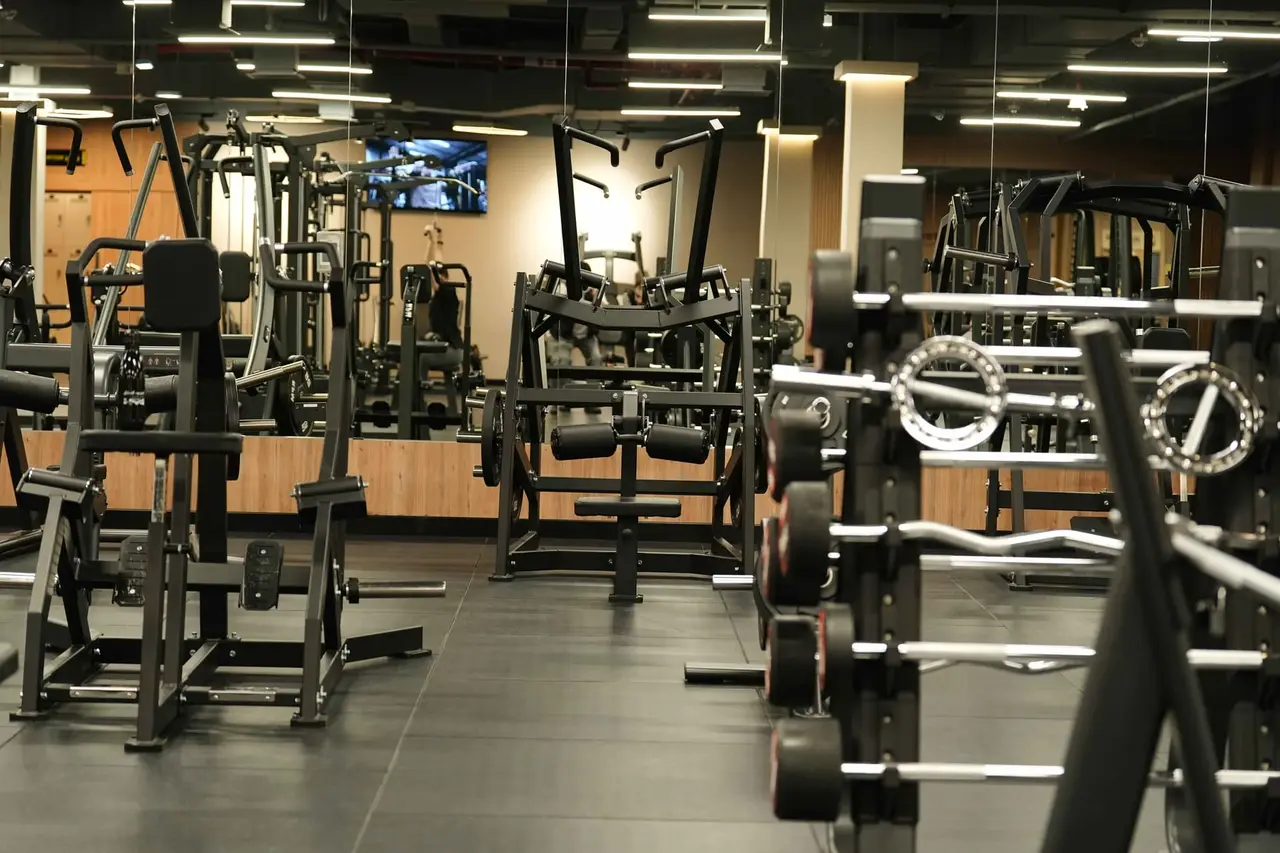
RPM's floor photos show squat racks with barbells and colour bumper plates, a rack of fixed barbells and a dumbbell rack, so both the barbell and dumbbell versions are covered on the training floor. If you want someone to check your hinge before you add weight, book a personal training session.
Questions, answered.
What muscles does the Romanian deadlift work?
Mainly the hamstrings and glutes, with the muscles along the lower back and your grip working to hold position.
Romanian deadlift vs deadlift: which should I do?
The RDL keeps more of the work on the hamstrings and is the easier hinge to learn; the deadlift moves more weight and trains more of the body. Many programmes use both, and Romanian deadlift vs deadlift sets out how.
How low should I go on an RDL?
Until your hamstrings are fully stretched or your back starts to round, whichever comes first. For most people that is somewhere between just below the knee and mid-shin; touching the floor is not the goal.
Why do I feel RDLs in my lower back?
Usually because the bar drifts away from your legs, the knees bend too much, or you go deeper than your hamstrings allow. Lighten the load and shorten the range. If it is pain rather than effort, stop and have it checked by a doctor or physiotherapist.
Is there a machine alternative to the RDL?
A Smith machine can be used for the same hinge, and a cable pull-through, facing away from a low pulley with a rope between your legs, is another option. The hamstring exercises page lists more.