How the glutes work
Three muscles make up the glutes. The gluteus maximus is the big one that gives the buttocks their shape. It extends the hip, pulling the thigh back behind you or driving the hips forwards as you stand, and it turns the thigh outwards. The gluteus medius and minimus sit higher and to the side. They lift the leg out sideways and, more usefully, hold the pelvis level every time you stand on one leg, which means every step you walk or run.
For training, the key idea is that the glutes can be loaded at either end of their range. Deep squats, lunges and Romanian deadlifts are hardest when the hip is bent and the muscle is long. Hip thrusts, bridges and cable kickbacks are hardest when the hip is straight and the muscle is short. A well-built glute programme includes something from each end, plus a little side-hip work.
The movements that train the glutes
Group glute exercises by where in the rep they are hardest and the choice gets easier. Each library page below covers its movement step by step.
- Hardest at the top, with the glutes short: the hip thrust, the floor glute bridge and cable kickbacks. These are the most targeted glute exercises, because little else limits the set.
- Hardest in the stretch: the Romanian deadlift and the deadlift, which share the work with the hamstrings.
- Squats and lunges with deep hips: the back squat, the goblet squat, the Bulgarian split squat and the lunge. The quads work hard too, and depth decides how much the glutes contribute.
- Fast hip extension: the kettlebell swing, which builds power and conditioning more than size.
- The side of the hip: hip abduction on a machine or a cable, and band side steps, for the gluteus medius and minimus.
The best machines for glutes, honestly
People search for the one machine that builds glutes, and the honest answer is that it does not exist: each machine covers only part of the job. What a machine does offer is a way to load the glutes hard with less balance and less set-up. Here is what each common one is good for.
| Machine | What it does for the glutes | Worth knowing |
|---|---|---|
| Hip thrust machine | Loads the top of hip extension, like a barbell thrust | Faster to set up than a bar; not every gym has one |
| Leg press | Glutes and quads; feet high and wide on the platform shift more work to the glutes | Go only as deep as the lower back stays on the pad |
| Cable station | Kickbacks with an ankle strap, pull-throughs with a rope | Light, precise work for the end of a session |
| Hip abduction machine | Trains the side of the hip | Small muscles: moderate weight, slow reps |
| Smith machine | Hip thrusts, split squats and squats on a fixed bar path | Handy when you train without a spotter |
| Back extension bench | Hip extension over a pad; less rounding and a harder squeeze bias the glutes | Bodyweight first, then hug a plate |
Machines are not a lesser option for the glutes. The Smith machine and cable machine pages explain those two stations in detail.
For the glutes and hamstrings together, the Romanian deadlift and the back extension are the most efficient picks. For the glutes and quads together, the leg press, the split squat and a deep squat. And if all you had was a barbell, a bench and a rack, you could still train the glutes completely: thrusts, hinges and squats need nothing more.
How often and how many sets
Two or three glute sessions a week work well. The glutes bounce back quickly from thrusts and bridges and more slowly from deep squats and heavy hinges, so spread the hardest lifts across the week. As with the rest of the legs, a common coaching range is about 10 to 20 hard sets a week once you have been training a while, and about 6 to 10 when you are new. Squats, lunges and hinges count towards that total, so someone who already squats twice a week may need only a few sets of thrusts on top.
Progress the same way you would any lift: add reps at a weight until every set reaches the top of the range, then add a little load. The hypertrophy volume calculator helps you total your weekly sets.
Glute growth: what to expect
Many people come to glute training wanting a bigger or rounder shape. Training can build the muscle, but slowly: think in months of consistent, progressive sessions, with enough food to support them, not weeks. How the hips look also depends on your genetics, where your body stores fat and your overall body fat, and training does not control any of those. No exercise or programme can decide the exact shape you end up with.
What you can measure, week by week, is performance: the load on your hip thrust, the reps on your split squat, how steady you are on one leg. When those numbers keep rising, the muscle is being given a reason to grow. If they stall for several weeks, look at sleep, food and recovery before adding more sets.
Two sample glute sessions
Session A: thrust and hinge
Start with the hip thrust while you are fresh, then the Romanian deadlift for the stretched end of the range.
| Exercise | Sets × reps | Coaching note |
|---|---|---|
| Barbell hip thrust | 3–4 × 8–12 | Hold the top for a second |
| Romanian deadlift | 3 × 8–10 | Hips back until the hamstrings feel the stretch |
| Cable kickback | 2–3 × 12–15 each leg | Slight forward lean, no swinging |
| Hip abduction, machine or cable | 2–3 × 15–20 | Slow, controlled reps |
Session B: squat and single leg
Deep squatting and single-leg work, with the kettlebell swing to finish. Swap in the goblet squat if the barbell is new to you.
| Exercise | Sets × reps | Coaching note |
|---|---|---|
| Back squat or goblet squat | 3–4 × 6–10 | As deep as you can control with a neutral back |
| Bulgarian split squat | 3 × 8–10 each leg | Lean the torso slightly forward to bias the glutes |
| Walking lunge | 2 × 12 each leg | Long steps |
| Kettlebell swing | 5 × 10 | Snap the hips and finish tall |
Each session is roughly 10 to 14 sets in which the glutes do much of the work. Train the upper body on the same day or on other days of the week.
Glute training mistakes
- Living on bands and light pump work. Band exercises are useful for warming up, but the glutes need loads that rise over months.
- Arching instead of extending. In thrusts, swings and back extensions, finishing the rep with the lower back takes the work away from the glutes. Keep the ribs down and the chin tucked.
- Cutting squats and lunges short. Shallow reps leave the glutes with little to do; go as deep as you can control.
- Training glutes every day. Daily sets with no rest days and no progression leave you tired rather than stronger.
- Forgetting the rest of the body. A glute emphasis belongs inside a full-body plan, not in place of one.
- Pushing through hip or back pain. Stop the exercise, and have pain that persists checked by a doctor or physiotherapist.
Glute training at RPM
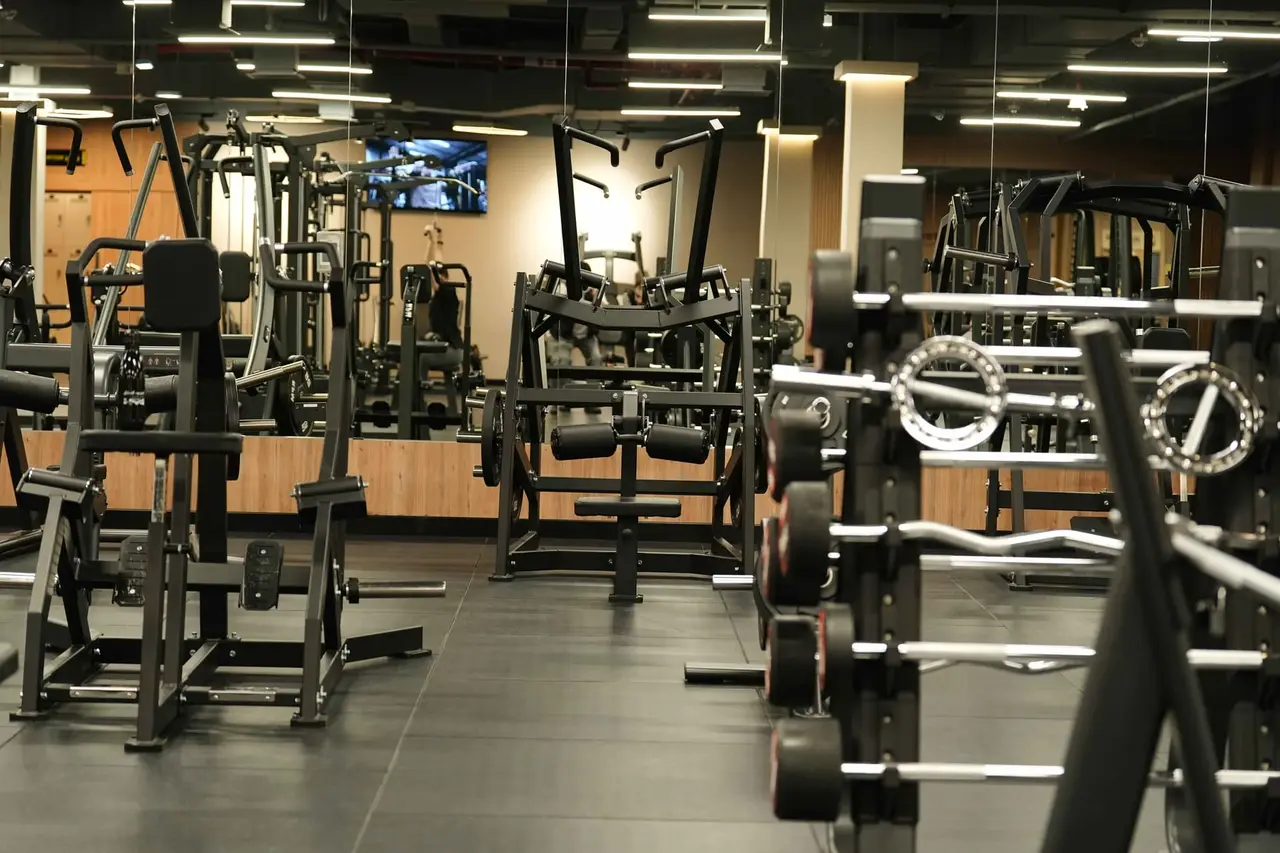
The core glute movements need little special kit, and RPM's photos of the Al Manhal floor show it: flat benches, barbells and colour bumper plates for thrusts and hinges, squat racks, an angled plate-loaded leg press, multi-station cable towers, dumbbells and kettlebells. A hip thrust machine, an abduction machine, a Smith machine and a back extension bench do not appear in those photos, so ask which are on the floor in the Mixed and Ladies sections during your free tour.
This hub covers every glute movement in the library, for anyone who trains. The glute training guide for women is a different thing: a two-day programme for women training in RPM's Ladies section, with the research behind its set counts. For coaching, see personal training or a female personal trainer, and browse every movement in the exercise library.
Questions, answered.
Which machines work the glutes and hamstrings together?
The back extension bench and the leg press with the feet high on the platform both work the two together, and so does a cable pull-through. Among free weights, the Romanian deadlift is the most direct choice; see the hamstring guide.
Are glute exercises different for women and men?
No. The same movements train the glutes in everyone. Women more often ask for a glute emphasis and men more often skip direct glute work, but the exercises, sets and progression are the same.
Can I train glutes with only dumbbells?
Yes. Dumbbell Romanian deadlifts, goblet squats, split squats, lunges, step-ups and a dumbbell hip thrust cover it, and single-leg versions keep a light dumbbell challenging.
What glute exercises can I do on the cable machine?
Kickbacks and side raises with an ankle strap, pull-throughs with a rope between the legs, and cable Romanian deadlifts. They suit the end of a session, after the heavy lifts.
Can I train glutes at home?
Bridges, single-leg bridges, split squats and step-ups need little more than a step and a sofa. Progress by adding reps, slowing the lowering phase or holding a loaded bag; a gym becomes useful when you need heavier loads.
Do squats build the glutes?
Deep squats work the glutes, especially near the bottom, but they train the quads at least as much. Glute-focused plans add a thrust or a hinge rather than relying on squats alone; the legs guide shows how both fit in a week.