What the fly trains, and where it sits in a session
A press pushes the arms forward; a fly draws them together across the body. That hugging action, bringing the upper arm in towards the midline, is the chest muscle's other main job, and the fly isolates it. Because the elbows hold a fixed bend, the triceps have almost nothing to do, while the front shoulders still assist, most of all near the bottom.
The fly is an accessory, not a replacement for pressing. It loads the chest hardest when the arms are wide and the muscle is lengthened, and hardly at all once the dumbbells are over your chest. A 2005 study that compared the barbell press, dumbbell press and dumbbell fly with six-rep loads found similar chest activity across the three, but the fly loaded the chest hard for a shorter part of each repetition. So most programmes put it after one or two presses, with light weights and higher reps, as the chest training guide does.
Setting up for a fly
- Choose dumbbells much lighter than you press with, often half as heavy or less. The long lever makes the bottom of the arc far harder than it looks, so if in doubt start with a pair that feels almost too easy.
- Sit on the end of a flat bench with the dumbbells on your thighs, lie back and bring them up over your chest as you would for a dumbbell bench press.
- Turn your palms to face each other, so the handles are parallel and the dumbbells almost touch above the middle of your chest.
- Bend your elbows slightly, as if hugging a large barrel. That bend is the shape you keep for the whole set.
- Plant your feet, set your shoulder blades back and down into the bench and keep your chest lifted. This is what holds the shoulders steady at the bottom.
How low to go: the stretch and the shoulder
Depth is where the fly is won or lost. The chest works hardest when stretched, so a fly cut short does little, but the bottom of the arc is also where the front of the shoulder sits under the most leverage. The aim is a strong stretch across the chest, not as much range as your joints will give you.
- Lower until your upper arms are roughly level with your torso, or a little below the bench line. For most people the stretch is clear here and the shoulders stay put.
- Keep the shoulder blades pinned back throughout. If they lift off the bench and the shoulders roll forward, you have gone too far.
- Feel the stretch across the chest, between the breastbone and the armpit. A pulling or pinching feeling at the front of the shoulder means stop higher on the next rep.
- Keep the elbows pointing out to the sides and slightly down, with the dumbbells travelling in line with your chest rather than up by your head.
- Pause briefly in the stretch instead of bouncing out of it.
Pain at the front of the shoulder during or after flies is a reason to stop the exercise, not to go deeper. Get it checked by a doctor or physiotherapist before you carry on.
How to do a rep
- Start with the dumbbells over your chest, palms facing, elbows softly bent.
- Open your arms in a wide arc over about three seconds, the elbows travelling out to the sides rather than down by your hips or up by your ears.
- Stop at the depth described above and hold the stretch for a moment.
- Bring the dumbbells back along the same arc, thinking of squeezing your upper arms towards each other rather than lifting the weights.
- Stop just before the dumbbells touch, hands over the middle of your chest, and begin the next rep.
Breathe in as the arms open and out as they close. The slow lowering does most of the work in a fly; rushing it lets the dumbbells drop into the bottom of the range, exactly where you want the most control.
Mistakes to fix first
| Mistake | What it looks like | The fix |
|---|---|---|
| Turning it into a press | The elbows bend more on the way down and straighten on the way up | Fix one elbow angle and move only at the shoulder; lighten the dumbbells |
| Arms almost straight | Locked elbows and a long lever hanging off the elbow joint | Keep a soft bend that stays the same all set |
| Going too heavy | Short, fast reps, with the dumbbells falling into the bottom | Use a pair you can lower in three seconds for twelve reps |
| Too deep | The shoulders roll forward and the dumbbells sink well below the bench | Stop when the upper arms are level with your body and the stretch is clear |
| Clanging at the top | The dumbbells bang together and the chest switches off | Stop with a small gap and keep squeezing |
Fly variations, and how the machines compare
The fly can be done on different benches and with different kit. These are the versions people ask about most, including how two machine options differ.
Incline dumbbell fly
The same movement on a bench raised to a low incline, about the first or second notch. The arc shifts up towards your collarbones, so more of the work goes to the upper chest. Keep the angle low; on a steep bench the front shoulders take over.
Flat vs incline fly
The flat fly works the chest as a whole and takes slightly more weight; the incline version moves more of the effort to the upper chest. If you already do an incline bench press, the flat fly adds variety; if all your presses are flat, the incline fly fills the gap.
Cable fly and pec deck: how they differ
With a cable fly the pulleys keep pulling even at the top of the rep, where dumbbells go slack, and moving the pulleys changes the angle. A pec deck, often called the butterfly machine, guides the arms through a fixed arc and is the easiest of the three to learn. The dumbbell fly loads the stretch hardest and the squeeze least. All three are reasonable, and many people rotate between them.
If the benches are busy, a cable fly on the cable machine trains the same action standing, and the chest press machine works the chest with heavier loads.
Sets, reps and when to go heavier
| Goal | Sets × reps | How hard |
|---|---|---|
| Learning the arc | 2 × 12–15 | Very light; stop with four or more reps left |
| Building muscle | 2–4 × 10–15 | One or two reps left, with a slow lowering on every rep |
| Finisher after presses | 1–2 × 15–20 | Light and steady, stopping before the reps get shorter |
Rest about a minute between fly sets. They are rarely the place for very heavy loads or for training to failure, because form usually breaks first at the bottom of the range.
One fly exercise of two to four sets after your presses is enough for most chest days. Progress by adding reps or slowing the lowering before you reach for a heavier pair; the jump between dumbbells feels much bigger on a fly than on a press.
Flies at RPM
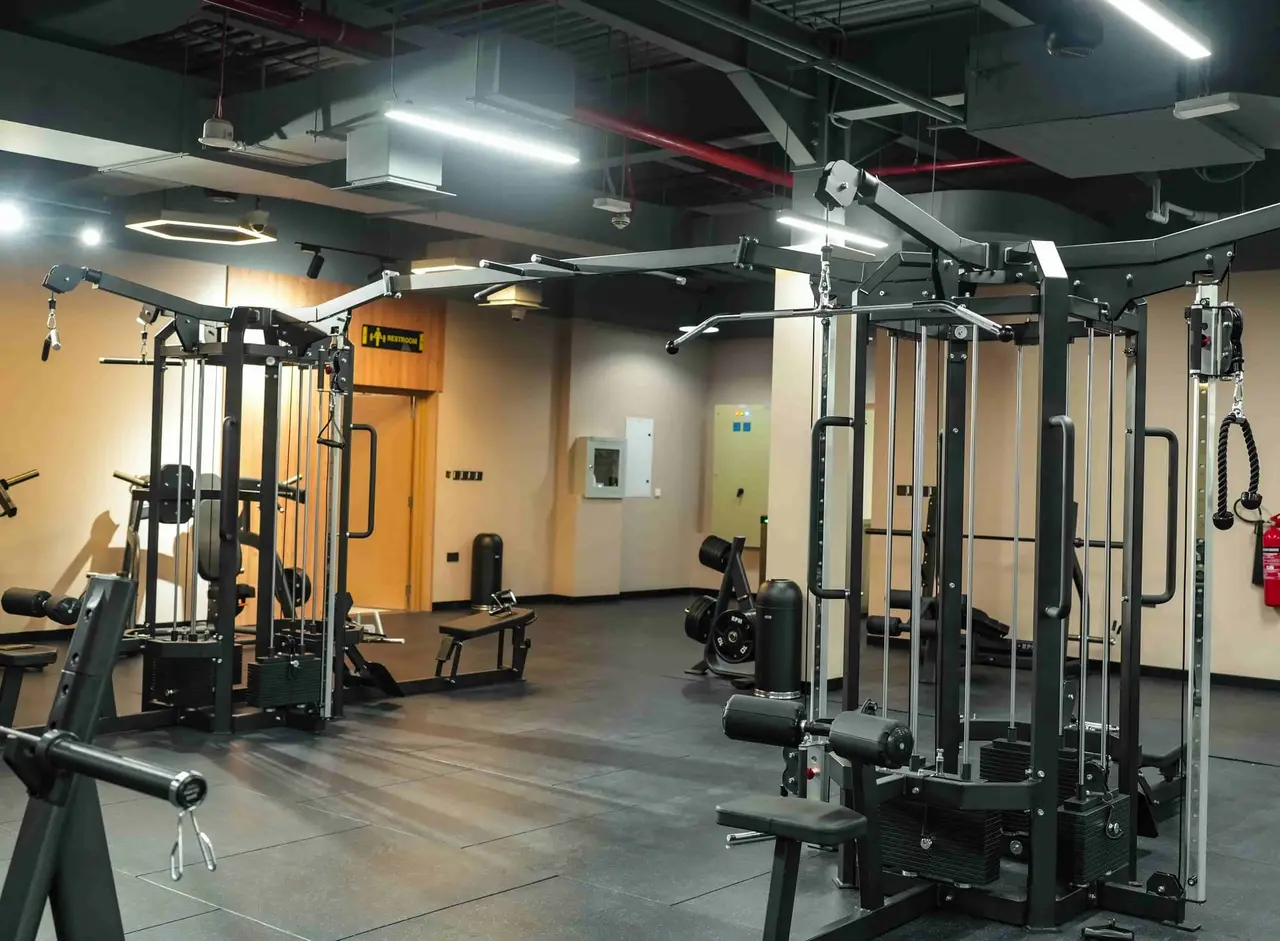
RPM's floor photos show a dumbbell rack, flat benches and multi-station cable towers, so both the dumbbell fly and the cable fly are possible on the training floor. Whether a bench inclines or there is a pec deck is not shown, so ask on the free tour. To find the right depth for your shoulders with a coach watching, book personal training.
Sources
Questions, answered.
Dumbbell fly or press: which should I prioritise for the chest?
The press builds more overall strength and takes heavier loads, so it comes first. The fly adds stretch-focused work without the triceps. Most programmes make the press the main lift and the fly an extra, as the chest training guide shows.
Dumbbell fly or pec deck?
The pec deck guides the path and keeps tension at the squeeze, so it is easier to learn; the dumbbell fly loads the stretch more and needs more control. Use whichever you can do through a full, comfortable range.
Can you do a standing dumbbell fly?
Not usefully for the chest. Standing up, the dumbbells pull straight down, so the movement mostly works the shoulders. To fly while standing, use cables set at about chest height.
Why do I feel dumbbell flies in my shoulders?
Usually the dumbbells are too heavy, the range is too deep or the shoulder blades are not pinned back. Lighten the load and stop higher. If it hurts rather than just works, stop and get it checked by a doctor or physiotherapist.
Can I do a dumbbell fly on the floor?
Yes. The floor fly stops your elbows at body level, which takes away the deepest part of the stretch. It suits people without a bench, or anyone who wants a shorter range.