How the shoulder works
The shoulder is a ball-and-socket joint with more range than any other in the body, and several muscle groups share the work of moving and steadying it. The deltoid is the rounded muscle that caps it, and its three heads pull in different directions. The front head raises the arm forwards and does much of the work in every press. The side head lifts the arm out to the side and gives the shoulders their width. The rear head pulls the arm back and out, as at the end of a row.
Underneath, four small rotator cuff muscles keep the ball of the upper arm centred in its socket, while the trapezius and serratus move the shoulder blade so the socket follows the arm. You do not need to train each of these separately, but you do need more than one direction: a programme built only on pressing works the front head hard and leaves the side and rear heads behind.
This page is the muscle guide in the exercise library: how to cover every part of the shoulder across a training week. If you want a short list of strength movements to start with, top 5 shoulder workouts for strength is the quicker read; this guide goes further into the side and rear heads, weekly volume and planning sessions.
What to train them with: free weights, cables and machines
Each tool has a job, and none is essential on its own.
- Barbell. The standing overhead press is the heaviest shoulder movement and the one to choose when upper-body strength is the goal. It needs good overhead mobility and a strong trunk, so it is rarely the first shoulder exercise to learn.
- Dumbbells. The seated shoulder press is easier to learn, lets each arm find its own path and suits muscle building. Dumbbells also cover the lateral raise and the bent-over rear delt fly, so a rack and a bench can train every head.
- Cables. A cable keeps tension where a dumbbell goes slack, at the bottom of a lateral raise for example, and the face pull really only works on a cable or a band.
- Machines. A shoulder press machine, a lateral raise machine and a reverse pec deck take balance out of the movement, so you can push sets close to failure with little to go wrong.
Which machines are worth using? Honestly, it depends on what else you have. The reverse pec deck is one of the simplest ways to load the rear delts and earns its place if it is on the floor. A shoulder press machine helps beginners and suits the last hard sets of a session. A lateral raise machine is good, but a cable does the same job. Chest pressing counts too: the incline bench press works the front shoulders hard, so if it is already in your week you rarely need extra front-delt isolation such as front raises.
How often and how much
Count hard sets per week rather than exercises per session. As a rough guide, a beginner does well on six to ten hard sets a week of direct shoulder work, and an experienced lifter chasing size might do ten to twenty, counting presses and raises together. Chest and back training adds indirect work: benching loads the front shoulders and rowing loads the rear.
Spread the work over two or three sessions. The side and rear delts are small and recover quickly, so three short doses of raises and flies a week tend to beat one long shoulder day, while heavy pressing needs more recovery and one or two sessions a week is enough. The hypertrophy volume calculator helps you count weekly sets, and training volume and splits shows how they fit into a plan.
Two sample shoulder sessions
Session A: strength-focused upper day
Built around the standing overhead press, with the incline bench press as the second press and lighter side and rear work to finish.
| Exercise | Sets × reps | Notes |
|---|---|---|
| Overhead press | 4 × 4–6 | Two to three minutes' rest; stop with one or two reps left |
| Incline bench press | 3 × 6–10 | Barbell or dumbbells |
| Lateral raise | 3 × 12–15 | Strict, no swing |
| Face pull | 3 × 15 | Pause at the finish of every rep |
Session B: shoulders for muscle
A lighter, higher-rep day that opens with the seated shoulder press and gives the side and rear heads most of the volume through lateral raises, rear delt flies and face pulls.
| Exercise | Sets × reps | Notes |
|---|---|---|
| Seated dumbbell shoulder press | 3 × 8–12 | One or two reps left |
| Cable lateral raise | 3 × 12–15 each arm | Steady tempo |
| Rear delt fly | 3 × 15–20 | Move the arms, not the shoulder blades |
| Dumbbell lateral raise | 2 × 15–20, then partials | Finish with short reps |
| Face pull | 2 × 15–20 | Light, with a one-second hold |
Use one of these sessions, or a mix, once or twice a week alongside your chest, back and leg training; the upper/lower split calculator can help you place them.
Common shoulder training mistakes
- Pressing only. Two presses and no raises or flies leave the side and rear heads undertrained; add at least one movement for each.
- Going too heavy on raises. Lateral raises and rear delt flies are small-muscle exercises, and swinging a heavy pair shifts the work to your traps and lower back.
- Skipping the warm-up. A few light sets of the first press, plus light face pulls or band work, prepare the shoulder for heavier pressing; the warm-up guide has a full routine.
- Ignoring pain. Effort and a burn in the muscle are normal; a sharp pain, a pinch in the joint or pain that lingers after training are not. Stop the exercise that causes it and get the shoulder checked by a doctor or physiotherapist rather than training around it.
- Changing exercises every week. Keep the same main movements for several weeks so you can see whether the weights and reps are going up.
Shoulder training at RPM
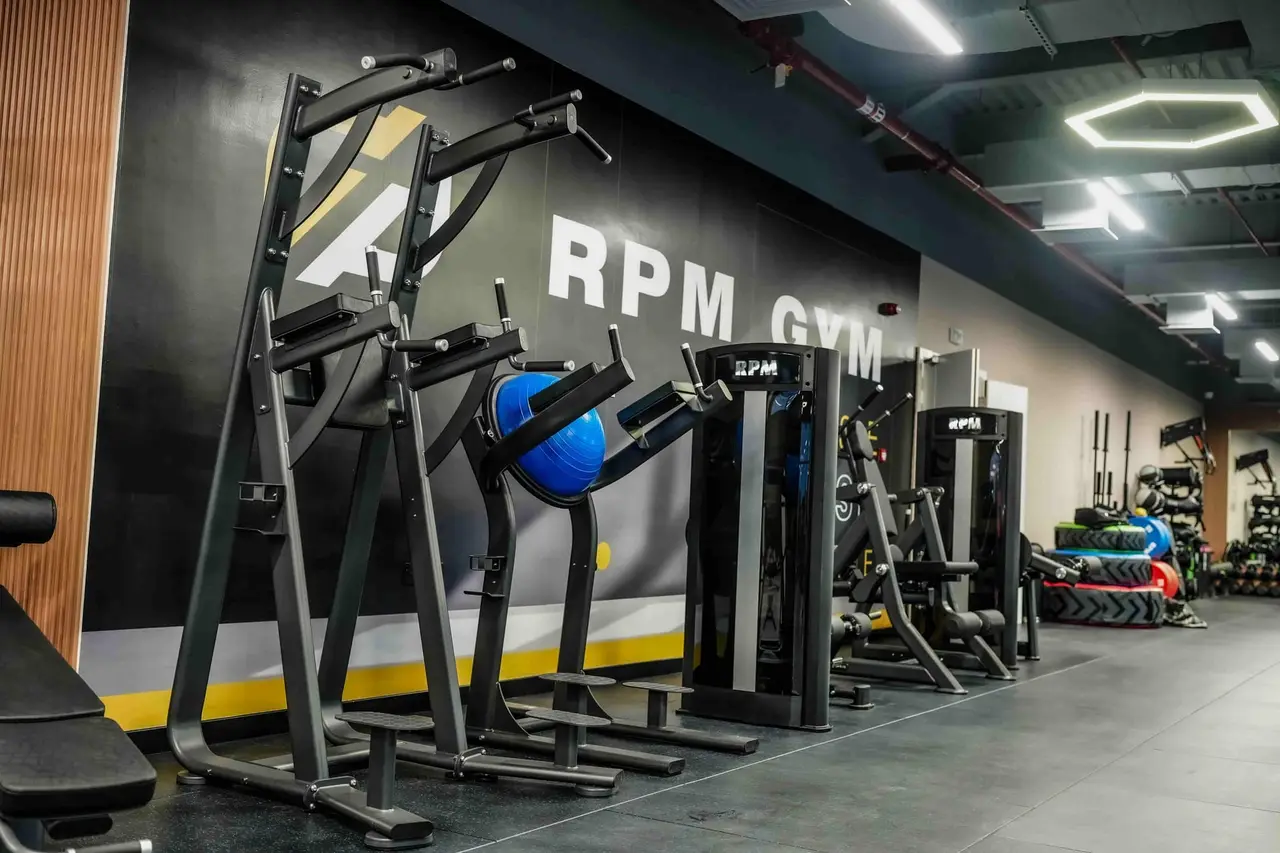
RPM's floor photos show squat racks with barbells and colour bumper plates, a dumbbell rack, flat benches and multi-station cable towers on the training floor in Al Manhal, which covers the overhead press, dumbbell pressing, lateral raises, rear delt flies and face pulls. The photos do not show a shoulder press machine, a lateral raise machine, a reverse pec deck or adjustable benches, so ask on your free tour what is on the floor. For a plan built around your shoulders and your week, book a personal training session, or work with a female personal trainer if you prefer.
Questions, answered.
Which shoulder exercises should I do at the gym?
One press, one side-shoulder movement and one rear-shoulder movement cover the basics: for example the shoulder press, the lateral raise and the face pull. Add the overhead press when you want a strength focus.
Can I train my shoulders with only dumbbells?
Yes. A dumbbell press, lateral raises and bent-over rear delt flies train all three heads. Dumbbells struggle to keep tension at the bottom of a raise, which is where cables help, but they are enough to build strong shoulders.
Which gym machines work the shoulders?
The shoulder press machine for the front and side heads, the lateral raise machine for the side head and the reverse pec deck for the rear. The cable station covers lateral raises, reverse flies and face pulls; the cable machine guide explains attachments and heights.
Should women train shoulders differently?
No. The muscles and the movements are the same; loads and reps vary from person to person, not by gender. Many women prioritise lateral raises and rear delt work for shape and pressing for strength, which is a sound plan for anyone.
How many times a week should I train shoulders?
Two or three times, with pressing once or twice and raises or flies on the other days. Weekly hard sets matter more than having a dedicated shoulder day.
What should I do if my shoulder hurts when I train?
Stop the movement that causes the pain and have the shoulder checked by a doctor or physiotherapist. Do not train through sharp or lingering pain, and do not guess at the cause yourself.