What the machine trains, and who it suits
Sitting upright and pushing handles away from your chest is the bench press pattern turned on its side. The chest muscles do most of the work, the triceps straighten the elbows and the front shoulders help at the start of each rep. The difference is that the machine fixes the path: the handles can only move one way, so there is nothing to balance and nothing to steer.
That makes it one of the easiest presses to learn. A beginner can concentrate on feeling the chest work instead of worrying about a bar tipping, and someone training alone can push close to the end of a set, because stopping only means letting the handles come back. Experienced lifters use it late in a session, once they are too tired to press free weights well. What it leaves out is the steadying work dumbbells and barbells demand. The chest training guide shows how a machine fits alongside free-weight presses.
Setting up the machine
Designs differ between makers, so read the labels or diagrams on the frame. Most share the same few settings, and getting them right is most of the technique.
- Seat height: set the seat so the handles sit level with the middle of your chest, around nipple height. Too low and the press drifts up towards your shoulders; too high and it angles down towards your stomach.
- Start position: if the back pad moves, or a lever sets how far back the handles start, set it so your hands begin just in front of your chest with a light stretch across it, never behind the line of your body.
- Handles: many machines offer horizontal and vertical (neutral) grips. Horizontal handles let the elbows sit out a little wider; vertical handles keep them nearer your sides and feel easier on many shoulders. Pick one and stick with it while you learn.
- Body position: feet flat on the floor or foot bar, back and head against the pad, shoulder blades gently drawn back. Some machines have a foot pedal that brings the handles forward so you can get into position under heavier loads.
- Weight: set the pin or load plates for a weight you could press about fifteen times. Stack numbers vary between machines, so go by how the reps feel rather than the figure on the plate.
Doing a smooth rep
- Take the handles with a full grip, wrists straight and elbows a little below shoulder height.
- Press forward until your arms are nearly straight, without snapping the elbows into lockout or letting your shoulders leave the pad.
- Hold for a moment with the chest squeezed.
- Let the handles return over two or three seconds until you feel the stretch you set at the start.
- Begin the next rep before the plates touch down, so the muscles stay loaded from the first rep to the last.
Breathe out as you press and in as the handles come back. Keep every rep at the same speed; when the last few slow to a crawl and you start shrugging or arching off the pad, the set is over.
Machine or free weights for a beginner?
Both work. The machine is quicker to learn, lets you focus on the target muscle and adjusts in small, simple steps. Free weights train the balance and coordination that carry over to other lifts. A sensible path for a new lifter is to start here, add a free-weight press within a few weeks, and keep the machine as the second or third chest exercise. The comparison of free weights and resistance machines goes into the choice in more detail, and how to start at the gym covers your first sessions.
Mistakes to fix first
| Mistake | What it looks like | The fix |
|---|---|---|
| Seat at the wrong height | The handles start at your shoulders or your stomach instead of mid-chest | Adjust the seat before your first set, and recheck it if someone used the machine before you |
| Shoulders rolling forward | The shoulders peel off the pad as the arms straighten | Keep the shoulder blades back against the pad and stop just short of full lockout |
| Back arching off the pad | The lower back lifts to help shift a heavy weight | Take weight off until your back stays on the pad |
| Letting the stack crash | The plates slam together between reps | Control the return and keep a little tension at the back of the rep |
| Starting too deep | The hands begin well behind the chest and the front of the shoulder takes the strain | Move the start position so the handles begin just in front of your chest |
Types of chest press and other ways to do it
Chest press machines come in a few designs, and the cable station adds one more option. Each answers a question people often ask about this exercise.
Plate-loaded vs pin-loaded (selectorised) chest press
A pin-loaded, or selectorised, machine has a weight stack inside the frame and you change the load by moving a pin, which takes seconds. A plate-loaded machine has horns that you slide weight plates onto; it often has a separate arm for each side and a smoother feel near the end of the press, but loading it takes longer. Both train the same muscles, so use whichever fits you and is available.
Single-arm chest press
Machines with independent arms let you press one side at a time. That helps when one side is clearly weaker, and your trunk has to work to stop you twisting. Do the weaker side first and match its reps on the stronger side.
Cable chest press
Sitting or standing between two pulleys set at about chest height, you press two handles forward: a machine press without the fixed path. Steadying the handles means a lighter load, but you choose the angle, slightly down, straight or slightly up. The cable machine guide covers pulley heights and attachments.
If the machine is taken, the dumbbell bench press trains the same muscles, and the chest fly works the chest without the triceps.
Sets, reps and moving the pin
| Goal | Sets × reps | How hard |
|---|---|---|
| First weeks on the machine | 2–3 × 12–15 | Stop with three or four reps left while you learn the set-up |
| Building muscle | 3–4 × 8–12 | One or two reps left; the last set can go to the last clean rep |
| Finisher after free-weight presses | 2–3 × 12–20 | One rep left, at a steady speed |
Rest a minute to ninety seconds between sets. With no bar to balance, the machine is a reasonable place to take a set close to failure, provided the reps stay smooth.
When every set reaches the top of the range, move the pin down one plate, or add the smallest plates on a plate-loaded machine, and work back up through the reps. Note your seat and start-position settings next to your weights, so each session begins from the same position.
Chest press machines at RPM
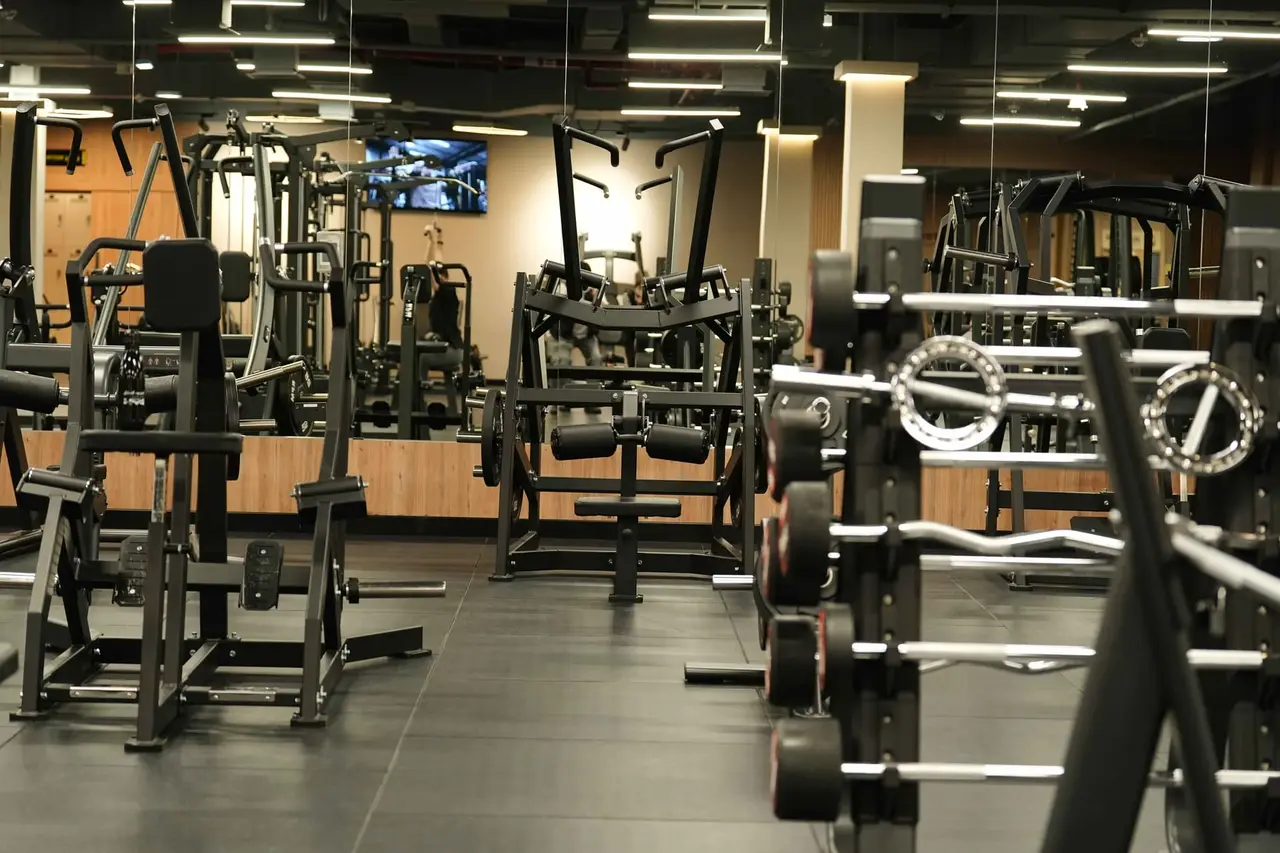
RPM's floor photos show plate-loaded machines and multi-station cable towers on the training floor in Al Manhal, but they do not confirm which models are there, so ask on the free tour whether there is a chest press machine and how it adjusts. The cable towers in the photos can be set up for a cable chest press either way. If you are new to the gym and want someone to set the machines up with you, book a personal training session.
Questions, answered.
What muscles does the chest press machine work?
Mainly the chest, with the triceps and front shoulders assisting. Vertical handles bring in a little more triceps; horizontal handles a little more chest stretch.
Chest press machine or bench press?
The bench press trains more of the stabilising muscles and suits heavier loading over time; the machine is easier to learn, needs no spotter and lets you push close to failure. Many programmes use the bench press first and the machine later in the session.
What seat height should I use on the chest press?
Set it so the handles are level with the middle of your chest. If they start at your shoulders, raise the seat; if they start near your stomach, lower it.
Chest press machine or dumbbell press?
Dumbbells make each arm steady its own weight and allow a freer path; the machine removes that so you can focus on pushing. Use dumbbells for the extra control work and the machine for simple, hard sets. The chest training guide has a week that uses both.
What is the difference between the chest press and the chest fly machine?
The chest press is a pushing movement where the elbows bend and the triceps help. On a fly machine, often called a pec deck, the arms stay nearly straight and sweep together, so the chest works with little help from the triceps.
Chest press machine or shoulder press machine?
They train different things. The chest press pushes forward and works the chest; the shoulder press pushes overhead and works the shoulders. A full upper-body session usually includes one of each.