What the rower trains, and who it suits
Each stroke links the legs, hips, trunk, back and arms into one movement, so the rower spreads the work across most of the body while your heart and lungs carry the session. You stay seated, so there is no landing as there is in running, which is why many people use it as their main cardio or as a change from the treadmill. It also appears in race training: HYROX races include a rowing station between the runs.
The catch is that rowing is a skill. A poor stroke turns into an arm-and-back tug that tires you quickly and can leave the lower back sore, while a few sessions spent learning the sequence pay off in every session after. If your back hurts while rowing, stop and have it checked by a doctor or physiotherapist rather than rowing through it. For the other stations on a gym floor, see the gym equipment guides.
Setting up: foot straps, damper and monitor
- Sit down and slide your feet into the footplates. Adjust them so the strap crosses the widest part of your foot, around the base of the toes, and pull it snug. Your heels should be able to lift a little as you come forwards.
- On an air rower, set the damper. The lever controls how much air reaches the fan: higher settings feel heavier and slower, like a high gear on a bike; lower settings feel lighter and quicker. Most coaches start people in the lower middle of the range. It is not a difficulty dial, because your effort on each stroke decides how hard the session is.
- Magnetic and water rowers work differently. Magnetic models have resistance levels set on the monitor, and water rowers get heavier the harder you pull. Start low on either.
- Switch on the monitor and find two numbers: the split, which is the time it would take to row 500 metres at your current pace, and the stroke rate, in strokes per minute. A lower split means faster; a lower rate means fewer, longer strokes.
- Hold the handle in a relaxed hook, fingers wrapped and wrists flat, hands about hip-width. Squeezing it hard tires the forearms long before the legs.
The stroke, step by step
- The catch: sit tall with your shins close to vertical, arms long and your body leaning slightly forwards from the hips.
- The drive starts with the legs. Push the footplates away while the arms stay long and the back stays firm, so the push travels through you into the handle.
- As the legs near straight, swing your body back to a slight lean past upright.
- Only then pull with the arms, drawing the handle to your lower ribs with the elbows passing close to your sides. This is the finish.
- The recovery reverses it: arms away first, then the body tips forwards from the hips, then the knees bend and the seat rolls back up to the catch.
Legs, body, arms on the way out; arms, body, legs on the way back. Make the drive quick and the recovery about twice as long, as if counting one on the drive and two on the slide forwards. Breathe out as you drive and in as you return.
Stroke rate and the 500 m split
The split is the number most rowers train by. It shows your pace whatever the length of the piece, so you can set a target, hold it and watch it come down over the weeks. The rowing pace calculator turns a split into a finishing time for any distance, or the other way round. Stroke rate is the other half of the picture: speed comes from the length and force of each stroke, not from how often you take one.
| Session type | Stroke rate | How it should feel |
|---|---|---|
| Easy, steady rowing | About 18–22 a minute | You can talk in full sentences |
| Moderate pieces | About 22–26 a minute | You can talk in short phrases |
| Hard intervals | About 26–32 a minute | Only a few words at a time |
If the rate climbs but the split does not improve, the strokes have become short and rushed: slow the recovery and push harder with the legs. The heart rate zone calculator gives you a second way to set effort.
Mistakes to fix first
| Mistake | What it looks like | The fix |
|---|---|---|
| Arms pulling early | The elbows bend before the legs have finished pushing | Keep the arms long until the legs are almost straight |
| Seat racing ahead | The seat slides back but the handle hardly moves | Brace your trunk as the legs drive, so the push reaches the handle |
| Rounded back at the catch | Reaching for the footplates with a hunched spine | Stop the slide when your shins are near vertical and lean from the hips |
| Damper on the top setting | Every stroke feels like a heavy haul and the lower back tires first | Lower the lever to the lower middle and let your legs set the pace |
| Knees bending too soon on the way back | The knees rise before the hands pass them, so the handle has to go over them | Move your hands past your knees before bending them |
| Rushing back to the catch | The slide forwards is as fast as the drive | Count one on the drive and two on the return |
Rowing workouts to start with
| Session | What to do | What it builds |
|---|---|---|
| Technique builder | Five rounds of 3 minutes easy with 1 minute of rest, each round focusing on one part of the sequence | A stroke that holds together when you tire |
| Steady row | 15–20 minutes at an easy, conversational effort, stroke rate around 20 | Aerobic base |
| Short intervals | 8 × 250 metres hard, resting about a minute after each | Speed and power |
| Pyramid | 1, 2, 3, 2 and 1 minutes hard, each followed by the same time easy | Holding pace as the effort changes |
| Race-style practice | 1,000 metres at a hard but even split, straight after a short treadmill run | Rowing on tired legs, as in a HYROX race |
Begin with two sessions a week and add time before you add speed. Calorie figures on the monitor are estimates; for a personal one, use the calories burned calculator.
Rower, treadmill or something else?
Compared with a treadmill, the rower adds upper-body work and removes the landing, but it is less specific if your goal is a running race; the rowing machine vs treadmill guide sets the two side by side. Against an exercise bike, it works more of the body and asks for more technique. When no rower is available, a cross-trainer also moves the arms and legs together, and a sled or battle ropes give you hard pulling efforts.
Rowing machine or seated cable row?
They share a name and a pulling action but do different jobs. The rowing machine is cardio: light resistance, many strokes, legs doing most of the work. The seated cable row is a strength exercise for the back, done for sets of about 8 to 15 reps on a weight stack.
Rowing machines at RPM
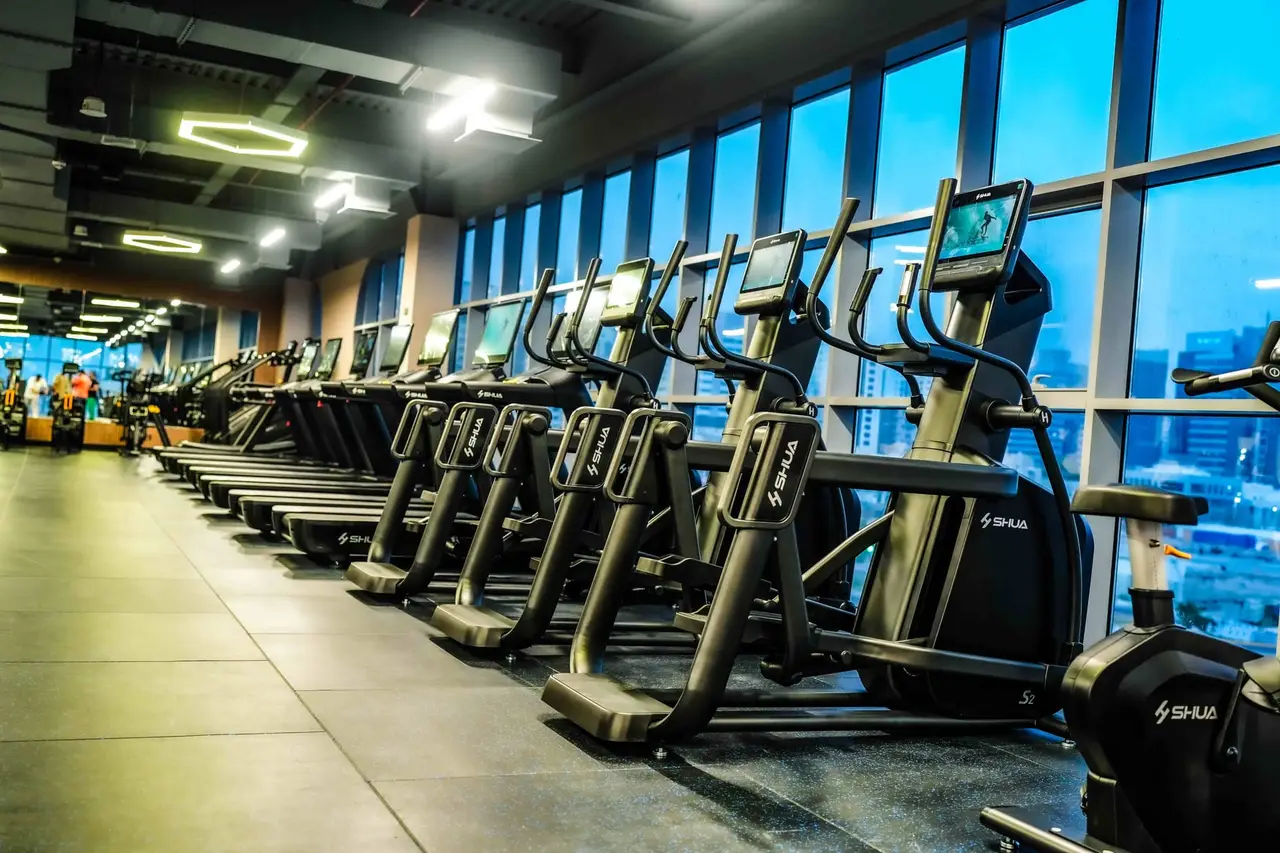
RPM's photos of the cardio row show treadmills, cross-trainers and an upright exercise bike by tall windows; they do not show a rowing machine. Ask on a free guided tour whether there is one, what type it is and where it sits, and read how to choose a gym with rowing machines for what to check. A coach in a personal training session can teach you the stroke wherever a rower is available.
Questions, answered.
How do you use a rowing machine properly?
Strap your feet across their widest part, set the damper low to middle, and follow the sequence: legs, body, arms on the drive, then arms, body, legs on the way back. Keep the drive strong and the recovery unhurried, and watch the split rather than the stroke rate.
What damper setting should I use on a rower?
On most air rowers, somewhere in the lower middle of the range. Higher settings feel heavier but do not make the session better; they mainly tire the back and arms sooner. Experienced rowers move it to suit the session.
Is the rowing machine good for your back?
It works the back muscles on every stroke, but it is a cardio machine rather than a back-strength exercise, and with good technique the legs do most of the work. If your lower back aches while rowing, check the damper and your posture at the catch, and stop and see a doctor or physiotherapist if the pain continues.
Is a rowing machine good for losing weight?
It can be part of the picture. Rowing adds to the energy you use each week, and because you stay seated there is no landing on every stride. Weight change depends on your overall activity and eating, and the monitor's calorie count is an estimate, so judge progress over weeks rather than sessions.
How long should a beginner row?
Ten to fifteen minutes of easy rowing, two or three times a week, is a sensible start. Use the first sessions to learn the sequence, and build time before you push the pace. The equipment guides cover the other cardio and strength stations.