Stair climber, stepmill or stepper: what the names mean
Gyms use the names loosely. A stepmill is a short revolving staircase, like a down escalator you keep walking up, and it is the machine most people picture when they say stair climber. A stepper has two pedals that rise and sink under your feet without your feet ever leaving them. StairMaster is a brand that makes both, which is why its name gets used for either. The technique below applies to both, with notes where they differ.
If you were looking for a stair-climbing trolley, a powered stair climber for a wheelchair or a stair lift for an older relative, those are mobility aids rather than gym equipment, and this page does not cover them. For the other machines on a training floor, see the gym equipment guides.
What it trains, and who it suits
Every step is a small single-leg lift of your own bodyweight. The quads straighten the knee, the glutes and hamstrings extend the hip and the calves finish the push, while your heart and lungs work to keep up. Because you are lifting yourself rather than travelling forwards, even a slow pace feels demanding, so it suits people who want hard cardio without running: walkers looking for more effort, hikers, and anyone building leg endurance.
There is no landing as there is in running, but your knees and hips bend under load on every step. If either starts to hurt, slow down or stop, and have it checked by a doctor or physiotherapist before you carry on. Climbing is also no substitute for strength work; the leg exercises page covers that side.
How to use it: posture, handrails and speed
- Step on while the machine is still, hold the handrails, and find the stop control before you start.
- Choose a manual programme and the lowest speed level. Levels usually stand for steps per minute and differ between models, so a number on one machine tells you little about another.
- Stand tall with a slight forward lean from the hips, not a hunch from the waist. Keep your chest up and your eyes ahead rather than on your feet.
- Place your whole foot on each step and push through the midfoot and heel. On a stepmill, climbing on your toes shortens the movement and tires the calves early; on a stepper, keep the pedals moving through a long, even range.
- Rest your fingertips on the rails for balance only. If you have to grip them to keep up, or your arms are holding up your weight, the speed is too high.
- To finish, drop to the lowest level for a minute or two, then stop the machine and step off once the stairs have come to rest.
Breathe steadily and pick a speed at which you could still say a few words. On a stepper, press the pedals down with control rather than letting them drop you to the bottom of the range.
Mistakes to fix first
| Mistake | What it looks like | The fix |
|---|---|---|
| Leaning on the rails | Arms locked and bodyweight resting on the handrails | Lower the speed until a light touch is enough |
| Hunching over the console | Rounded back, head down, hips behind the feet | Stand tall and lean slightly from the hips |
| Climbing on tiptoe | Heels hanging off the step and calves burning early | Put the whole foot on the step |
| Speed too high | Missed steps, stumbling or grabbing at the rails | Drop a level or two and build up over several weeks |
| Tiny pedal strokes on a stepper | Short, fast bounces near the bottom of the range | Use long, controlled strokes |
| Scrolling while you climb | Posture slumps and the pace drifts | Keep the phone for the easy minutes at the end |
Stair climber workouts
| Session | What to do | How it should feel |
|---|---|---|
| First climbs | 2 minutes at a low level, then 1 minute at the lowest; repeat four or five times | Breathing harder but still able to talk |
| Steady climb | 15–20 minutes at one level you can hold throughout | Comfortably hard, a few words at a time |
| Intervals | After a warm-up, 8 rounds of 30 seconds faster and 90 seconds slower | Hard in the fast parts, recovered by the end of each slow one |
| Long-step climb | On a stepmill, take two steps at a time at a slow speed, in short blocks | Hips and thighs working through a longer range |
| Hands-off finish | The last few minutes at an easier level with no hands on the rails | Balance and posture under fatigue |
Two sessions a week is a good start, ideally not straight after a hard leg day. The heart rate zone calculator helps you set effort; for a personal energy estimate use the calories burned calculator, because the console figure is only an estimate.
Stair climber or treadmill?
The usual version of this question is StairMaster vs treadmill. A treadmill lets you walk, run or walk uphill, and running on it carries over to running races. A stair climber lifts you on every step, so the same effort arrives at a much slower pace and the thighs and glutes feel it more. Incline walking sits in between: an incline treadmill walk gives a climbing effort without the stairs. Choose the one you will use regularly; for a first plan that rotates machines, see cardio for beginners.
Stair climbers at RPM
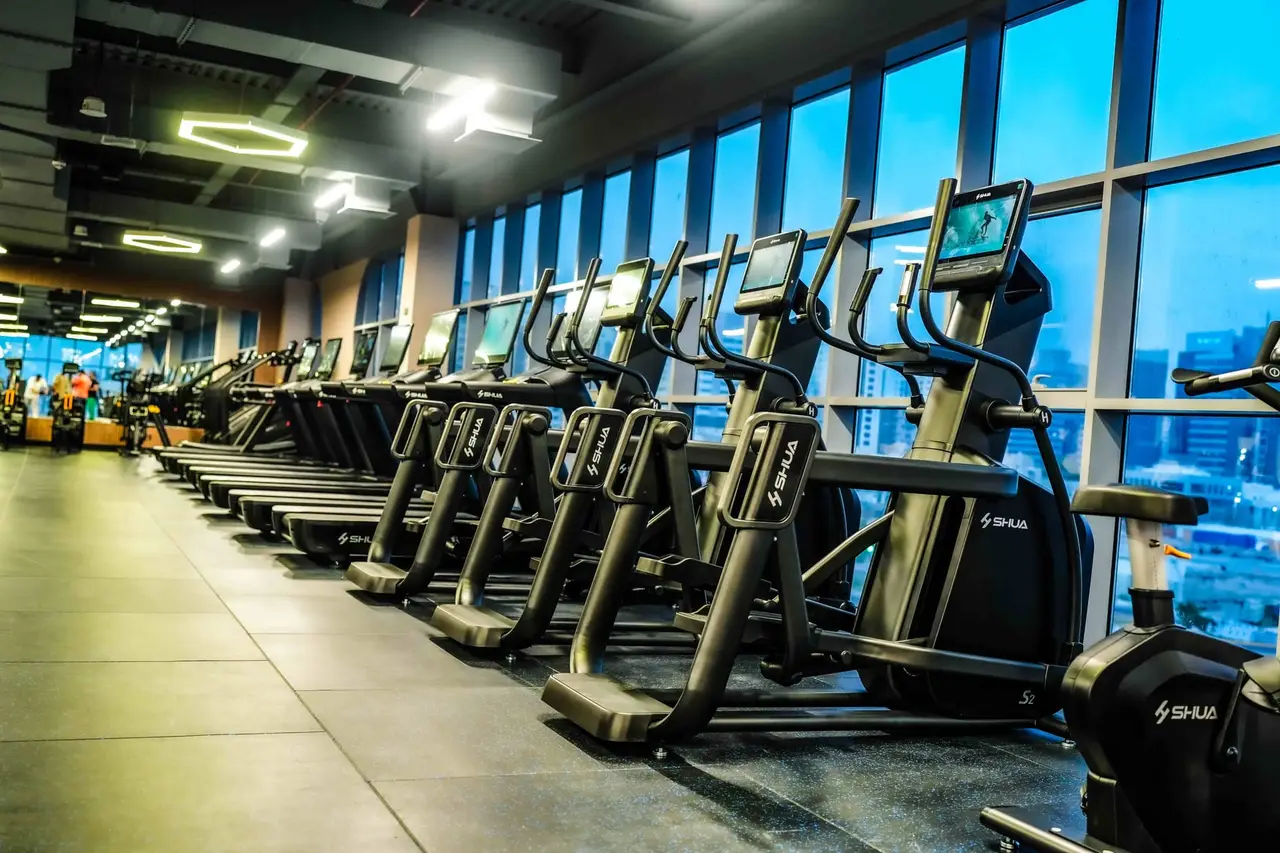
RPM's photos of its cardio area show treadmills, cross-trainers and an upright bike along tall windows, but not a stair climber, so ask on a free guided tour whether one is on the floor. Until you know, an incline walk on the treadmill trains a similar climbing effort. A coach in a personal training session can fit either into your week.
Questions, answered.
Is the stair climber good for your glutes?
It works them on every step, more so if you stand tall and push through the whole foot. How your glutes change depends on your overall training and eating, so pair climbing with strength work; the glute exercises page shows what to add.
How long should I use the stair climber?
Ten to fifteen minutes is plenty for a first session. Over several weeks, build towards twenty to thirty minutes of steady climbing, or use shorter interval sessions instead.
What is the difference between a stepmill and a StairMaster?
StairMaster is a brand; a stepmill is a type of machine with revolving stairs. StairMaster makes stepmills, which is why the two names get used for the same thing. A stepper, with two pedals, is a different machine. All of them sit with the other cardio stations in the equipment guides.
How many calories does a stair climber burn?
It depends on your bodyweight, the speed, how long you climb and how much you lean on the rails. Console numbers are estimates and differ between machines. The calories burned calculator gives a personal estimate; use it to compare sessions rather than to plan meals.
Is the stair climber hard on the knees?
There is no landing, but your knees bend under your bodyweight on every step, so it asks more of them than walking on the flat. Start slowly and keep the whole foot on the step. If your knees hurt, stop and have them checked by a doctor or physiotherapist.