What the face pull trains, and where it fits
A face pull combines three actions in one rep. The arms pull back and apart, which works the rear deltoids; the shoulder blades draw together, which works the middle trapezius and rhomboids between them; and at the end the upper arms rotate outward, bringing in the small rotator cuff muscles at the back of the shoulder. That last part is what separates it from the rear delt fly, where the arms stay long and the shoulder blades stay fairly still.
Most coaches use it in one of two places: a couple of light sets in the warm-up before pressing, or harder sets at the end of an upper-body or back session. It suits beginners because the load is light and the cable guides the path. It does not replace rows or presses, and it will not fix a sore shoulder; it is one useful piece of balanced shoulder training. The shoulder exercise guide shows how to plan it into the week.
Setting up the cable
- Clip a rope attachment to the pulley and set it at about forehead height or a little above. The variations below explain what changing the height does.
- Hold the rope close to the knots, knuckles up and thumbs pointing back towards you, so the ends can open wide.
- Step back until your arms are straight and the weight lifts off the stack. Stand with feet hip width apart, or one foot ahead of the other for balance.
- Lean back very slightly with your ribs down, so the cable runs in a line from the pulley to your face.
- Choose a light weight you can pull fifteen times with a pause at the end of each rep; it will be far less than you row.
How to do a rep
- Start with straight arms and let the cable draw your shoulders slightly forward.
- Pull the rope towards your face with your elbows high, level with or a little above your hands.
- As the rope reaches your face, pull the ends apart so your hands pass either side of your head.
- Finish by rotating your upper arms back so your hands sit beside your ears and your forearms point up, like a double-biceps pose.
- Hold for a second, then let the rope return slowly to straight arms without your torso rocking forward.
The finish is the point of the exercise. If your hands stop in front of your face, you have done a high row. Breathe out as you pull and in as the rope returns, and keep the weight light enough that the pause is easy to hold.
Mistakes to fix first
| Mistake | What it looks like | The fix |
|---|---|---|
| Too much weight | You lean back hard and yank the rope with your whole body | Lighten the stack until you can pause at the finish on every rep |
| Elbows dropping | The rope comes to your chest with the elbows pointing down, which makes it a row | Keep the elbows level with or above the hands |
| No rotation at the end | The hands stop in front of the face | Pull the rope apart and finish with the hands beside the ears |
| Shrugging | The shoulders rise towards the ears as you pull | Keep the shoulders down and the neck long |
| Rushing the return | The stack drops and yanks your arms forward | Take two seconds to let the rope back out |
You should feel face pulls in the back of the shoulders and between the shoulder blades. If the front of the shoulder hurts, or the finish position is painful, stop and get the shoulder checked by a doctor or physiotherapist.
Rope height, kneeling and band versions
The pattern stays the same in each version: pull back, pull apart, rotate. Only the angle and the equipment change.
Rope height: pull to the face or the forehead?
With the pulley above head height and the rope pulled towards your forehead, the outward rotation and the rear delts do more of the work. Set around face height and pulled to your nose or mouth, the muscles between the shoulder blades work harder. Both are valid; pick one height and keep it for a few weeks so you can track progress.
Kneeling or seated face pull
Kneeling below the pulley, or sitting on a bench or the floor, takes the legs and any backward lean out of the movement, so it is harder to cheat. Lower the pulley to keep the same line from the cable to your face. It is a good fix if you find yourself leaning further back every set.
Band face pull
Anchor a resistance band at about head height, hold it with both hands and pull exactly as you would the rope. A band gets harder the further you stretch it, so the finish is the toughest point. It suits warm-ups and home training when no cable machine is available.
If every cable station is taken, a bent-over rear delt fly with light dumbbells covers the rear shoulders. There is no true dumbbell face pull, because a dumbbell pulls downward rather than towards you. The seated cable row with a wide grip is another option for the upper back.
Sets, reps and progression
| Goal | Sets × reps | How hard |
|---|---|---|
| Warm-up before pressing | 2 × 15–20 | Easy, well short of failure |
| Building the rear shoulders | 3–4 × 12–20 | One or two reps left, with a pause on each rep |
| End-of-session finisher | 2–3 × 20–25 | Light, continuous and controlled |
Rest under a minute between warm-up sets and about a minute between harder ones; the rest-between-sets calculator gives a starting point.
Face pulls fit two or three times a week, often on upper-body or pulling days. Progress by adding reps and lengthening the pause at the finish before adding weight. When you do add weight, the smallest step on the stack is enough; if the finish gets sloppy, the step was too big.
Face pulls at RPM
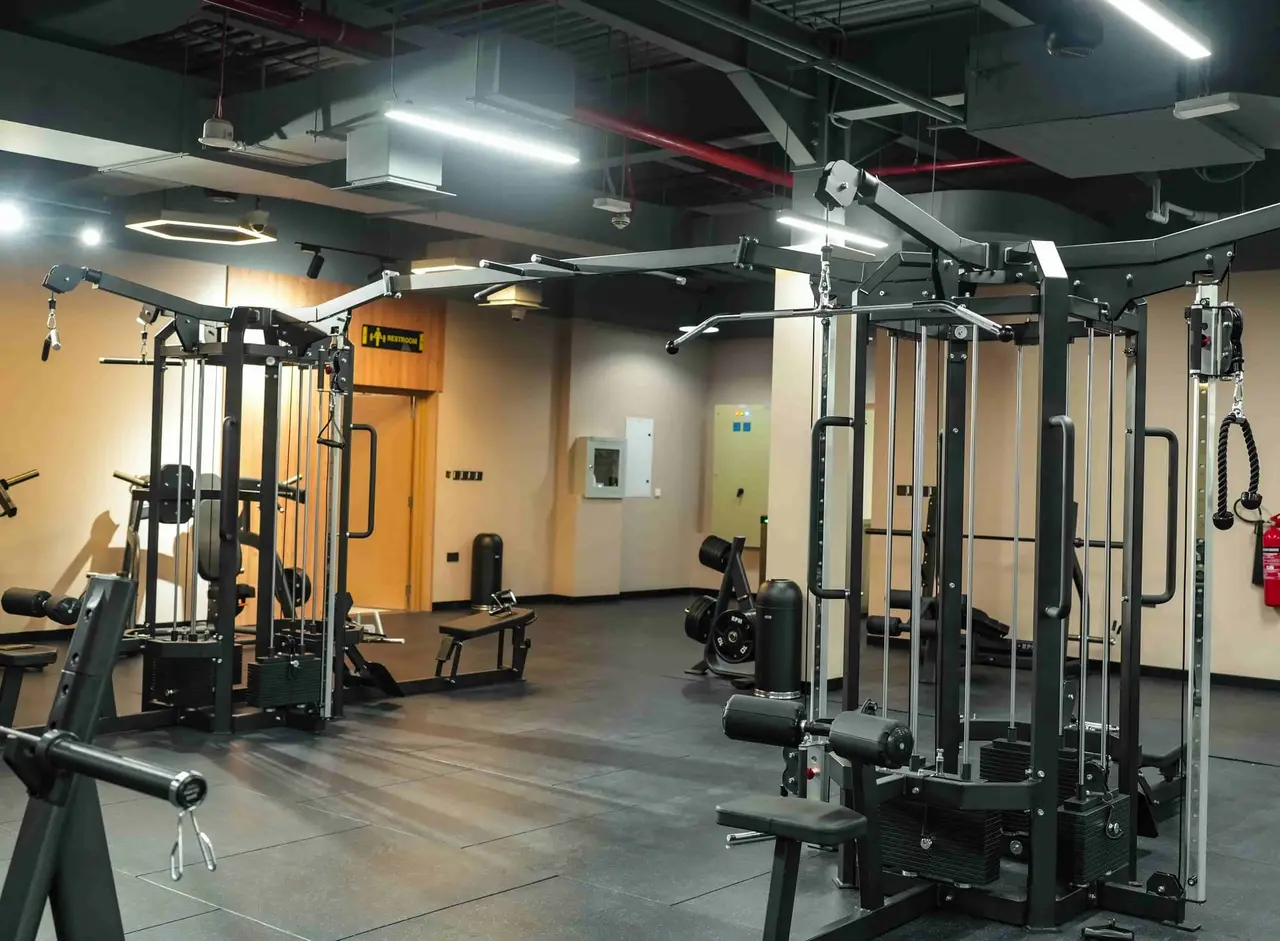
RPM's floor photos show multi-station cable towers on the training floor in Al Manhal, which is what a face pull needs. Ask on your free tour which attachments are kept at each station. If you want a coach to check your elbow height and finish position, book a personal training session.
Questions, answered.
What muscles do face pulls work?
The rear deltoids, the middle trapezius and rhomboids between the shoulder blades, and the small rotator cuff muscles that turn the arm outward. The upper traps help a little.
Are face pulls a back or a shoulder exercise?
Both. They load the rear shoulders and the upper back together, so they fit a back day or a shoulder day equally well. For more upper-back work, see the back training guide.
Face pull or rear delt fly: what is the difference?
The rear delt fly keeps the arms long and isolates the rear delts. The face pull bends the elbows, draws the shoulder blades together and finishes with outward rotation, so more muscles share the work. Many programmes include both.
Face pull or upright row?
Different movements. An upright row lifts a weight up the front of the body and mainly works the side shoulders and traps. A face pull pulls back towards the face and works the rear shoulders and upper back.
Can I do face pulls without a cable machine?
Yes, with a resistance band anchored at head height. Without a band or a cable, a bent-over rear delt fly is the closest substitute.