What the rear delt fly trains, and why it earns a place
The rear deltoid sits on the back of the shoulder. It pulls the upper arm backwards and outwards when the arm is raised in front of you, the reverse of a chest fly, and helps turn the arm outward. It is small and easy to neglect: pressing loads the front of the shoulder, and in most rows the lats and the muscles between the shoulder blades take the bulk of the work, so the rear delts get a share but rarely enough.
A reverse fly isolates them with light weights. It suits beginners and experienced lifters, asks little of the rest of the body and fits at the end of a back, shoulder or upper-body session. Programmes heavy on bench and shoulder pressing use it to balance that work, and the shoulder exercise guide shows where it fits alongside raises and presses.
Setting up the bent-over dumbbell version
- Take a pair of light dumbbells, lighter than you use for lateral raises.
- Stand with feet hip width apart and knees softly bent, then push your hips back until your torso is close to parallel with the floor, back flat from hips to head.
- Let the dumbbells hang under your chest, palms facing each other, with a soft bend in the elbows.
- Keep your neck in line with your spine and your eyes on the floor a little ahead of your feet.
- If holding the hinge tires your lower back, sit on the end of a bench and lean your chest towards your thighs, or use a supported version below. If the lower back actually hurts, stop and get it checked by a doctor or physiotherapist.
How to do a rep
- Sweep your arms out to the sides in a wide arc, as if opening a pair of wings.
- Keep the elbow angle fixed so each arm moves as one piece from the shoulder.
- Stop when your arms are roughly in line with your torso at shoulder level. Pulling them further back mostly brings in the shoulder blades.
- Pause briefly with your torso still and your neck relaxed.
- Lower over two or three seconds until the dumbbells are back under your chest.
Move the arms, not the shoulder blades. Let the blades stay fairly wide and still; squeeze them hard together at the top and the upper back takes over from the rear delts. Breathe out on the way up and in on the way down.
Mistakes to fix first
| Mistake | What it looks like | The fix |
|---|---|---|
| Standing up as you lift | The torso rises with each rep and the arms barely move | Hold the hinge, or rest your chest on a bench |
| Bending the elbows | The arms fold and the movement turns into a row | Set a soft elbow bend and keep it; go lighter if it collapses |
| Arms drifting towards the hips | The dumbbells travel back past the waist instead of out to the sides | Keep the arms at right angles to the torso, level with the shoulders |
| Shrugging | The shoulders climb towards the ears | Keep the neck long and the shoulders down |
| Throwing the weight | Momentum flings the dumbbells up and they drop back | Pause at the top and take two or three seconds to lower |
Machine, cable and supported versions
Every version trains the rear delts. They differ in how much support and constant tension they give.
Reverse pec deck
Sit facing the pad of a pec deck, with the handles set to their rearmost position at shoulder height. Grip with palms down or facing each other and sweep the handles back in an arc. The fixed path and chest pad make it one of the simplest ways to load the rear delts; set the seat so your arms move level with your shoulders.
Cable reverse fly
Set two pulleys at about shoulder height and cross the cables, left cable in the right hand and right cable in the left. Step back to the middle with your arms in front of you and sweep them out and back. The cables hold tension where dumbbells go slack, and the move works one arm at a time too.
Chest-supported rear-delt fly
Lie face down on an incline bench with the dumbbells hanging below you. The bench takes your lower back and any swing out of the movement, so it suits strict reps or anyone who finds the standing hinge uncomfortable.
Rear-delt row
A row with the elbows flared wide and the handle or dumbbells pulled towards your upper chest, so your upper arms finish level with your shoulders. It takes heavier loads than a fly and works the upper back more. Do it on the seated cable row with a wide bar, or as a wide-grip bent-over row.
If the dumbbells or the cable station are busy, the face pull trains the same rear delts along with the muscles that rotate the arm outward.
Sets, reps and progression
| Goal | Sets × reps | How hard |
|---|---|---|
| Learning the movement | 2–3 × 12–15 | Stop with two or three reps left and no swing |
| Building muscle | 3–4 × 12–20 | One or two reps short of failure |
| High-rep finisher | 2 × 20–30 | Light, continuous reps with a short pause at the top |
Rest about a minute between sets. The rear delts recover quickly, so two or three short doses a week tend to work better than one long session.
Progress in reps first. Small muscles respond well to higher reps, and the next dumbbell up can be a big jump, so add a rep or two per set until you reach the top of your range, then move up. On the machine or cables, use the smallest increment available.
Rear delt flies at RPM
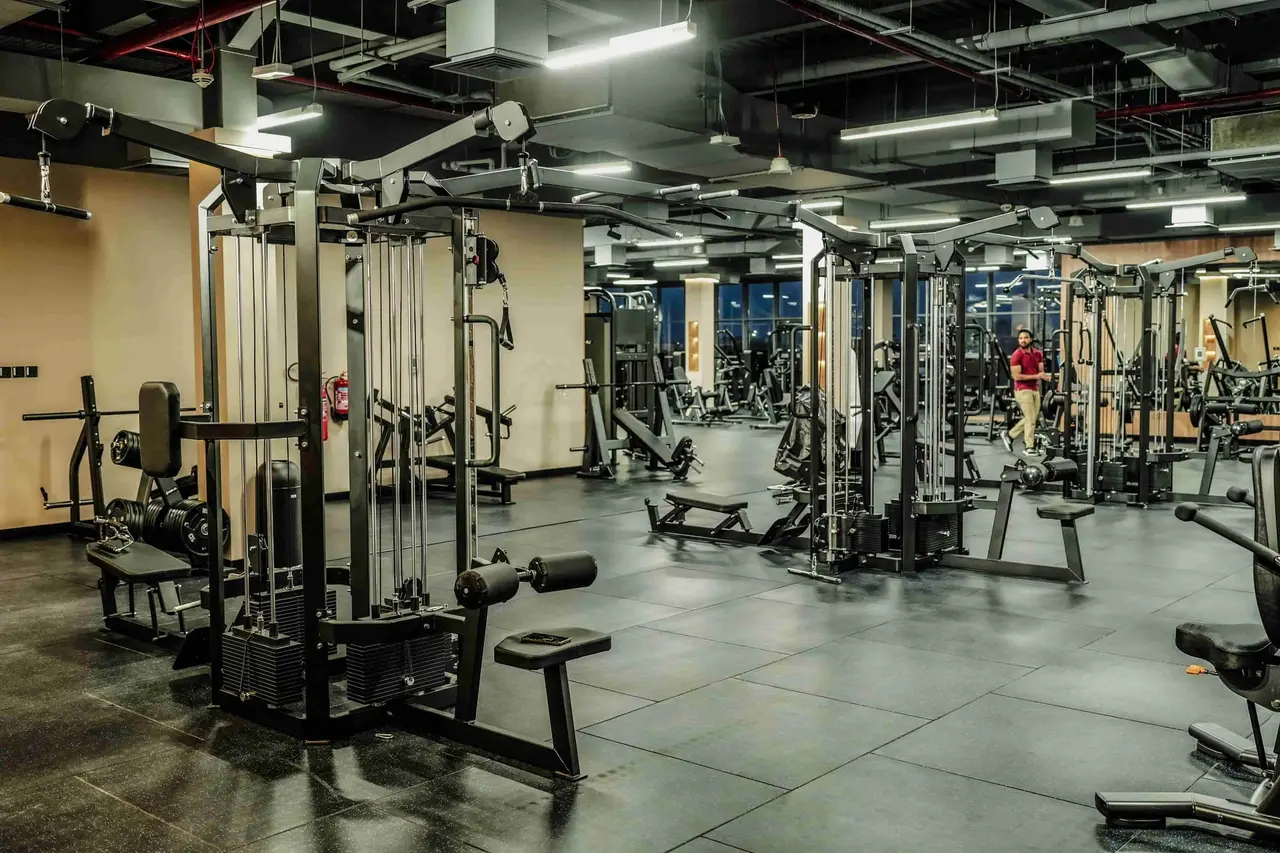
RPM's floor photos show a dumbbell rack, flat benches and multi-station cable towers, which covers the bent-over, seated and cable versions. A reverse pec deck and an adjustable incline bench do not appear in the photos, so ask on your free tour what is on the floor. If you are unsure whether your rear delts or your upper back are doing the work, a personal training session sorts that out quickly.
Questions, answered.
Is the rear delt fly the same as the reverse fly?
Yes. Rear delt fly, reverse fly and bent-over fly describe the same movement; the reverse pec deck is the machine version.
Rear delt fly or face pull: which should I do?
Both train the rear delts. The fly keeps the arms long and isolates them; the face pull adds outward rotation and more upper-back work. Many programmes use one in each session, or alternate them.
Should I use the reverse pec deck or dumbbells?
Either works. The machine is easier to learn and load, with your chest supported. Dumbbells need only a rack and a bench but ask you to hold a hinge. Pick whichever you can do with strict form.
What is the difference between a rear delt fly and a row?
In a fly the elbows stay almost straight and the arms sweep out to the sides, isolating the rear delts. In a row the elbows bend and drive back, and the lats and upper back take most of the load. Rows go heavier; flies are more targeted.
Can I train rear delts without a machine?
Yes. The bent-over dumbbell fly, a band pulled apart at chest height and a cable reverse fly all work without a pec deck. At home, light dumbbells and a sturdy chair to lean on are enough.