The short answer
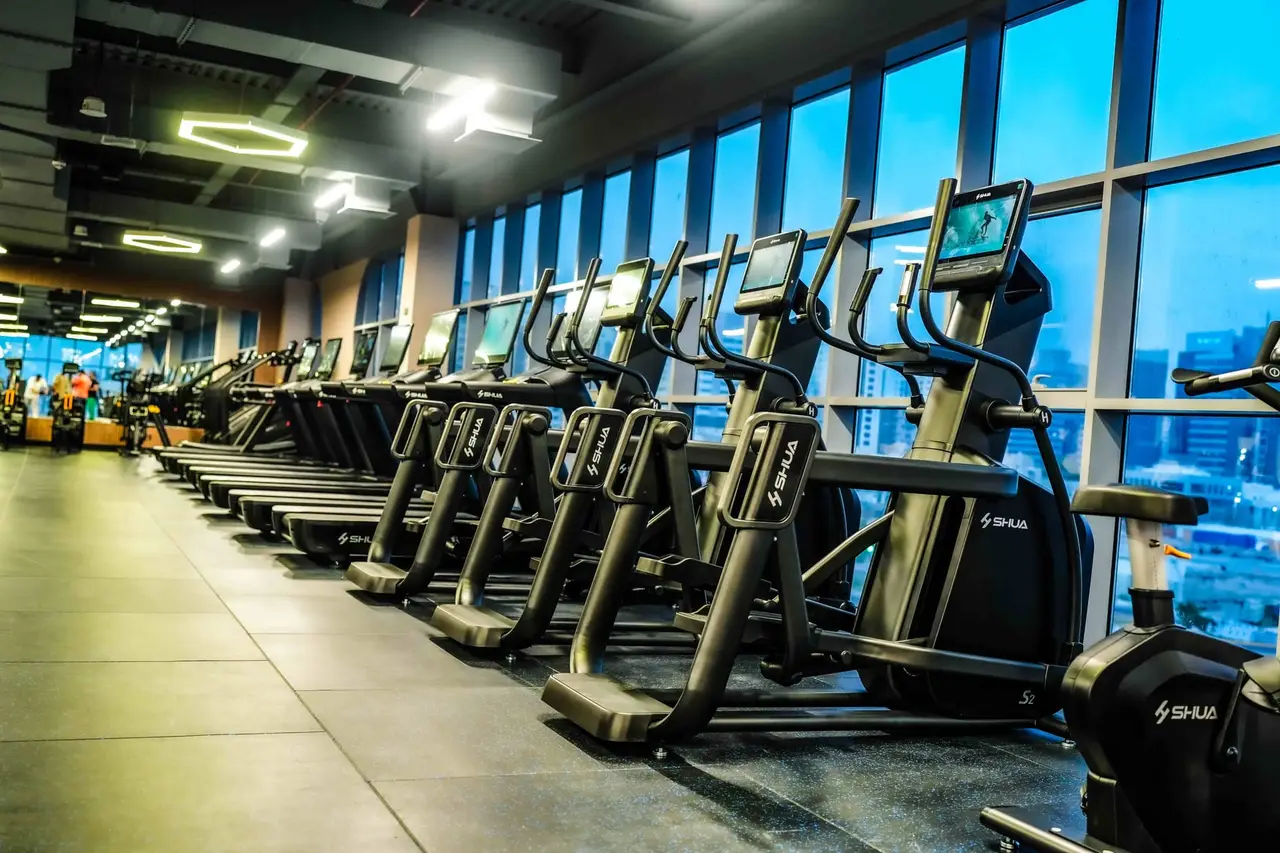
Neither machine is better in general; they suit different people and different weeks. The treadmill practises the way you already move, walking and running, and lets you raise the effort with speed or slope. The elliptical keeps your feet on the pedals the whole time, so there is no landing, and its moving handles let your arms push and pull. If you run or plan to, the treadmill is the specific choice. If running does not suit you, or you simply want a change, the elliptical gives your heart and lungs a similar workout. Many people use both, and RPM's photos of its cardio area show treadmills and cross-trainers on the same row.
Side by side
| Treadmill | Elliptical (cross-trainer) | |
|---|---|---|
| How you move | Walking or running on a moving belt | Feet on two pedals tracing an oval, hands on moving handles |
| Impact | A landing on every running stride; far less when walking | No landing, because the feet never leave the pedals |
| Main muscles | Legs and hips, with more calf and glute work on an incline | Thighs and glutes, with the chest, back and arms joining in through the handles |
| How you set the effort | Speed and incline | Resistance and pedal speed, plus a ramp on some models |
| Learning curve | None for walking; running needs a careful start and stop | A few minutes to find the rhythm |
| Carry-over to running | Direct | Indirect: the fitness carries over, the running stride does not |
| Who it suits | Walkers, runners, race training, incline walking | People avoiding impact, runners on easy days, anyone wanting upper-body work in their cardio |
Fat loss and calories: what really differs
Most searches for this comparison are about weight loss, and the honest answer is that the machine matters less than what you do on it. The energy you use depends on your size, how hard you work and for how long. A brisk incline walk and a hard elliptical session can be equally demanding, and either becomes easy if you lean on the rails or let the pedals carry you round. Fat loss comes from your overall activity and eating across weeks, not from one machine.
The calorie figure on the console is an estimate, and machines estimate in different ways, so a treadmill reading and an elliptical reading are not comparable. For a personal figure, use the calories burned calculator, and measure progress by what you can do: a faster walking pace, or a longer session at the same effort.
When to choose the treadmill
- You want to walk or run, or you are training for a race. The treadmill pace calculator turns a target time into a speed setting.
- You want more effort without going faster. Raising the incline turns a walk into a climb, as the guide to incline treadmill walking explains.
- You are new to cardio and want nothing to learn, because walking is a pattern you already know.
Stand on the side platforms while the belt starts, step on at a slow walk, and build to running speed only once you feel settled. Keep a light touch on the rails or none at all; holding on tightly takes weight off your legs and makes the session easier than the display suggests.
When to choose the elliptical
- Running or jumping does not agree with your joints, or you want a session without any landing. If something hurts on either machine, stop and have it checked by a doctor or physiotherapist.
- You want your upper body involved. Push and pull the handles on purpose instead of resting your hands on them.
- You run and want an easier day that keeps the fitness ticking over without the pounding.
Stand upright with your weight over the middle of your feet rather than leaning on the console, keep your heels down through most of each stride, and set enough resistance that the pedals do not spin you along. Pedalling backwards for a few minutes changes the feel of the stride and breaks up a long session.
Using both in one programme
You do not have to pick one. A week that uses both spreads the load on your body and stops sessions from going stale.
A sample week with three cardio sessions
| Day | Session | How hard |
|---|---|---|
| Day 1 | Treadmill: 25–30 minutes of brisk walking on a moderate incline | You can talk in short sentences |
| Day 2 | Your usual strength session | As planned |
| Day 3 | Elliptical, after a warm-up: 6 × 2 minutes hard, each followed by 2 minutes easy | Hard efforts, genuinely easy recoveries |
| Day 4 | Your usual strength session | As planned |
| Day 5 | Split session: 15 minutes on each machine at a steady effort | Comfortable and conversational |
The heart rate zone calculator gives you effort targets to use on either machine. For a first plan built around these machines, see cardio for beginners.
What about the bike, rower or stair climber?
The bike is the other common pairing: it takes your weight on the saddle and asks nothing of your balance, as the treadmill vs bike guide explains. A stair climber is hard even at a slow pace because you lift your bodyweight on every step, and a rowing machine adds a strong pull for the back and arms. Rotating two or three machines across the week works as well as sticking to one.
Treadmills and cross-trainers at RPM
RPM's floor photos show treadmills and cross-trainers along tall windows, with an upright exercise bike beside them, so you can try both machines on one visit. Stair climbers and rowers are not in the photos, so ask about them if your plan needs one. Book a free guided tour to test the machines, and if you want cardio and strength planned together, a coach in a personal training session can write it with you.
Questions, answered.
Is the elliptical or the treadmill better for fat loss?
Neither has an edge on its own. Fat loss depends on your total activity and eating over weeks, so pick the machine you will use most often at a challenging effort, and keep some strength training in your week.
Which burns more calories, the elliptical or the treadmill?
It depends on how hard you work, not on the machine. Running or steep incline walking can be very demanding, and so can a high-resistance elliptical session. Console figures are estimates that differ between machines; the calories burned calculator gives you a personal one.
Is the elliptical easier on the joints than the treadmill?
It removes the landing, which many people find more comfortable than running, and walking on a treadmill involves far less impact than running too. If a joint hurts on either, stop and get it checked rather than switching machines and carrying on.
Elliptical, treadmill or bike?
The treadmill for walking and running, the elliptical for cardio without landing and with arm work, and the bike for seated cardio that takes your weight off your feet. RPM's cardio page compares the machines on its floor.
Can the elliptical replace running?
For general fitness, it can: it trains the heart and lungs hard. For running performance, it cannot, because it does not practise the running stride. Runners usually keep most sessions on their feet and use the elliptical for easy or extra days.