The answer in brief
The two exercises are the same elbow bend with a different hand position. In a bicep curl the palms face up and the forearm is turned fully outward, which uses one of the biceps' two jobs and puts it in its strongest position. In a hammer curl the palms face each other and the forearm stays in neutral, so the biceps loses part of its advantage and the brachialis and brachioradialis pick up more of the work. Neither is the better exercise; they bias the same group of elbow-bending muscles in different directions.
This page sets them side by side and shows how to choose and combine them. For technique, use each exercise's own page; for a whole week of arm and pulling work, see the biceps guide.
Side by side
| What differs | Hammer curl | Bicep curl |
|---|---|---|
| Grip | Palms facing each other, thumbs up | Palms facing up, little finger slightly higher at the top |
| What the forearm does | Stays in neutral; nothing rotates | Turns fully palm-up, a rotation the biceps itself drives |
| Muscles that gain most | Brachialis and brachioradialis, with the biceps still working | Biceps in its strongest position, with the brachialis helping |
| Typical load | Usually a little heavier | Usually a little lighter |
| Grip and forearm demand | High: the forearm can tire before the arm does | Moderate |
| Implements | Dumbbells, a rope on the cable, a multi-grip bar where a gym has one | Dumbbells, straight bar, EZ bar, cable bar or handle |
| Wrist comfort | The neutral grip suits most wrists | A straight bar strains some wrists; an EZ bar or dumbbells ease it |
| Common fault | Palms rotating up, so it becomes an ordinary curl | Swinging the torso to start each rep |
| Learning curve | Low | Low |
What the grip changes in practice
The biceps attaches to the radius, one of the two forearm bones, and turning the palm up is one of its main jobs. When the forearm is held in neutral, the biceps is in a weaker position to bend the elbow, so the muscles whose only job is bending it share more of the load. The brachialis lies under the biceps across the front of the upper arm, so building it adds to the thickness of the arm seen from the side. The brachioradialis makes up much of the bulk at the top of the forearm, near the elbow, which is why hammer curls turn up in forearm training too.
Most people lift a little more on hammer curls because two strong helpers are sharing the load. That does not make the hammer the harder exercise for the biceps. Judge each one by its own numbers: a pair heavier on hammers is normal, and forcing your palms-up curl to match it usually brings in a swing.
When to choose the hammer curl
- You want arms that look thicker from the side and more forearm, not only the biceps.
- Your grip gives out on rows, pulldowns or deadlifts and you want direct forearm work.
- Palms-up curls bother your wrists and the neutral grip feels better. If either grip causes pain, stop and get it checked by a doctor or physiotherapist first.
- You only have dumbbells or a rope and want a curl that loads well with either.
When the bicep curl is the better pick
- The biceps itself is the priority, for size or for the shape of the front of the arm.
- You want to add load in small steps with an EZ bar, a straight bar or the cable stack.
- You are working towards a chin-up, which uses the same palms-up, elbow-bending pattern.
- You already do plenty of heavy pulling that taxes your grip and forearms, and want the curl to isolate the biceps.
Programming both in one week
Because they bias the same muscles differently, the two pair well. The simplest rule: the curl that matters most to you goes first, while you are fresh, and the hammer comes after any heavy pulling, since rows and deadlifts tire the grip. Three ways to lay it out:
| Set-up | When | What to do |
|---|---|---|
| One arm session | After pulling, or on an arm day | EZ-bar or dumbbell curl 3 × 8–12, then hammer curl 2–3 × 10–12 |
| Two pull sessions | Day A and day B | Day A ends with a bicep curl, 3 × 8–12; day B ends with a hammer curl, 3 × 8–12 |
| Short on time | Alternate weeks | One curl per session: palms-up one week, neutral grip the next |
Stop every set with one or two reps left. For most people, about four to eight hard sets of curls a week across both exercises, on top of rows and pulldowns, is a sensible starting point; the hypertrophy volume calculator counts direct and indirect sets.
Log each exercise separately and progress it on its own terms: add reps until every set reaches the top of the range, then move up one pair. Alternating sets with a triceps exercise, such as the tricep pushdown, keeps an arm session short without either curl suffering.
Both curls at RPM
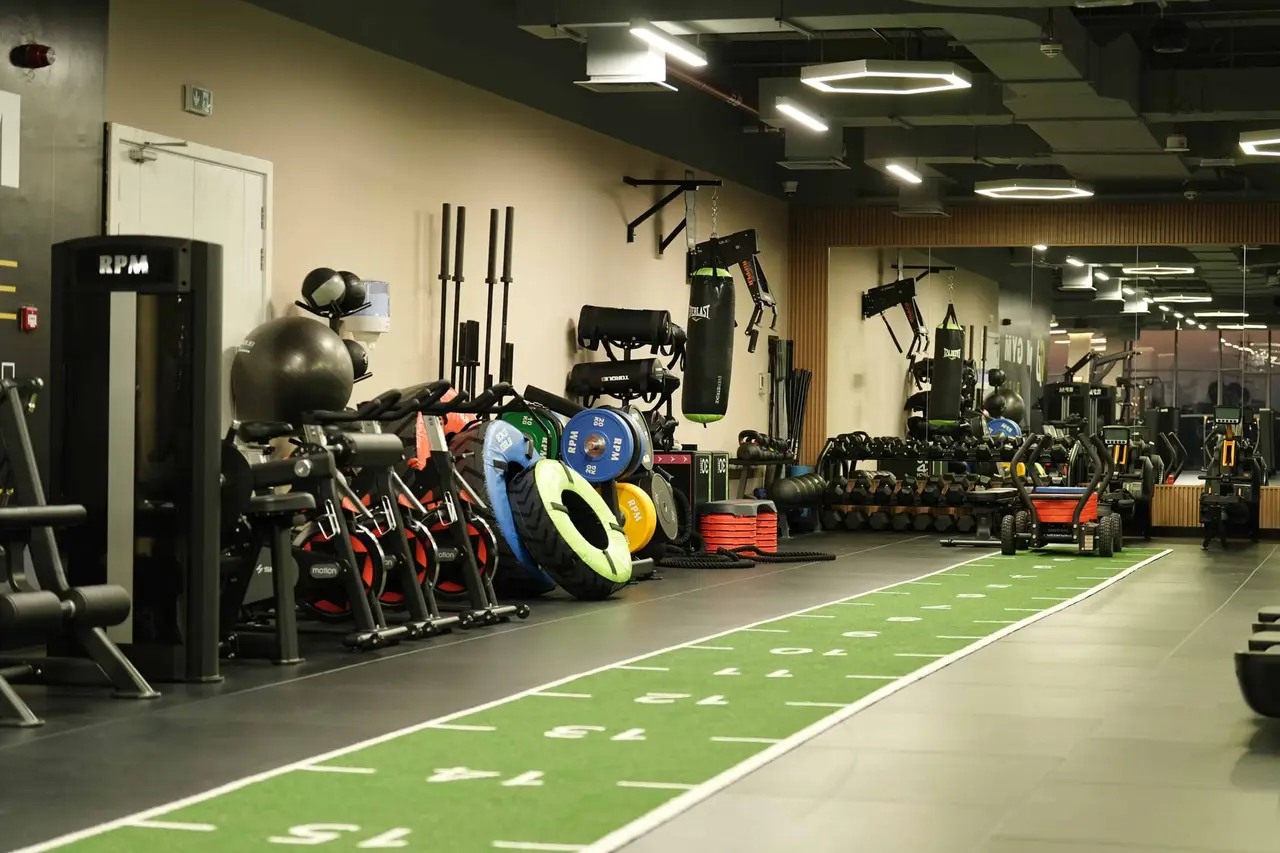
RPM's floor photos show a dumbbell rack, a rack of fixed barbells that includes EZ bars and multi-station cable towers on the training floor in Al Manhal, so both curls can be done with dumbbells, and the bicep curl with a bar or the cable as well. Whether a rope or a multi-grip bar is on hand for cable or barbell hammer curls is a question for your free tour. A personal training session can check your grip and elbow position on both.
Questions, answered.
Which is better for bigger biceps, hammer curls or bicep curls?
For the biceps alone, the palms-up curl, because it works the muscle in its strongest position. For overall arm size, including the brachialis under the biceps and the top of the forearm, the hammer adds work the bicep curl does not. That is why most programmes include both.
Do hammer curls work the biceps?
Yes. The biceps still bends the elbow in a hammer curl; it simply shares more of the work with the brachialis and brachioradialis than it does with the palms up.
Why can I lift more on hammer curls?
In the neutral grip the brachialis and brachioradialis are in a strong position and take a larger share of the load. Expect to use a pair or so heavier on hammers, and track the two exercises separately rather than comparing the numbers.
Hammer curl vs bicep curl vs reverse curl: what is the difference?
The grip. Palms up is the bicep curl, palms facing each other is the hammer, and palms facing down is the reverse curl. Moving from up to down, the biceps does less, the muscles on top of the forearm do more and the weight you can lift drops, so the reverse curl is clearly the lightest of the three.
Hammer curl vs preacher curl?
Different jobs again. The preacher curl is a palms-up curl with your upper arm braced on a pad, so it isolates the biceps and loads the stretched bottom of the rep. The hammer curl is a standing neutral-grip curl with nothing bracing the arm, and it brings in more forearm. One of each makes a good two-exercise finish to an arm session.
Should women do hammer curls or bicep curls?
The same as anyone: both. The muscles respond the same way in women and men, so choose the exercises by goal and comfort, and the loads by how the last reps feel.