The short answer
All three are the same lift, a barbell press, on a bench set at a different angle. Tilting the back pad up sends your arms upwards towards your head, which recruits more of the upper chest and the front shoulders; tilting the bench down sends them towards your hips, in line with the lower chest; flat sits between the two and lets you press the most. The bench press, incline bench press and decline bench press pages cover the set-up and technique of each.
So the choice is less about which angle wins and more about what your week is missing. If you only bench flat, an incline adds the most. If you already do both, a decline is variety rather than a gap. The chest training guide shows a full chest week built around the first two.
Side by side
| What differs | Incline | Flat | Decline |
|---|---|---|---|
| Bench position | Back pad raised, usually one or two notches | Level | Head below hips, legs hooked under pads |
| Where the bar touches | Just below the collarbones | Lower chest | Bottom of the breastbone |
| Chest emphasis | Upper chest | Whole chest, middle and lower most | Lower chest, much like flat |
| Front shoulder share | Larger, and it grows as the bench rises | Moderate | Smallest |
| Typical load | The lightest of the three | Heavy | Similar to flat, or slightly more |
| Bar travel | Similar to flat | Medium | Shortest |
| Set-up and spotting | Incline bench, or an adjustable bench in a rack | Flat bench in a rack; the simplest to spot | Special bench with leg pads; a spotter is close to essential |
| Suits | Anyone whose pressing is all flat | Everyone, as the main press | Lifters wanting variety, or an angle their shoulders prefer |
What the research says about bench angle
Three studies sit behind most of the advice. In a 2020 study of 30 trained adults pressing at five angles, electrical activity in the upper chest peaked with the bench at about thirty degrees, the middle and lower chest were most active flat, and the front shoulder took over beyond about forty-five degrees. A 2016 study of 14 trained men that included a slight decline found the lower chest working about as hard flat as on the decline, with no extra upper-chest work from the decline.
Muscle activity is not the same as growth, so a training study helps. In a 2020 trial, untrained young men pressed once a week for eight weeks, either flat, incline or both, with the number of sets matched. Strength rose by much the same amount in all three groups, while the upper chest thickened more in the incline group at the uppermost of the sites measured. Put together: flat for overall strength, a low incline for the upper chest, and a decline only if you want one.
These are short studies of young adults, each measuring one lift. They describe averages, not what your own shoulders will tolerate, so let comfort and progress decide between neighbouring angles.
Weight, difficulty and strength
Most lifters press noticeably less on an incline than flat, because the shoulders do a larger share of the work and the upper chest is the smaller part of the muscle. There is no fixed ratio worth chasing; compare each lift only with its own log. The decline usually lands close to the flat number, sometimes above it, because the bar travels less.
For pure strength, prioritise the flat bench: it moves the heaviest loads, it is the version tested in powerlifting, and progress on it carries over to the other two. The incline is the harder lift for most people at a given weight, which is why it suits the second slot of a session or the first slot of a lighter day. There is no separate rule for women here; the same angles do the same jobs.
When to choose each
When the flat bench should come first
You want one main press, you are chasing a heavier bench, you train chest once a week, or you are new to barbell pressing and want the simplest set-up to spot.
When to add the incline
Every press in your week is flat, you want more upper-chest work, or you would like a lift that builds the front shoulders along with the chest. Keep the bench low; a steep incline is a shoulder press under another name.
When the decline earns a place
You already press flat and incline and want variety, your shoulders feel better on a slight decline, or you have a decline bench and a spotter to hand. Without them, dips or a high-to-low cable crossover cover the same downward line.
Using the angles in one programme
Two chest sessions a week let you use two angles without either one going stale. Here is one way to set it up:
| Session | Main press | Second press | Then |
|---|---|---|---|
| Chest day A | Flat bench press, 4 × 5–8 | Incline dumbbell press, 3 × 8–12 | Cable crossover, 2–3 × 12–15 |
| Chest day B | Incline bench press, 3–4 × 6–10 | Flat dumbbell press, 3 × 8–12 | Push-ups or dips, 2–3 sets |
| Optional swap | Decline bench press in place of the flat press for a few weeks | Keep the incline | Keep the fly |
Rest two to three minutes after the main press and about ninety seconds after the rest. Each exercise has its own page, including the incline dumbbell press and the dumbbell bench press.
Change the order every few months rather than every week: putting the incline first for a block lets it progress, and swapping back keeps the flat bench moving. Track each angle in its own column.
Bench angles at RPM
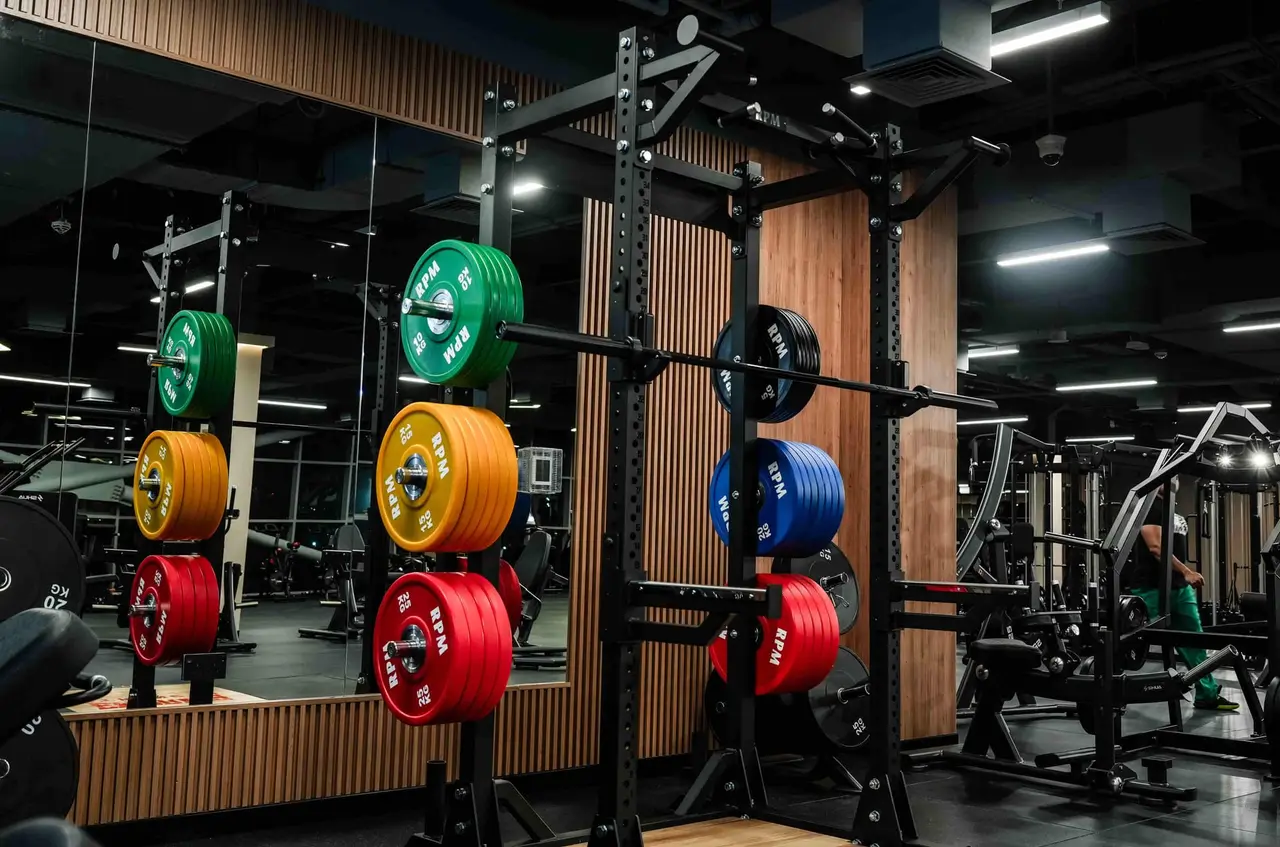
RPM's floor photos show squat racks with barbells and colour bumper plates, and flat benches, on the training floor in Al Manhal, so the flat press is covered. They do not show an incline or decline bench, so ask on your free tour which benches adjust and whether there is a decline station. A coach in a personal training session can help you choose and set the angle.
Sources
- Rodríguez-Ridao D, Antequera-Vique JA, Martín-Fuentes I, Muyor JM. Effect of five bench inclinations on the electromyographic activity of the pectoralis major, anterior deltoid, and triceps brachii during the bench press exercise. International Journal of Environmental Research and Public Health, 2020
- Chaves SFN, et al. Effects of horizontal and incline bench press on neuromuscular adaptations in untrained young men. International Journal of Exercise Science, 2020
- Lauver JD, Cayot TE, Scheuermann BW. Influence of bench angle on upper extremity muscular activation during bench press exercise. European Journal of Sport Science, 2016
Questions, answered.
Incline or flat bench: which builds a bigger chest?
Both, in different places. The flat press loads the whole chest heavily; the incline puts more into the upper chest. In the 2020 training study the upper chest grew most with the incline while strength rose alike, so using both covers the whole muscle.
Is the incline bench press harder than the flat?
For most people, yes: you will press less on the incline for the same reps. That reflects the larger role of the shoulders and the smaller upper chest, not a weakness.
Should I do the incline or the flat press first?
Whichever matters most to you right now. The lift you do first gets your freshest effort, so put the flat first if your bench is the priority and the incline first if your upper chest is lagging, then swap every few months.
Incline or decline: which do I need?
If you have to pick one, the incline, because the flat bench already covers the lower chest and the decline adds little beyond it. The decline is a reasonable extra for variety, which is how the chest training guide handles any third press.
Does the same apply to dumbbells?
Yes. Incline and flat dumbbell presses split the work the same way as the barbell versions, with each arm able to find its own path. See the incline dumbbell press for the set-up.