The short answer
Both lifts push weight from your shoulders to straight arms overhead, and both work the front and side shoulders and the triceps. The overhead press and shoulder press pages each teach one of them and note the basic difference: one is a standing barbell lift, the other usually a seated dumbbell lift. This page is about the choice itself: what you gain and give up with each, who each suits, and how to fit both into one programme.
The names cause half the confusion. Military press almost always means the standing barbell press. Shoulder press is a looser term that can mean dumbbells, a machine or a barbell, seated or standing. When a programme says shoulder press with no detail, it usually means the seated dumbbell version, and that is the comparison here. The shoulder exercise guide shows where pressing sits among the other shoulder movements.
Side by side
| What differs | Barbell overhead press | Dumbbell shoulder press |
|---|---|---|
| Usual set-up | Standing, bar taken from a rack at collarbone height | Seated on an upright bench, dumbbells kicked up from the thighs |
| What holds you still | Your legs, glutes and trunk | The bench and its back pad |
| Main muscles | Front and side shoulders and triceps, with the trunk working hard | Front and side shoulders and triceps, with little help from the legs |
| Path of the hands | Fixed width; the head moves back to let the bar pass | Each arm moves on its own; the palms can angle in and the dumbbells finish closer together |
| Load you can use | The heavier of the two, as one bar | Less in total; each arm carries its own share |
| Adding weight | Small plates on each side, so the steps can be tiny | Fixed pairs, so the steps can be large at the light end |
| Learning curve | Moderate: bracing, bar path and the head movement take practice | Low: the bench takes balance out of it |
| Joint and back demands | Needs comfortable overhead reach; arching through the lower back is the common fault | Easier on the lower back; wrists and shoulders settle into their own angle |
| Failing a rep | Lower the bar back to your shoulders, or into the rack | Lower the dumbbells to your shoulders, then to your thighs |
| Kit needed | A rack, a barbell and plates | Dumbbells and a bench with an upright back |
What a study comparing the two found
A 2013 study of fifteen healthy men tested barbell and dumbbell presses, each seated and standing. The heaviest standing dumbbell press was a little lower than both the standing barbell press and the seated dumbbell press. Yet the standing dumbbell press produced the highest activity in the deltoids, while the standing barbell press asked more of the triceps than its dumbbell equivalent.
Two cautions apply. Muscle activity measured in a lab is not the same as muscle growth over months, and fifteen men is a small group. Read it as support for choosing by goal rather than proof that one press builds bigger shoulders: the barbell lets you lift more, the dumbbells make each kilo work harder, and the shoulders get trained either way.
Choose the barbell overhead press when
- Strength is the goal and you want a number you can track in small steps.
- You already squat and bench with a barbell and are comfortable bracing under a bar.
- Your arms reach straight overhead without your lower back arching to get them there.
- You want one lift that trains the shoulders, triceps and trunk together, which saves time in a full-body session.
Choose the dumbbell shoulder press when
- You are new to pressing, or returning after a break, and want the simpler lift to learn.
- Shoulder muscle is the goal, and you want to take sets close to failure without balancing a bar.
- A bar travelling past your face is uncomfortable, and turning the palms slightly in feels better.
- One side is clearly weaker and you want each arm to do its own work.
- Your lower back or your balance limits the standing lift.
Standing or seated, bar or dumbbells: the four combinations
| Version | What changes | Use it when |
|---|---|---|
| Standing barbell (military press) | The heaviest standing option, with the whole body braced | Strength is the priority |
| Seated barbell | The bench removes the leg and trunk work, so most people lift a little more; the bar still passes the face | You want barbell loading with less balance; it needs an upright bench in or beside a rack |
| Standing dumbbell | The lightest of the four, with the most balance and trunk work | No bench is available, or you want the trunk to work hard |
| Seated dumbbell | Back supported, each arm on its own path | The default for building shoulder muscle |
A shoulder press machine sits one step beyond the seated dumbbell press: a fixed path, nothing to balance and easy to push to failure. The Arnold press is a seated or standing dumbbell variation that adds a palm rotation and uses lighter weights.
Using both in one programme
Because the two presses load the same muscles from different set-ups, they combine well. The simplest way is one of each per week:
Two pressing days a week
| Day | Main press | Then |
|---|---|---|
| Upper day A | Overhead press, 4 × 4–6, one or two reps left | Lateral raise, 3 × 12–15 |
| Upper day B | Seated dumbbell shoulder press, 3 × 8–12 | Rear delt fly, 3 × 15 |
Rest two to three minutes after the heavy barbell sets and about ninety seconds after the dumbbell sets.
With only one pressing day, open with three or four heavy sets of the overhead press, then do two or three lighter sets of the dumbbell press rather than two full-volume presses. Or alternate by training block: four to six weeks led by the barbell, then a block led by the dumbbells. Track each lift separately. Two dumbbells do not add up to a barbell number, and seated numbers do not predict standing ones.
Both presses at RPM
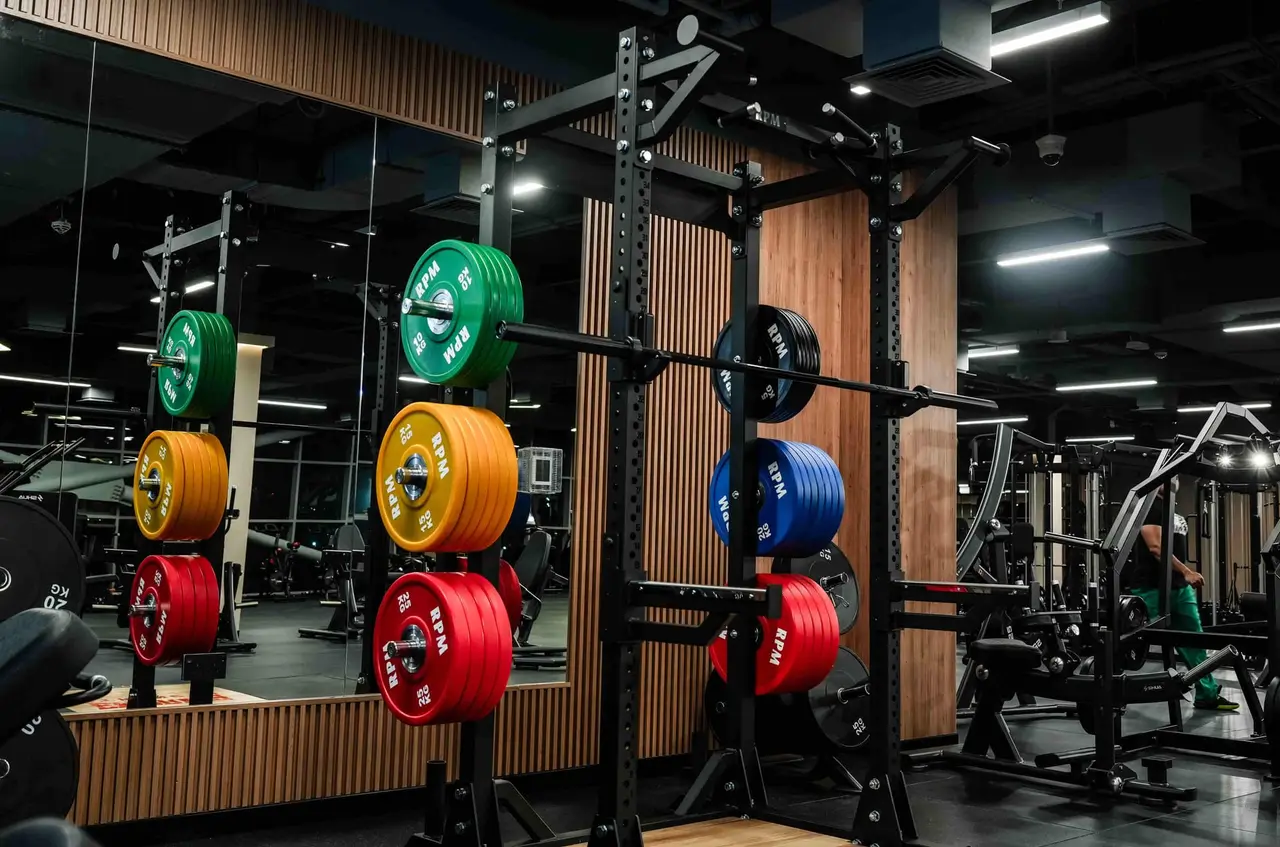
RPM's floor photos show squat racks with barbells and colour bumper plates, a dumbbell rack and flat benches on the training floor in Al Manhal, so the standing barbell press and the standing or flat-bench dumbbell press are covered. A bench with an upright back pad and a shoulder press machine are not in the photos, so ask on your free tour. A personal training session can help you choose and set up whichever press you start with.
Sources
Questions, answered.
Military press vs shoulder press: which is better?
Neither is better in general; they suit different goals. The military press, standing with a barbell, builds pressing strength you can measure in small steps and trains the trunk. The seated dumbbell shoulder press is simpler to learn and keeps the effort on the shoulders. Choose by your goal, or use both.
Which builds bigger shoulders?
Either can, if you take sets close to failure and add reps or load over time. The dumbbell press is often easier to push hard for muscle, while the barbell press lets you handle heavier loads. Lateral raises and rear-shoulder work matter as much as the choice of press.
Why can I press more with a barbell than with two dumbbells?
The bar ties your hands together, so both arms share one load and nothing has to be steadied separately. Each dumbbell needs its own control, and getting a heavy pair to your shoulders takes effort too. Expect the two dumbbells together to weigh less than your barbell.
Should I do the overhead press seated or standing?
Standing is the classic version and trains the trunk; seated, against an upright back pad, takes balance out of it, so most people lift a little more. If your lower back arches when you press standing, sit down until your bracing improves.
Overhead press or shoulder press machine?
The machine fixes the path, so it is the easiest press to learn and to take to failure, but it does nothing for balance or the trunk. Many programmes use a barbell or dumbbell press first and save the machine for the last hard sets.
Is the overhead press good for beginners?
It can be learned with an empty bar, but the seated dumbbell press is the easier start because the bench handles balance. If you are new to pressing, begin with dumbbells and add the overhead press once you can brace well, a skill the plank helps build.