The short answer
With a back squat you carry a loose bar across your upper back and you decide its path: it has to stay over the middle of your feet, so your hips travel back and your torso leans forward to keep it balanced. On a hack squat the carriage runs on rails, your back rests on a pad and your feet sit slightly ahead of you, so the knees can travel far forward while the torso stays at the machine's angle. Take the balancing away and most of the other differences follow.
Two clarifications save confusion. The machine is not the barbell hack squat, a free-weight lift with the bar held behind your legs, which the hack squat page also covers. And when a programme says 'back squat or hack squat if preferred', it means either can fill the main squat slot; this page helps you decide which. Many lifters end up using both. The leg training guide shows where that slot sits in the week.
Side by side
| What differs | Back squat | Hack squat |
|---|---|---|
| Equipment | Barbell, plates and a squat rack with safety arms | A hack squat machine, usually plate-loaded |
| Who controls the path | You: the bar must stay over mid-foot | The rails |
| Torso | Leans forward as needed; the angle depends on your build and bar position | Pressed against the back pad at a fixed angle |
| Main muscles | Quads, glutes and adductors share the work | Quads first; glutes and adductors mainly near the bottom |
| Trunk and lower back | Work hard to stop the bar folding you forward | Work less, since the pad holds you, though the shoulder pads still load the spine |
| Learning curve | Steeper: rack set-up, bracing, depth and bar path | Gentler: foot position and depth are the main skills |
| Missing a rep | Sit down onto safety arms set just below your depth | Lower the carriage onto its safety stops |
| Weight on the bar | Not comparable with the machine | Not comparable with the barbell |
| Availability | Any gym with a rack | Not every gym has one |
What changes for your legs
Because the feet sit ahead of the hips on the hack squat and the pad stops you leaning, the knees bend a long way while the hips stay fairly open. A deep knee bend under load is exactly what the quads need, which is why most lifters feel the machine almost entirely in the front of the thighs. In the back squat the hips move back to keep the bar balanced, so the glutes and the large adductor on the inner thigh take a bigger share, and the muscles along the spine work from the first rep to the last.
Neither wins for leg size across the board. If the quads are the priority, the hack squat lets you take them closer to failure with less fatigue elsewhere. If you want the glutes, adductors and trunk trained in the same lift, or a squat whose strength carries over to other barbell work, the back squat does more.
Why the numbers do not match
Many lifters load more plates on the hack squat than they can back squat, and some find the reverse. Neither comparison tells you much. The carriage has its own weight, which varies by manufacturer; on an angled track only part of the load acts against you; and rollers and leverage differ from one model to the next. Track each lift on its own, and do not enter hack squat numbers in the squat 1RM calculator, which is built for a barbell.
When to choose the back squat
- You want general strength, with the legs, hips and trunk trained in one lift.
- You compete, or plan to, in powerlifting, where the back squat is the tested lift.
- You train in gyms that have racks but no hack squat.
- You want to keep sharpening the bracing and bar control that other barbell lifts rely on.
When the hack squat is the better pick
- Your goal is bigger quads and you want to push them hard without balancing a bar.
- Your lower or upper back tires before your legs in heavy back squats.
- You want a second squat after the barbell that does not repeat the same fatigue.
- You are still learning to brace under a bar and want hard leg work in the meantime, while you practise the barbell with light sets.
Moving to the machine is not a way around pain. If either squat hurts your knees or back, stop and have it checked by a doctor or physiotherapist before you choose between them.
Using both in one programme
The two combine well because they share muscles but not limits: the barbell taxes balance and the trunk, the machine taxes the quads.
| Approach | How it looks | Good for |
|---|---|---|
| Barbell first, machine second | Back squat 3–4 × 4–6, then hack squat 2–3 × 8–12 | Strength and size in the same session |
| One per leg day | Day 1: back squat 3–4 × 5–8. Day 2: hack squat 3–4 × 8–12 | Two leg days without repeating the same fatigue |
| Swap by block | Eight to twelve weeks leading with one, then the other | Restarting progress when one lift stalls |
Rest two to three minutes after heavy sets on either. If you are also weighing up the leg press, the hack squat vs leg press comparison covers that third option.
Both at RPM
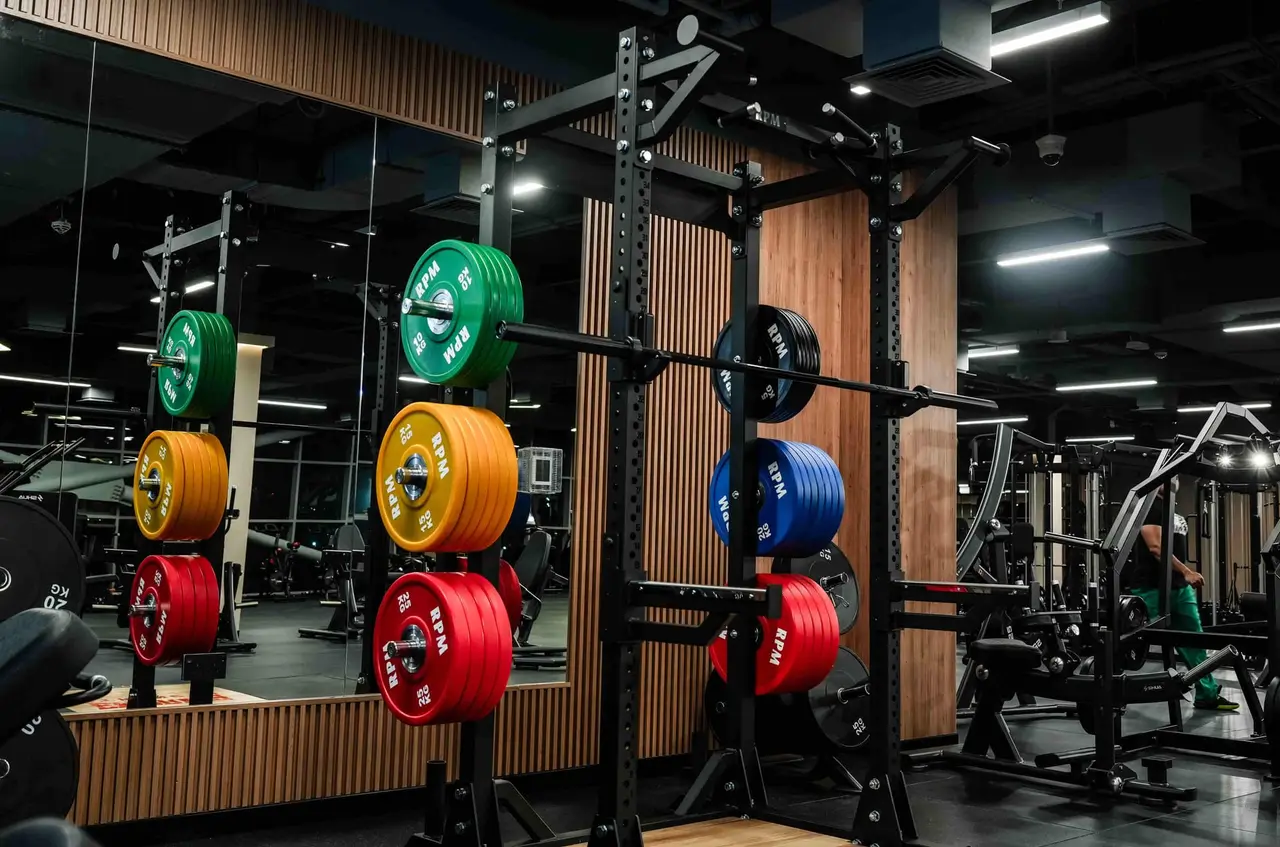
RPM's floor photos show squat racks with barbells and colour bumper plates, so the back squat is covered. A hack squat machine is not in those photos; ask on your free tour what the floor has, and if there is none, the photographed 45-degree leg press or a heels-raised goblet squat gives a similar quad focus. A personal training session can set up either lift with you.
Questions, answered.
Is the hack squat as good as the back squat?
For building the quads it can match or beat it. For whole-body strength, balance and carry-over to other barbell lifts, the back squat does more. Which is better depends on what you need the squat to do.
Can I replace back squats with hack squats?
For most muscle-building goals, yes, provided you also train the hamstrings and glutes with hinges. You give up some trunk and balance work, and if you compete in powerlifting you still need the barbell.
Which is better for glutes?
The back squat, especially to full depth, because the hips travel back and do more of the work. The reverse hack squat, facing the pad, also shifts load to the glutes. For a glute-first programme, add the hip thrust.
Is the hack squat easier on the back?
It removes the job of holding a loose bar, so the lower back usually works less, but the shoulder pads still press down through your spine. If your back hurts when you squat, see a doctor or physiotherapist rather than assuming the machine is the answer.
What about the pendulum squat or the belt squat?
Both are machine squats that, like the hack squat, take balance out of the lift; the belt squat also hangs the load from your hips instead of your shoulders. They are less common, so check whether a gym has one before planning around it.