What dumbbells do well, and badly, for the shoulders
This page is for training the shoulders when dumbbells are the tool you have, or the one you prefer. The shoulder exercise guide explains how the three heads work, compares every tool from barbells to cables and machines, and sets out weekly set counts. The question here is narrower: how to build complete shoulder sessions from one rack.
Dumbbells are a natural fit. The shoulder moves in more directions than any other joint, and dumbbells follow every one of them: pressing overhead, raising out to the side, sweeping back from a bent-over position. Each arm works alone, so a weaker side cannot hide, and your palms can turn to whatever angle your shoulders prefer, which a barbell does not allow.
Their weakness is the way gravity loads them. A dumbbell always pulls straight down, so a lateral raise is nearly weightless at the bottom and hardest at the top, and a rear delt fly behaves the same way. A cable can load the bottom of those ranges; a dumbbell cannot. The second limit is the gap between pairs: on a press it is a modest jump, but on a raise done with a light pair it can be a large share of the load. Both are workable, as the rest of this page shows.
Three pairs, not one: choosing the weights
Shoulder work with dumbbells uses very different loads, and most of the classic mistakes come from using the pressing pair for everything.
| Job | Typical exercises | How to choose the pair |
|---|---|---|
| Pressing | Seated or standing press, Arnold press | The heaviest pair: about ten reps with two in reserve, and you can lift it to your shoulders cleanly |
| Side shoulders | Lateral raise, leaning one-arm raise | Light: you can raise it to shoulder height and pause there on every rep |
| Rear shoulders | Bent-over rear delt fly, rear-delt row | Light for flies, heavier for rows, as long as the shoulder blades are not doing the lifting |
If the pressing pair is awkward to get into position, lift one dumbbell at a time to your shoulders with a drive of the knee, as the shoulder press page shows.
The movements, grouped by head
These are the dumbbell shoulder exercises worth knowing, grouped by the part of the shoulder they load most. The linked pages take each one step by step.
- Front shoulders, with the triceps: the seated dumbbell shoulder press, the Arnold press, the standing dumbbell press and the single-arm press. In the single-arm version you press one dumbbell with the other hand on your hip, so your trunk has to resist leaning and a weaker side shows up at once.
- Side shoulders: the lateral raise, seated or standing; the leaning one-arm lateral raise, holding an upright and leaning away from it, which loads the bottom of the range better; and partial reps at the end of a set.
- Rear shoulders: the bent-over rear delt fly, the chest-supported version lying face down on an incline bench, and the rear-delt row, rowing with the elbows wide, which takes heavier dumbbells. The chest-supported row page covers that bench set-up.
- Upper traps: the dumbbell shrug, holding the pair at your sides and lifting the shoulders straight up. The shoulder guide counts the traps with the shoulders.
- Front raises: lifting a dumbbell out in front. Every press already works the front shoulders hard, so most people can leave them out; add them only if the front head is clearly lagging.
Two dumbbell-only sessions
Session A: dumbbells and a flat bench
For a floor with flat benches only: the press is done standing, or seated on the end of the bench, so your trunk works as well.
| Exercise | Sets × reps | Coaching note |
|---|---|---|
| Standing dumbbell press | 4 × 6–10 | Ribs down, no lean back |
| Seated lateral raise | 3 × 12–15 | On the end of the bench; pause at shoulder height |
| Bent-over rear delt fly | 3 × 15–20 | Chest close to the thighs, slow on the way down |
| Dumbbell shrug | 2 × 10–15 | Straight up, short hold at the top |
Session B: a shorter, raise-led day with no bench
A shorter session for the second shoulder day of the week, with most of the work going to the side and rear heads and the Arnold press to vary the press.
| Exercise | Sets × reps | Coaching note |
|---|---|---|
| Standing Arnold press | 3 × 8–12 | A pair lighter than your normal press |
| Leaning one-arm lateral raise | 3 × 12–15 each arm | Hold an upright and lean away |
| Rear-delt row | 3 × 10–12 | Elbows wide, pull towards the upper chest |
| Lateral raise, then partials | 2 × 12–15, then 5–8 partials | Finish each set with short reps |
Session A is 12 sets and Session B 11. Run one or both in a week alongside your chest and back training; if your chest days already include heavy pressing, cut the press in Session B to two sets.
Making raises harder when the next pair is too big
The gap between light dumbbells bites hardest on raises. Going from a 6 kg pair to an 8 kg pair adds a third to the load on an exercise where form fails quickly. Before you move up:
- Work in a higher rep range, 12 to 20, and add reps until every set reaches the top of it.
- Pause for a second at shoulder height on every rep, and lower over three seconds.
- Switch to the leaning one-arm raise: one arm at a time, the same dumbbell becomes harder at the bottom of the range.
- Add partial reps after your last full rep, or drop to a lighter pair and keep going on the final set.
- Move up only when you can raise the new pair to shoulder height without swinging. If you cannot, go back and keep building reps.
Presses progress more conventionally: add reps between 6 and 12, then take the next pair when every set reaches the top of the range. Log each exercise separately; with three pairs on the go, it is easy to forget which one you used.
Mistakes when training shoulders with dumbbells
- Using the pressing pair for raises. Too heavy a pair turns a lateral raise into a swing driven by the traps and the lower back.
- Shrugging through every raise. If your shoulders climb towards your ears, the traps are taking over; lighten the pair and think of pushing the dumbbells out, not up.
- Skipping rear-shoulder work. Presses and side raises leave the back of the shoulder short, so at least one rear-shoulder exercise belongs in every week.
- Rushing the lowering. The way down is half the rep; letting the dumbbells drop wastes it.
- Pressing with a big arch. Standing, or on a flat bench with no back pad, keep the ribs down; if you cannot, use an upright bench or a lighter pair.
- Training through joint pain. A burn in the muscle is normal; a pinch or sharp pain in the shoulder is a reason to stop and get it checked by a doctor or physiotherapist.
Dumbbell shoulder training at RPM
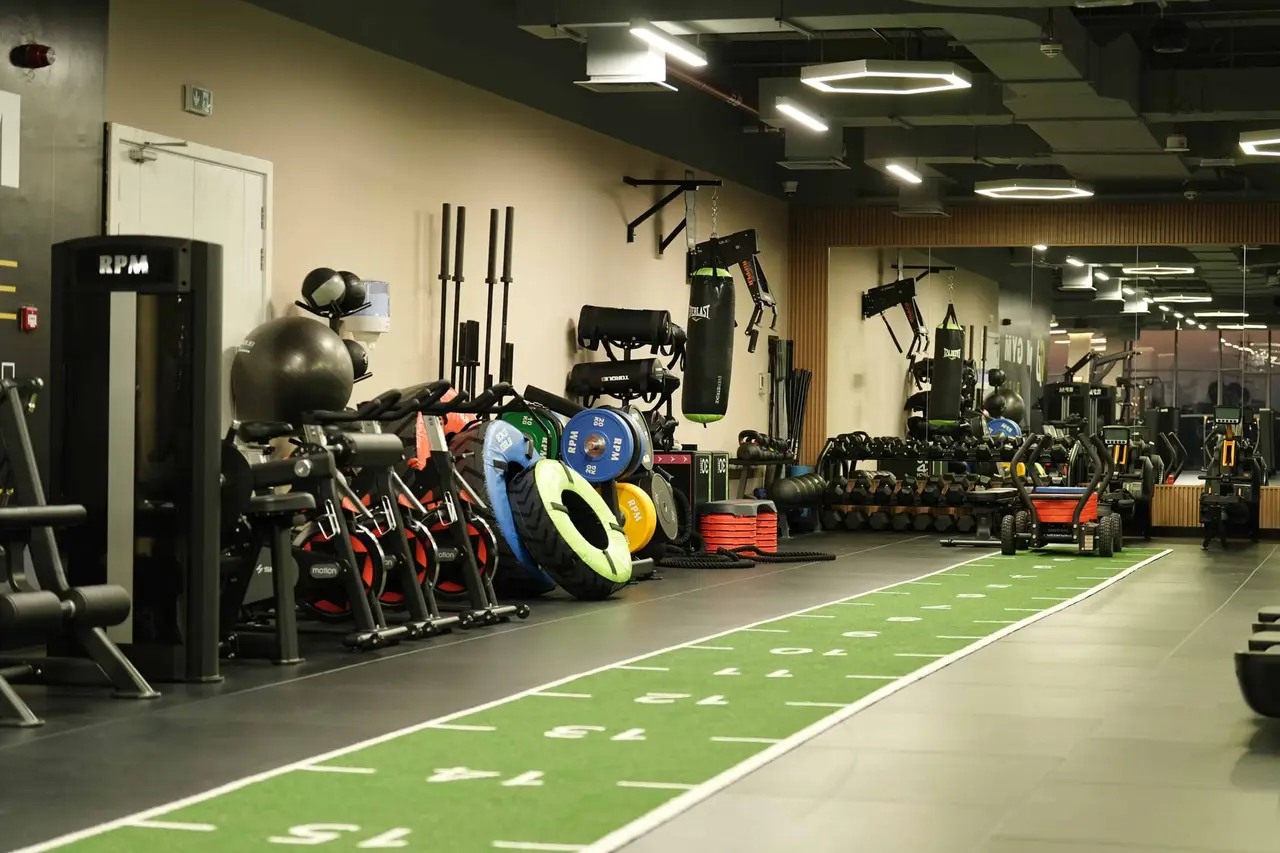
RPM's floor photos show a dumbbell rack in the functional training area and flat benches on the training floor, which covers both sessions above. An upright or incline bench, needed for the back-supported seated press and the chest-supported rear delt fly, does not appear in the photos, so ask on your free tour. A personal training session can set your three pairs and check your raise technique.
Questions, answered.
Which dumbbell shoulder exercises suit beginners?
Start with three: the seated dumbbell shoulder press, the lateral raise and the bent-over rear delt fly, two or three sets each, once or twice a week. Add the Arnold press or the leaning raise once those feel steady.
Can I train shoulders with dumbbells and no bench?
Yes. Press standing, raise standing, and do the rear delt fly bent over at the hips. Standing presses need a firmer brace and slightly lighter dumbbells, but the shoulders still get a complete session.
How heavy should dumbbells be for shoulder exercises?
It depends on the exercise: heaviest for presses, much lighter for lateral raises and rear delt flies. For each one, choose a pair you can control through the full range for the bottom of your rep range with about two reps left.
Can I train my shoulders at home with dumbbells?
Yes. A pair or two of dumbbells covers the presses, raises and rear delt flies on this page, and a sturdy chair can stand in for a bench. With few pairs at home, rely on higher reps, pauses and one-arm work to keep progressing.
Dumbbells or a barbell for the shoulders?
Dumbbells cover every head and suit muscle building; the barbell overhead press moves heavier loads for strength. Many programmes use the barbell for one heavy press a week and dumbbells for the rest, and the overhead press vs dumbbell shoulder press comparison shows how to combine them.
Are dumbbell shoulder exercises different for women?
No. The exercises and the progression are the same for everyone; the starting pairs differ from person to person, not by gender.