What an air bike is, and why it feels so hard
The names all describe one design. A fan sits where other bikes have a flywheel, and two long handles are linked to the cranks, so as one arm pushes, the other pulls. Assault AirBike, Rogue Echo and Schwinn Airdyne are brand names; air bike and fan bike are the generic terms, and gyms use them interchangeably.
The fan explains the reputation. Air resistance climbs much faster than speed does, so pedalling a little faster takes a lot more effort, and a flat-out sprint can take you to your limit within seconds. The upside is that the bike always matches you: a beginner and an experienced athlete can share it without changing a setting, because each decides the workload with every stroke. The downside is that it is very easy to start too hard.
What it trains, and who it suits
The legs drive the pedals, so the quads, glutes and hamstrings do most of the work, while the chest, shoulders, back and arms push and pull the handles. With the whole body working, your heart and lungs are pushed hard, which is why the air bike is a favourite for short, hard intervals and conditioning circuits. You stay seated, so there is no landing as there is in running or jumping, and nothing to balance.
It suits people who want hard conditioning without running, and anyone training for a mixed fitness race. It suits long, easy sessions less well: the fan is loud and blows air back at you, and other bikes do steady work more quietly. Hard intervals send your heart rate very high, so if you have a heart condition or high blood pressure, or have been inactive for a long time, ask your doctor before all-out efforts. If your knees, back or shoulders hurt while riding, stop and have them checked by a doctor or physiotherapist. The gym equipment guides cover the quieter options.
Setting up the air bike
- Saddle height: stand beside the bike and set the saddle about level with your hip bone, then check it seated. With a pedal at its lowest point and the ball of your foot on it, the knee should be slightly bent, neither straight nor cramped.
- Fore and aft, where the saddle slides: with the pedals level, your front knee should sit roughly over the pedal. Many air bikes only adjust up and down, and on those height is all you set.
- Feet: the balls of your feet on the middle of the pedals, toes forward. If the pedals have straps, pull them snug so a hard effort cannot throw a foot off.
- Handles: hold them where the grips are upright, with relaxed hands. At full reach the elbow should still be slightly bent, and at the back of the stroke your hand should finish near your chest, not behind your shoulder.
- Console: wake it and choose a mode. Most show time, distance, calories, watts and cadence; pick the one figure your session is built around before you start.
- Clear the area: keep loose clothing, bag straps and fingers away from the fan, and never reach into the fan guard while the fan is still turning.
Many air bikes have foot pegs at the front: rest your feet on them to work the arms alone.
Riding it: legs first, arms adding power
Sit tall with a slight forward lean, ribs down and trunk braced, so the push from each leg goes into the pedal rather than rocking you on the saddle. Let the legs set the rhythm and use the arms to add power: as one hand pushes its handle away, the other pulls its handle back, in time with the pedals. Fighting that rhythm, or hauling with the arms alone, wastes effort.
Pacing decides how a session goes. Because the resistance rises so steeply, the last bit of speed costs the most, so ten seconds at full speed at the start can leave you spent for the rest of the interval. Pick a target on the console, such as a wattage or a calories-per-minute figure, and hold it evenly. Across a set of intervals, aim for the last round to match the first; if it falls away sharply, start the next session a little easier.
Calorie readings differ between brands and machines, so log the model with the number. For a personal energy estimate use the calories burned calculator, and set effort with the heart rate zone calculator.
Mistakes to fix first
| Mistake | What it looks like | The fix |
|---|---|---|
| Sprinting from the start | Full speed for the first seconds, then a crawl for the rest of the interval | Hold an even target number from start to finish |
| Arms only | Shoulders shrugging and arms yanking while the legs barely turn | Let the legs lead and the arms follow their rhythm |
| Saddle too low | Knees rising high and thighs burning early | Raise it until the knee is only slightly bent at the bottom |
| Hunching | A rounded back and the head dropping towards the console | Sit tall and lean slightly from the hips |
| Stopping dead after a sprint | Climbing off the moment the interval ends | Keep pedalling easily for a minute or two while your breathing settles |
| Skipping the warm-up | Going straight into the first hard effort | Ride easily for five minutes with two or three short pick-ups |
Air bike workouts
| Session | What to do | How it should feel |
|---|---|---|
| First rides | 10–15 minutes easy, with a 15-second faster spell every 2 minutes | Breathing harder only in the faster spells |
| Short intervals | After a warm-up, 10 rounds of 15 seconds hard and 45 seconds very easy | Fast and powerful, recovered by the start of each round |
| Longer intervals | 5 rounds of 1 minute hard and 2 minutes easy | Hard but steady; the last round matches the first |
| Calorie ladder | Rounds of 5, 10 and 15 console calories at an even pace, resting as long as each round took | Controlled; resist going all-out on the first round |
| Bike and kettlebell | Alternate 30 seconds on the bike with 10 kettlebell swings, for 5–8 rounds | A conditioning circuit; keep every swing crisp |
Begin with one or two air-bike sessions a week, never hard intervals on consecutive days, and add rounds before you add speed. The kettlebell swing page covers the swing, and conditioning for beginners shows how intervals and steady work fit into a plan.
Air bike, spin bike or rower?
Against a spin bike or an upright exercise bike, the air bike adds the arms and swaps the resistance knob for the fan, so it is harder to ride gently and easier to empty yourself in a short effort; the other bikes are quieter and better for long steady rides and classes. Against the rowing machine, it asks for almost no technique, so you can work hard in your first session, while the rower loads the back and legs through a longer stroke and rewards practice. The standing SkiErg puts more of the load on the trunk and arms, and the cardio machines guide compares every machine by goal.
Assault bike or rowing machine for conditioning?
Both suit hard intervals. Choose the air bike when you want to go hard with nothing to learn, or when your lower back dislikes rowing; choose the rower when you are preparing for a race that includes rowing, or want a longer pulling stroke. Many people use both in the same week.
Air bikes at RPM
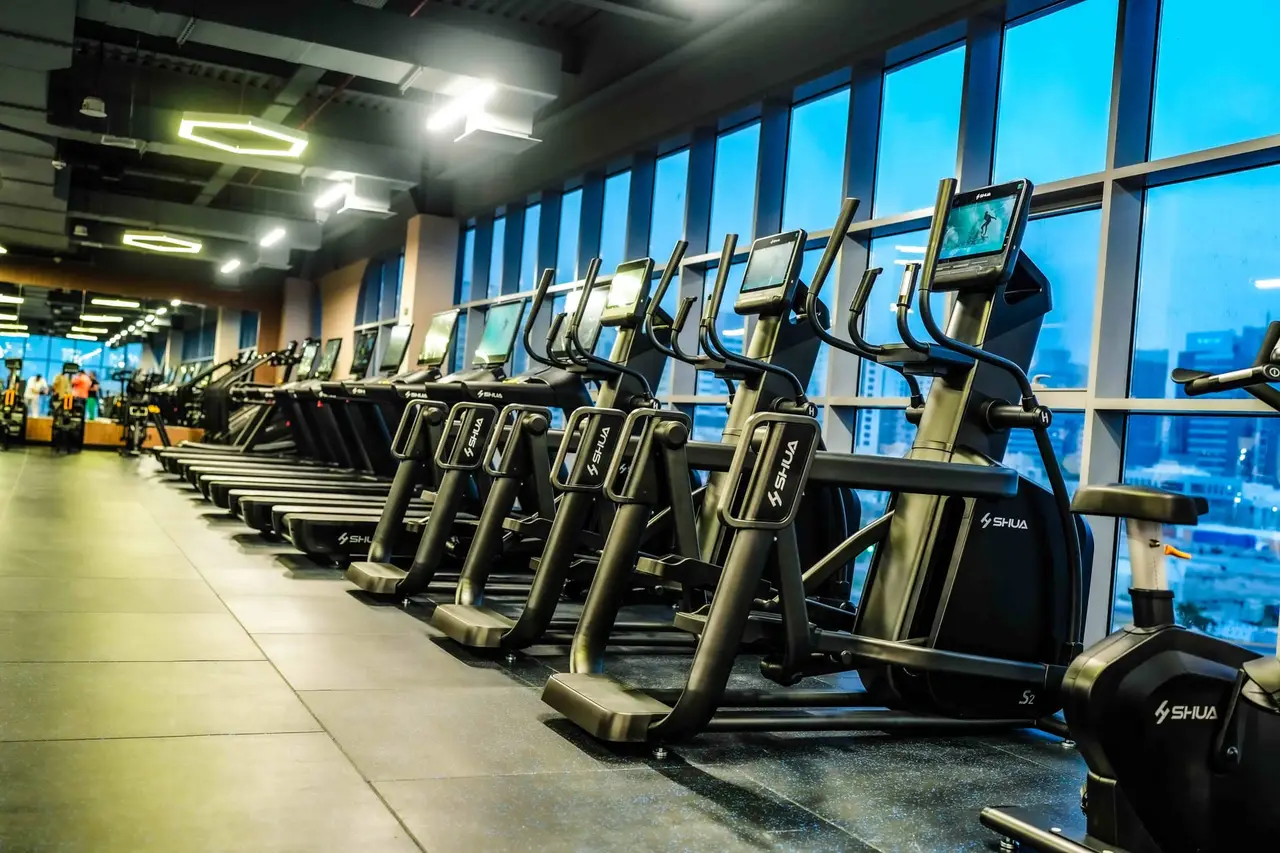
RPM's photos of its cardio area show treadmills, cross-trainers and an upright exercise bike by tall windows, and its functional-area photos show a row of spin bikes, but none of them shows an air bike. Ask on a free guided tour whether one is on the floor before you plan sessions around it. Until you know, the intervals above work on a spin bike or upright bike without the arm work, and the sled and battle ropes that RPM's functional training photos show give you hard upper-body efforts. A coach in a personal training session can build either into your week.
Questions, answered.
Is the assault bike good for fat loss?
It can be part of the picture. Hard intervals on an air bike add to the energy you use each week without any landing, and they fit into a short session. Fat loss depends on your overall activity and eating over months, and the console calorie figure is an estimate, so judge progress over weeks, not sessions.
Why is the air bike so hard?
Because the fan's resistance rises steeply with speed and your arms and legs work at the same time. You can never coast, and a little more speed costs a lot more effort. Ridden at an even pace, it becomes far more manageable.
How many calories does an air bike burn?
It depends on your size, how hard you ride and for how long. Console figures are estimates that vary between brands; the calories burned calculator gives a personal estimate to compare sessions with.
Is the air bike easy on the knees?
There is no landing, and you set the load with every stroke, which is why many people with sore knees find bikes easier than running. Check the saddle height first, since a low saddle bends the knee further on every stroke. If your knees still hurt, stop and have them checked by a doctor or physiotherapist.
Air bike or exercise bike: what is the difference?
An ordinary exercise bike works the legs against a resistance level you choose; an air bike adds moving handles for the arms, and its fan sets the resistance from your own speed. The exercise bike page covers upright, spin and recumbent bikes.