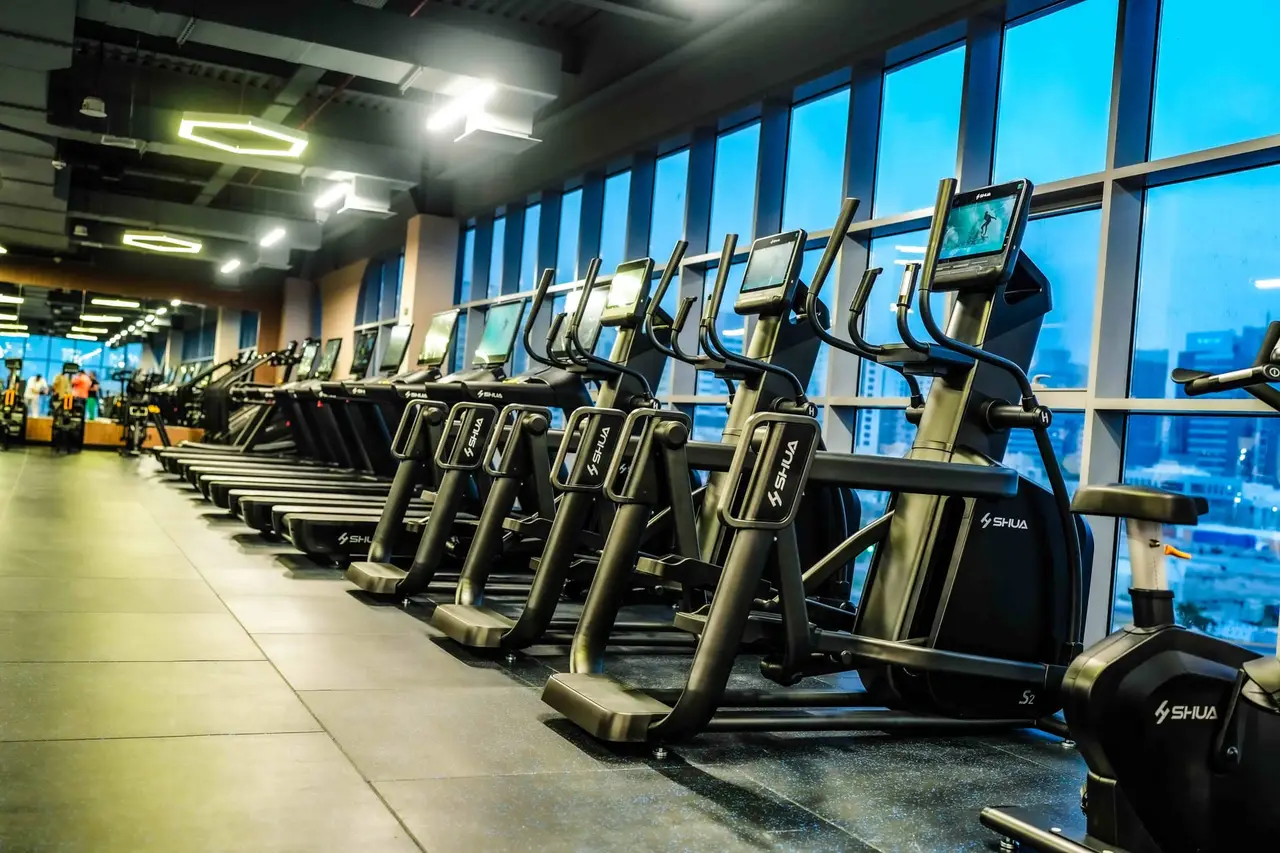
The cardio machines, and what each one is called
Gyms use several names for most of these machines, which makes searching for them harder than it should be.
| Machine | Also called | What it is |
|---|---|---|
| Treadmill | Running machine | A motorised belt for walking, running and incline walking |
| Cross-trainer | Elliptical, elliptical trainer | Foot pedals tracing an oval, with moving handles for the arms |
| Upright exercise bike | Stationary bike | A seated bike with resistance set on the console |
| Spin bike | Indoor cycle | A road-style bike with a heavy flywheel that you can ride standing |
| Recumbent bike | Reclined bike | A low bike with a backrest and the pedals out in front |
| Rowing machine | Rower, indoor rower, erg | A sliding seat and a handle on a chain or strap: the legs push, the arms pull |
| Stair climber | Stepmill, stepper, StairMaster | Revolving stairs, or two pedals you press down, that you climb |
| Air bike | Fan bike | A bike with moving arm handles and a fan that resists harder the harder you work |
| Ski ergometer | Ski erg | Two handles you pull down from overhead, as if poling on skis |
The library covers the treadmill, the cross-trainer, the exercise bike with its spin and recumbent versions, the rowing machine and the stair climber in depth, alongside the strength stations in the equipment guides. This page sits above them and answers the question that comes first: which one should you get on?
Which machine for which goal
| Your goal | Start with | Why | Watch for |
|---|---|---|---|
| Losing fat or weight | Whichever machine you will use three or more times a week | Activity added up over weeks is what counts, and a habit outlasts an occasional hard session | Console calorie figures are estimates |
| A running race | Treadmill | It practises the stride you will race in | Build running time gradually |
| Fitness with no landing | Cross-trainer, bike or rower | The feet stay on pedals or a footplate throughout | Set real resistance, or the session turns easy |
| Legs and glutes working harder | Stair climber, steep incline walk or a heavy bike | Every step or stroke loads the hips and thighs | Still no substitute for strength training |
| Upper body in your cardio | Rower, air bike, ski ergometer or cross-trainer | The arms pull or push on every stroke | On the cross-trainer, only if you drive the handles |
| Short on time | Intervals on a bike, rower or air bike | Quick to switch between hard and easy | Keep hard sessions to one or two a week |
| A HYROX race | Treadmill, rower and ski ergometer | The race combines running with rowing and ski stations | Practise on the machines the race uses |
Rotating two or three machines across the week spreads the load on your joints and keeps sessions from going stale. For race preparation, see HYROX at RPM.
Which machine for your body
- Knees that complain: the bike and cross-trainer remove the landing, and walking puts far less load through the knee than running. The stair climber and steep inclines bend the knee under your bodyweight on every step, so many people with knee trouble find them harder. If your knees hurt during or after a session, stop and have them checked by a doctor or physiotherapist.
- Lower back: the recumbent bike supports the back while you ride, while the rower asks the most of it once technique slips. If your back hurts on any machine, stop and get it checked before you carry on.
- A heavier body: seated machines take your weight off your feet, and on the treadmill, walking and incline walking build fitness without the impact of running. Check the user weight limit, usually on a label on the frame.
- Balance, or a first session in years: the recumbent and upright bikes ask the least of your balance. On a treadmill, keep a hand near the rail and the safety key clipped on.
- Pregnancy: ask your doctor or midwife which machines suit you and how hard to work; this page gives no pregnancy advice.
Fat loss, belly fat and calorie rankings
Search for the cardio machine that burns the most calories and you will find rankings, but they compare machines at whatever effort people happened to use. What they mostly show is which machines make it easy to work hard: those that move a lot of muscle at once, such as the rower, air bike and ski ergometer, or those that lift your bodyweight, such as the stair climber, a steep incline or running. How much energy you use over a month depends on whether you keep coming back at that effort. A hard machine you avoid does less for you than an easier one you use.
No machine takes fat from one place. The belly, hips and thighs change as overall body fat comes down, and that follows your activity and eating over months, not the machine. Read every console figure as an estimate; for a personal one, use the calories burned calculator, and keep strength training in the plan alongside the cardio.
Building a cardio workout at the gym
Workout A: a three-machine session (about 35 minutes)
This uses only the machines in RPM's photos and suits a busy floor: if one is taken, swap in another for that block.
| Block | Machine | What to do |
|---|---|---|
| Warm-up | Treadmill | 5 minutes of walking, a little faster each minute |
| Block 1 | Exercise bike | 8 minutes steady, then 4 × 30 seconds quick with 30 seconds easy |
| Block 2 | Cross-trainer | 8 minutes, raising the resistance one level every 2 minutes |
| Block 3 | Treadmill | 8 minutes of incline walking at a hard but talkable effort |
| Cool-down | Any of the three | 5 minutes easy, slowing gradually |
Workout B: intervals on one machine (about 25 minutes)
A bike, rower, air bike or cross-trainer all suit this format.
| Part | What to do | How hard |
|---|---|---|
| Warm-up | 6 minutes easy, building to moderate | Talking comfortably |
| Intervals | 6 rounds of 40 seconds hard and 80 seconds easy | About 8 out of 10 on the hard parts |
| Cool-down | 5–7 minutes easy | Breathing back to normal |
Do one session like B a week at first, with easier sessions around it. The heart rate zone calculator helps you pitch the effort on any machine.
In classes, circuit training often mixes cardio machines with weights, sleds and ropes; functional training covers that side, and cardio for beginners lays out a full eight-week start on the machines.
Cardio machines at RPM
RPM's photos of its cardio area show treadmills, cross-trainers and an upright exercise bike along tall windows, and its functional-area photos show a row of spin bikes. Rowers, stair climbers, recumbent bikes, air bikes and ski ergometers are not in those photos, so ask on a free guided tour which of them are on the floor before you plan around one. The women-only Ladies section has cardio equipment of its own. For hard conditioning away from the machines, the functional-area photos also show a sled on a turf lane and battle ropes, and a coach in personal training can combine both in one plan.
Questions, answered.
What is the best cardio machine for weight loss?
The one you will use most often at an effort that challenges you. Weight change follows your overall activity and eating across weeks, so three steady sessions you actually do beat one heroic session a week. Pair the cardio with strength training.
Which cardio machine is easiest on the knees?
Usually the bike or the cross-trainer, because neither has a landing, followed by walking on a treadmill. Knees differ, though, so if yours hurt on any machine, stop and have them checked by a doctor or physiotherapist.
Which cardio machine works the glutes most?
The stair climber and steep incline walking, because every step lifts you, with a heavy-resistance bike close behind. None of them replaces glute strength training; the glute exercises page covers that.
Which cardio machine burns the most calories?
The one that lets you work hardest for longest, which differs from person to person. Machines that move a lot of muscle or lift your bodyweight make high effort easier to reach, but only the effort you sustain decides the total.
Which cardio machine should I buy for home?
Choose by how you like to train and the space you have. A bike is compact and quiet, a treadmill suits walkers and runners but needs room behind it, and a cross-trainer needs headroom at the top of each stride. Try it before buying, at your real pace.