What the hack squat trains, and why lifters use it
Because the carriage runs on a fixed track and your back stays on the pad, you can let your knees travel a long way forward and sit deep without worrying about balance or your torso tipping. That deep knee bend is what makes it such a strong quad exercise. The glutes and adductors work hardest near the bottom, and the trunk still braces against the shoulder pads, though less than under a barbell.
It suits intermediate lifters who want to load the quads hard, often after barbell squats or in their place on a machine day, and people who squat well but struggle to manage a heavy bar on their back. Beginners can use it with light loads, though the deep knee position takes some getting used to. The leg training guide shows how it fits a week, and the hack squat vs leg press comparison helps if you are choosing between the two machines.
Setting up the machine
- Find the shoulder pad adjustment if there is one: the pads should sit firmly on top of your shoulders with your back flat against the pad behind you. On fixed machines, step forward or back on the platform to fit.
- Place your feet flat in the middle of the platform, about shoulder-width apart, toes turned out slightly, so your heels can stay down when you sink deep.
- Load plates evenly. Start with the empty carriage, which on most machines is already a meaningful weight, and add plates once you have done a set to full depth.
- Stand up to take the weight, then release the safety handles, usually levers by your hands or a catch you swing out. Check how they re-engage before your first rep.
- If the machine has adjustable safety stops, set them just below your deepest point.
How to do a rep
- Brace your trunk and press your back and hips into the pad.
- Bend your knees and let them travel forward over your toes as the carriage slides down, heels flat and knees in line with your feet.
- Sink until your thighs are at least parallel to the platform, deeper if your hips stay on the pad and your heels stay down.
- Drive up through your whole foot, pushing the carriage up the track without bouncing at the bottom.
- Stop just short of locked knees at the top. After the last rep, stand fully and re-engage the safety handles before stepping out.
Take two to three seconds on the way down and drive up steadily: bouncing out of the bottom of a heavy hack squat loads the knees hard at their most bent. Breathe in and brace at the top, and breathe out once you pass the hardest point on the way up. If your knees or lower back hurt during or after the exercise, stop and have them checked by a doctor or physiotherapist.
Mistakes that make the hack squat harder than it needs to be
| Mistake | What it looks like | The fix |
|---|---|---|
| Heels lifting | Your weight moves onto the toes as you sink | Move your feet slightly higher on the platform, or reduce depth until your ankles allow more |
| Hips peeling off the pad | At the bottom your lower back rounds away from the pad | Shorten the range a little and keep your back pressed into the pad |
| Knees caving in | The knees fall inward as you drive up | Lighter load, toes slightly out, knees pushed in line with the toes |
| Half reps with a heavy load | The carriage only moves a short way | Drop the weight and use your full depth |
| Slamming the knees straight | The knees snap locked at the top of every rep | Stop just short of straight to keep the tension on the quads |
Variations and stance
The name hack squat covers more than one exercise, and the machine itself can be used in more than one way. These are the versions people ask about.
Barbell hack squat (a different lift with the same name)
A free-weight lift: you hold a barbell behind your legs with straight arms and stand up from a squat, the bar sliding up the backs of your thighs. It sits between a deadlift and a squat, with more quad work than a deadlift, and needs no machine. The bar can scrape your calves, so wear long trousers and start light.
Reverse hack squat (facing the pad)
You face the machine with your chest against the pad and squat with your hips travelling back. The hips bend more and the knees less, so the glutes and hamstrings take a bigger share. Start lighter than your normal hack squat and keep your lower back flat.
Narrow vs wide stance
A narrow stance, feet closer than shoulder-width and a little lower on the platform, increases knee bend and focuses on the quads, especially the outer thigh. A wide stance with the toes turned out brings in more of the inner thighs and glutes. Most people do well at shoulder-width in the middle and adjust slightly from there.
If your gym has no hack squat, the leg press is the nearest machine, the front squat gives a similar quad emphasis with a barbell, and a heels-elevated goblet squat needs only one dumbbell.
Sets, reps and progression
| Goal | Sets × reps | How hard |
|---|---|---|
| Getting used to depth | 2–3 × 10–12 | Light, stopping with three or four reps left |
| Building quad size | 3–4 × 8–12 | One or two reps left |
| Strength | 3–4 × 5–8 | One or two reps left, with a longer rest |
Rest about two minutes between hard sets; the rest-between-sets calculator gives a range for your goal.
Once or twice a week is enough, either as your main leg movement or after squats. Machines differ in carriage weight and leverage, so compare yourself only with your own past numbers on the same machine. When every set reaches the top of the range at full depth, add a small plate to each side.
The hack squat at RPM
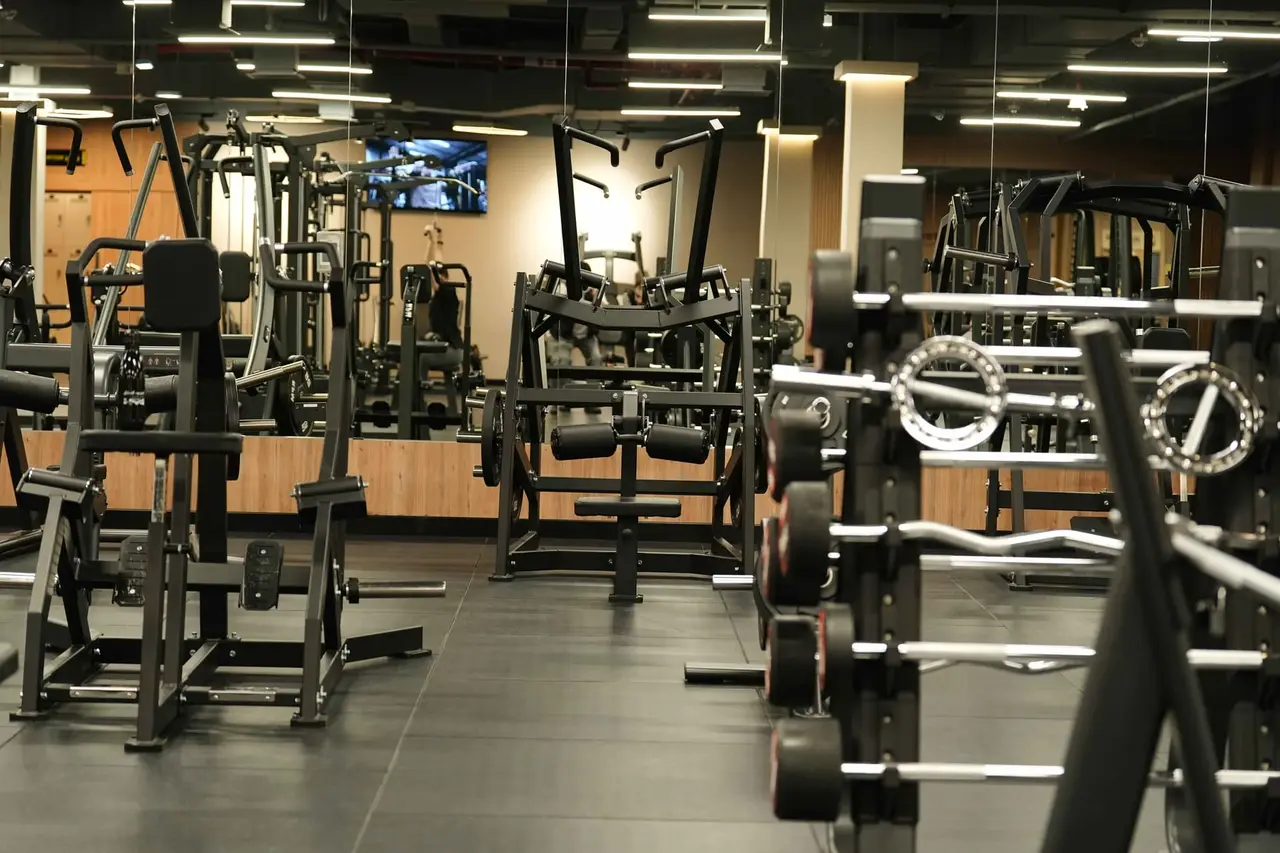
RPM's floor photos show plate-loaded machines and a 45-degree leg press, but not a hack squat machine, so ask on your free tour what the floor has for this movement. If you want help setting up a machine squat or choosing a substitute, a personal training session is the quickest way to get it right.
Questions, answered.
Hack squat or leg press: which should I use?
Use the hack squat if you want the quads to work hardest in a squat-like position, and the leg press if you want an easier set-up, more foot positions or a single-leg option. The hack squat vs leg press comparison puts them side by side.
Is the hack squat as good as a barbell squat?
For building the quads it can be, and it lets you push hard without balancing a bar. It does not train the balance, trunk control and bar path of the back squat, so many lifters keep both.
How much does a hack squat machine weigh without plates?
It depends on the manufacturer: the carriage alone is often a noticeable load, and the angle changes how heavy it feels. Check the label on the machine if there is one, and track progress by the plates you add rather than a total.
Is the hack squat good for glutes?
It works them, especially at full depth, but the standard version favours the quads. The reverse hack squat or a higher, wider stance shifts more work to the glutes; for a glute focus, see the glute training guide.
Hack squat or Smith machine squat?
Both fix the path. The hack squat supports your back on a pad and lets the knees travel far forward; the Smith machine leaves your torso unsupported, so it feels closer to a barbell squat. The Smith machine guide explains how to set one up.
Can I do hack squats with bad knees?
Have your knees assessed by a doctor or physiotherapist first. The hack squat bends the knee deeply under load, so do not use it to work around pain without advice.