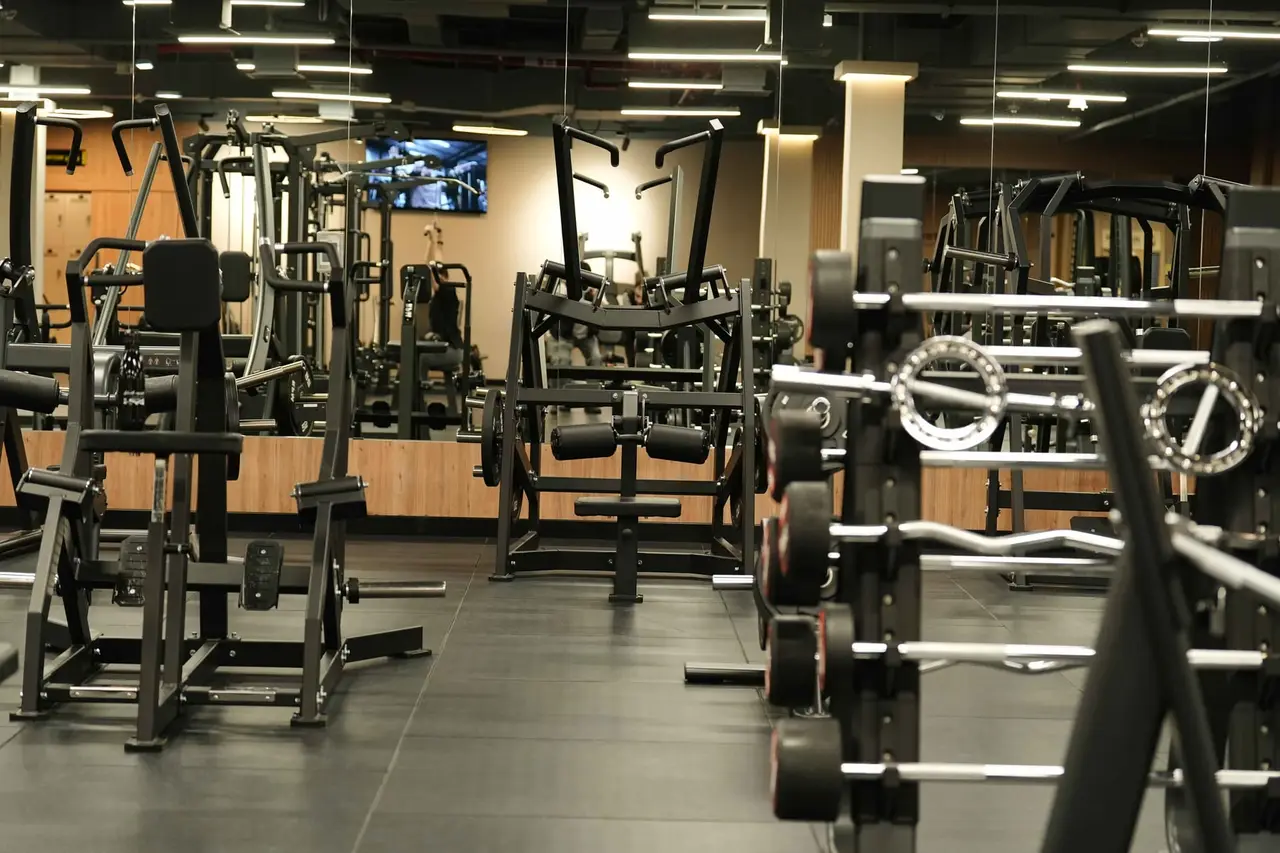
What the machine looks like, and what it trains
An adduction machine is a seat with a backrest, a pair of foot rests or foot bars, and two padded arms that swing out to either side. The pads sit against the inside of your knees or lower thighs, and a cable links the arms to a pin-loaded weight stack behind or beside the seat. A lever near the seat sets how wide the arms start, and there are handles to hold. Many gyms have a combined inner and outer thigh machine instead: the same seat, with pads you flip or move, so you squeeze in on one setting and push out on the other.
The muscles it trains are the adductors, a group of five on the inside of the thigh that pull the leg towards the midline. The largest, the adductor magnus, also helps straighten the hip, which is why deep squats and lunges work the inner thighs hard as well. The machine isolates the squeezing job. That is useful for footballers and anyone who changes direction quickly, for lifters who want stronger, fuller inner thighs, and as a small addition at the end of a leg session. The leg training guide shows where it sits in a week.
Setting it up
- Sit all the way back with your lower back against the pad. If the backrest adjusts, choose an upright position for your first sessions.
- Put your feet on the foot bars so your knees sit at about hip height and your thighs rest flat on the seat.
- Set the start width with the lever. Begin narrow, with only a light stretch on the inner thighs when the arms are open; you can widen it over the following weeks.
- Check that the pads press on the inside of your knees or just above them, not on your shins.
- Pin a light weight, one you could close fifteen times slowly, and take hold of the side handles.
How to do a rep
- Start from the open position with the stack lifted slightly and your back against the pad.
- Squeeze your knees together, leading with the knees rather than the feet, until the pads meet or nearly meet.
- Hold the closed position for a second without rocking your trunk forward.
- Let the arms open slowly, over two to three seconds, back to the width you set.
- Stop just before the plates touch down, and start the next rep from there.
The opening half of the rep is where control matters. The inner thighs are at their longest there, and letting the stack pull your legs apart quickly puts a sudden stretch on the groin. Breathe out as you squeeze and in as the legs open, and keep the return slow.
Mistakes to fix first
| Mistake | What it looks like | The fix |
|---|---|---|
| Start width set too wide | A strong pull in the groin before the first rep has begun | Narrow the start and widen it gradually over several sessions |
| Slamming the pads together | The arms clash and the stack bounces at the end of each rep | Squeeze to the middle and stop just short of the pads meeting |
| Rocking the trunk | The torso swings forward to help the legs close | Keep your back on the pad and lower the pin |
| Hips shifting on the seat | The pelvis slides or lifts as the weight gets heavy | Grip the handles and choose a load you can close while sitting still |
| Letting the stack snap open | The legs fly apart after each rep | Count two to three seconds on the way out |
A pulling or sharp pain in the groin, or pain at the front of the hip, is a reason to stop. Get it checked by a doctor or physiotherapist before you go back to the machine.
Variations and alternatives
The job is always the same, bringing the leg towards the midline. What changes is your trunk angle and the equipment.
Leaning forward vs sitting upright
Sitting upright is the standard and the easiest to control. Leaning forward from the hips with a flat back bends the hip further, which lengthens the adductor magnus at the start of each rep, so many people feel the work higher on the inner thigh and towards the back. Use a lighter weight when you lean, and keep the same slow opening.
Cable hip adduction
Stand side-on to a low pulley with an ankle strap on the leg nearest the stack, then sweep that leg across in front of your standing leg and let it return slowly. It trains one leg at a time, needs only a cable station, and asks more of your balance than the machine does, so hold the frame with one hand.
Copenhagen plank
A side plank with your top leg resting on a bench and the bottom leg hanging unsupported beneath it, so the inner thigh of the top leg holds you up. Start with the bench under your knee and short holds of about ten seconds; with the bench under the ankle it is far harder. It needs no machine and is a familiar part of football warm-ups.
If the machine is taken, the sumo squat and the lateral lunge train the inner thighs as part of a bigger leg movement.
Sets, reps and progression
| Goal | Sets × reps | How hard |
|---|---|---|
| Learning the movement | 2 × 12–15 | Stop with three or four reps left, start width narrow |
| Building muscle | 2–4 × 10–15 | Finish each set with one or two reps left |
| Strength for sport | 3 × 8–10 | Heavier, with a full pause in the closed position |
Rest about a minute between sets, and put the machine after your squats, presses and lunges rather than before them.
Once or twice a week is plenty, because squats and lunges already work the inner thighs. Progress the range before the weight: widen the start by one setting every week or two while the reps stay smooth, then add the smallest step the stack allows. Inner thighs that are new to direct work are often sore for a few days after the first session, so begin with two sets.
Inner thigh fat, toning and the pelvic floor
The machine builds and strengthens the adductors. It does not burn fat from the inner thigh: no exercise removes fat from the spot it works, and the shape of the inner thigh depends on overall body fat and genetics as well as muscle. What a stronger inner thigh can give you is firmer muscle under the skin and steadier knees and hips in squats, lunges and quick changes of direction.
The adductors work alongside the pelvic floor muscles, but the machine does not train the pelvic floor directly. If you have pelvic floor symptoms, ask a doctor or a physiotherapist before using it. If you are pregnant or have recently given birth, ask your doctor or midwife first.
The adduction machine at RPM
Neither a hip adduction machine nor a combined inner and outer thigh machine appears in RPM's floor photos, so ask what the Mixed and Ladies sections have when you come for your free tour. The photos do show multi-station cable towers, so the cable version is an option if an ankle strap is available; ask about that too. For coaching, book personal training or a female personal trainer.
Questions, answered.
What muscles does the hip adduction machine work?
The adductors, the group of muscles on the inside of the thigh that pull the legs together. The gracilis, which runs down past the knee, helps as well. The glutes and quads do very little.
What is the difference between the hip adduction and hip abduction machines?
Adduction squeezes the legs together and trains the inner thighs. Abduction pushes them apart and trains the side of the hip, mainly the gluteus medius. Many gyms use one combined machine for both; the hip abduction machine page covers the outward version.
Does the hip adduction machine work the glutes?
Not much. The adductor magnus helps the glutes extend the hip in squats and lunges, but on the machine the squeezing belongs to the inner thighs. For the glutes themselves, start with the glute guide.
What can I do instead of the hip adduction machine at home?
A Copenhagen plank on a sofa or a sturdy chair, side-lying raises of the bottom leg, and squeezing a firm cushion between your knees during a bridge. Wide-stance squats and side lunges add inner thigh work to your leg training.
Adduction machine or sumo squat for the inner thighs?
They do different jobs. The machine isolates the squeeze and is easy to load in precise steps. The sumo squat works the inner thighs in a long, stretched position together with the quads and glutes. Most leg programmes that care about the inner thighs use a squat or lunge pattern and add the machine.